
Desktop Molecular Distillation Apparatus
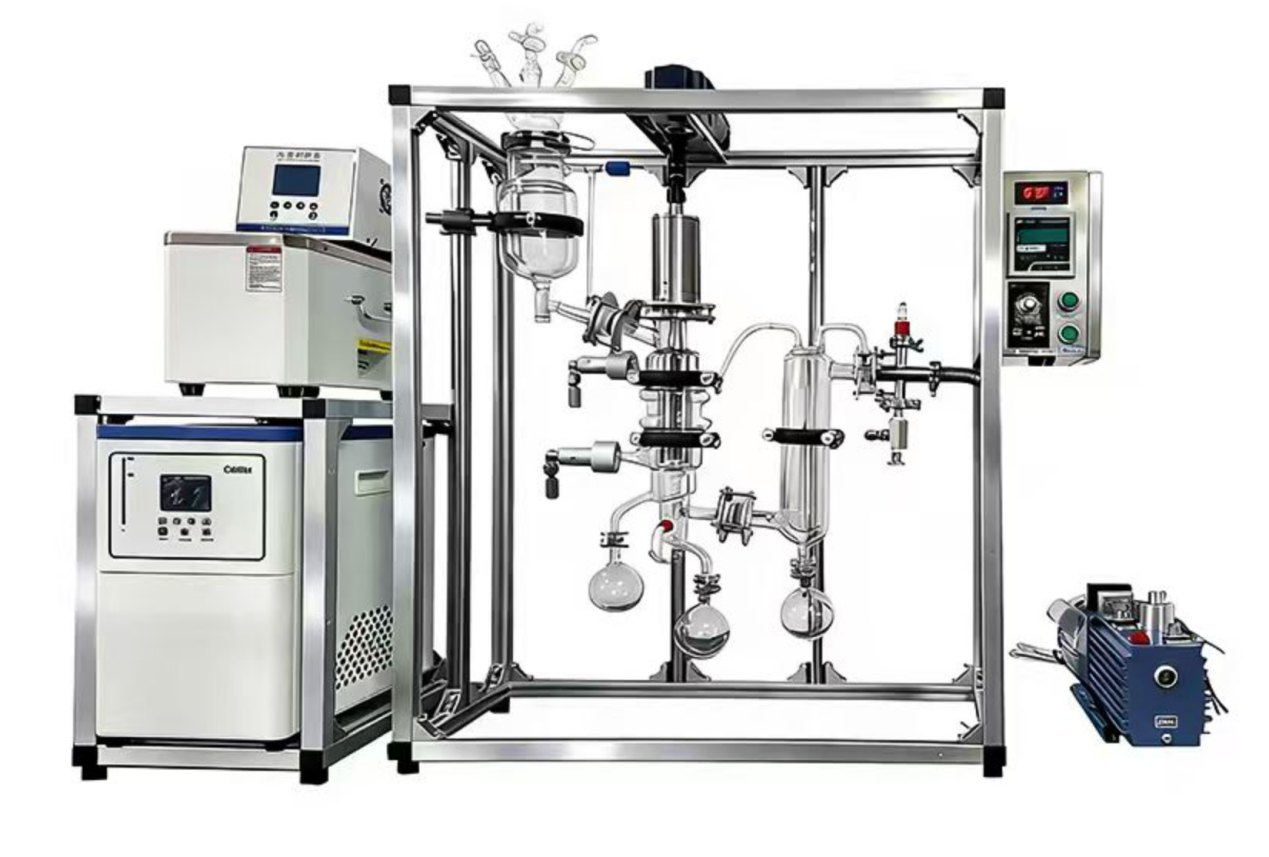
The AV-F50 is a bench-top short-path molecular distillation apparatus built around a Ø 50 mm borosilicate glass evaporator body. Molecular.
Bench-top Short-Path Molecular Distillation Apparatus
0.05 m² Wiped-Film Evaporation · Throughput 0.1–2.0 L/h · Vacuum < 10 Pa · RT–200 °C · Gentle Separation for Heat-Sensitive Materials
The AV-F50 is a bench-top short-path molecular distillation apparatus built around a Ø 50 mm borosilicate glass evaporator body. Molecular distillation is a special liquid–liquid separation technology: under high vacuum (below 10 Pa), the mean free path of vapor molecules exceeds the distance between the evaporation and condensation surfaces, so components are separated by their differences in evaporation rate — not by boiling.
Feed (0.1–2.0 L/h) is distributed onto the heated wall (RT–200 °C) by PTFE / 304 stainless steel wipers spinning at up to 450 rpm, forming a turbulent liquid film thinner than 0.5 mm. Light components evaporate instantly and condense on the short-path internal condenser for collection as the light fraction; heavier components flow down the wall into the heavy fraction receiver. An external condenser with cold trap recovers solvents and protects the vacuum pump.
Compared with conventional short-path stills, the AV-F50 offers shorter residence time, lower processing temperature and continuous operation without breaking vacuum — an ideal turn-key solution for lab-scale and pilot purification of high-boiling, heat-sensitive and easily oxidized materials.
Key Advantages
- Gentle Low-Temperature Separation — Operates far below the boiling point with a short residence time — ideal for high-boiling, heat-sensitive and easily oxidized materials.
- High Vacuum, Below 10 Pa — Ultimate vacuum below 10 Pa (no-load) protects materials from oxidation and lowers the operating temperature.
- Thin Film, High Heat Transfer — Wipers spread the liquid into a film < 0.5 mm thick, giving high evaporation efficiency with no bubbling or foaming.
- Effective Degassing & Deodorizing — Efficiently strips organic solvents and odors — highly effective for desolvating solvent-extracted liquids.
- Multi-Stage Selective Separation — Selectively evaporates target products and removes impurities; multi-stage operation separates 2+ components simultaneously.
- Corrosion-Resistant Wetted Parts — Wiper system of PTFE + 304 stainless steel; fluoroelastomer (optionally PTFE) gaskets throughout for excellent sealing and chemical resistance.
- Turn-Key Bench-top Design — Integrated feed tank (preheatable), metering pump, heating, cooling, external condenser and receivers on one compact frame — plug and play.
- Scalable & Customizable — Multiple evaporation areas for bench and pilot scale; larger areas available on request. Preheating temperature adjustable.
- Pure Physical Separation — Non-toxic, harmless, pollution-free and residue-free — yields clean, safe products with no solvent carry-over.
Product Features
| Feature | Benefit |
|---|---|
| Short-path molecular distillation at < 10 Pa | Molecule mean free path exceeds evaporation–condensation gap for true molecular separation |
| PTFE + 304 SS wiper system, ≤ 450 rpm | Turbulent film < 0.5 mm; high heat transfer, no hot spots |
| Heating jacket RT – 200 °C | Wide temperature window matched to thermally sensitive products |
| Preheatable 1 L feed tank with metering pump | Adjustable feed rate 0.1–2.0 L/h and preheat temperature |
| Internal condenser 0.1 m² + external condenser & cold trap | Efficient light-fraction capture, solvent recovery and pump protection |
| Separate 250 mL light / heavy fraction receivers | Clean split of distillate and residue for easy analysis |
| Continuous operation without breaking vacuum | Uninterrupted processing for higher productivity |
| All-glass borosilicate construction | Full process visibility; corrosion resistant and easy to clean |
| Fluoroelastomer / optional PTFE sealing | Excellent airtightness; PTFE option for aggressive media |
| Bench / pilot / custom evaporation areas | Seamless scale-up path from feasibility study to pilot line |
Technical Specifications
- Additional evaporation areas for pilot and production scale available on request — contact sales for tailored models.
| Parameter | AV-F50 |
|---|---|
| Evaporator inner diameter | 50 mm |
| Evaporation area | 0.05 m² |
| Condensation area | 0.1 m² |
| Feed tank volume | 1 L (preheating optional, adjustable) |
| Throughput | 0.1 – 2.0 L/h |
| Wiper motor power | 60 W |
| Max rotation speed | 450 rpm |
| Light fraction receiver | 250 mL |
| Heavy fraction receiver | 250 mL |
| External condenser / cooling device / heating device | Standard |
| Operating vacuum | < 10 Pa (no-load ultimate vacuum) |
| Heating temperature | Room temperature – 200 °C |
| Dimensions (main body, without trough) | 1100 × 500 × 1300 mm (L × D × H) |
| Dimensions (with trough) | 1500 × 500 × 1300 mm (L × D × H) |
| Power supply | Voltage customizable (110V / 220V / 230V / 380V, 50/60Hz) |
System Structure
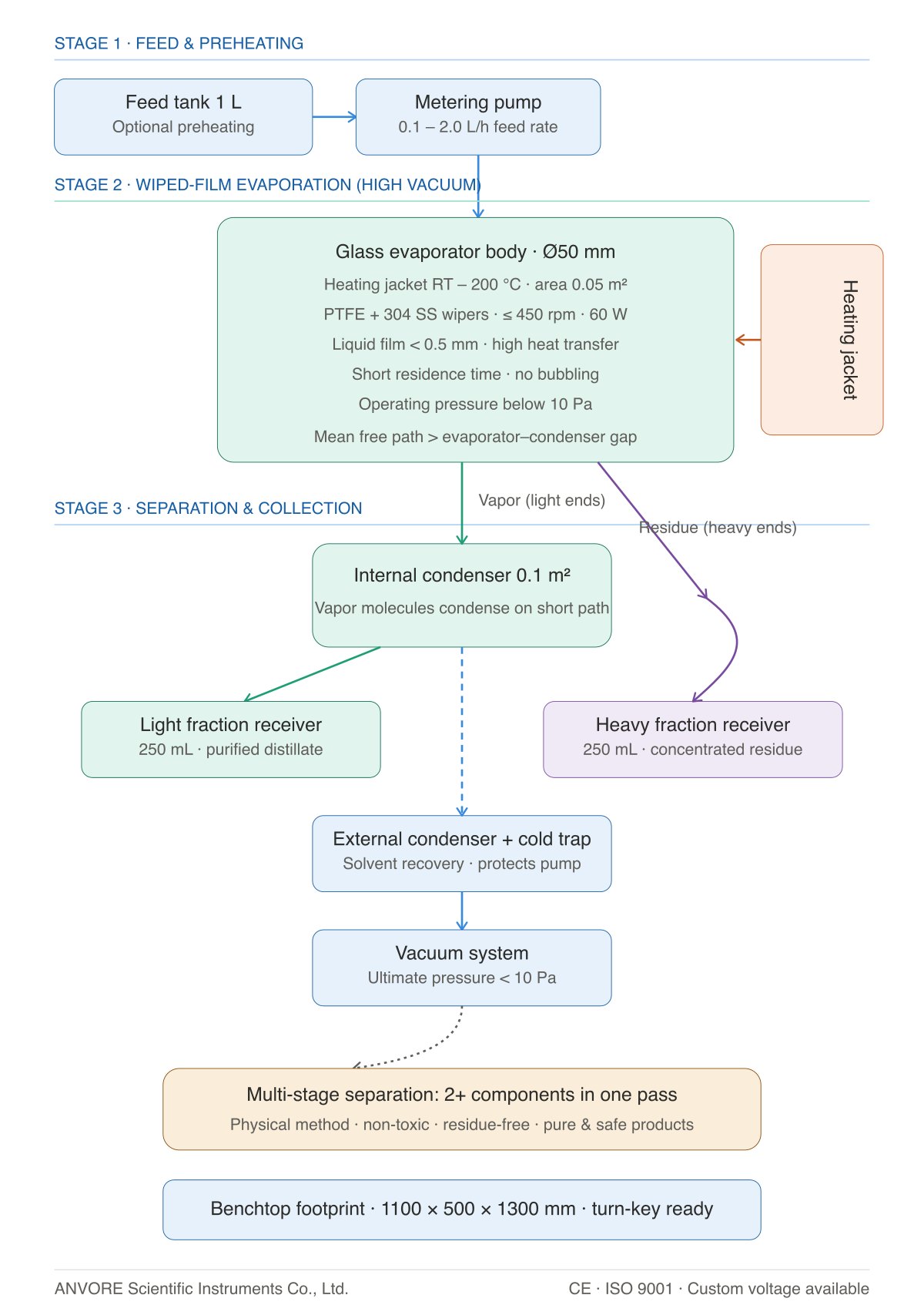
- Stage 1 · Feed & Preheating
- Material is charged into the 1 L feed tank (optional preheating with adjustable temperature) and delivered at 0.1–2.0 L/h by the metering pump, ensuring a stable, controlled feed to the evaporator.
- Stage 2 · Wiped-Film Evaporation
- Inside the Ø 50 mm glass body, PTFE / 304 SS wipers (up to 450 rpm, 60 W) spread the feed into a film < 0.5 mm on the heated wall (RT–200 °C). Under a vacuum below 10 Pa, the mean free path of vapor molecules exceeds the gap to the internal condenser: light components evaporate and travel directly to the cold surface, while heavy components stay in the liquid film.
- Stage 3 · Separation & Collection
- Condensed light fraction drains into the 250 mL light receiver as purified distillate; the concentrated heavy fraction flows down into its own 250 mL receiver. The external condenser and cold trap recover solvents and shield the vacuum pump, enabling continuous multi-stage separation of two or more components without breaking vacuum.
Applications
- Fine chemicals — — purification of aromatic (essential) oils, polymer intermediates, lanolin extraction
- Pharmaceuticals — — extraction of natural vitamins A & E, production of amino acid and glucose derivatives
- Food industry — — refined fish oil, fatty acid deacidification, high-carbon alcohol purification, mixed oil fractionation
- Cannabinoids & botanicals — — CBD / hemp oil and herbal extract purification and decolorization
- Petrochemicals — — heavy fraction upgrading and specialty base oil refining
- Daily chemicals & environmental protection — — fragrance purification, solvent recovery, waste stream concentration
More Short Path Molecular Distillation System — Glass
 AVF60
AVF60Lab Molecular Distillation System
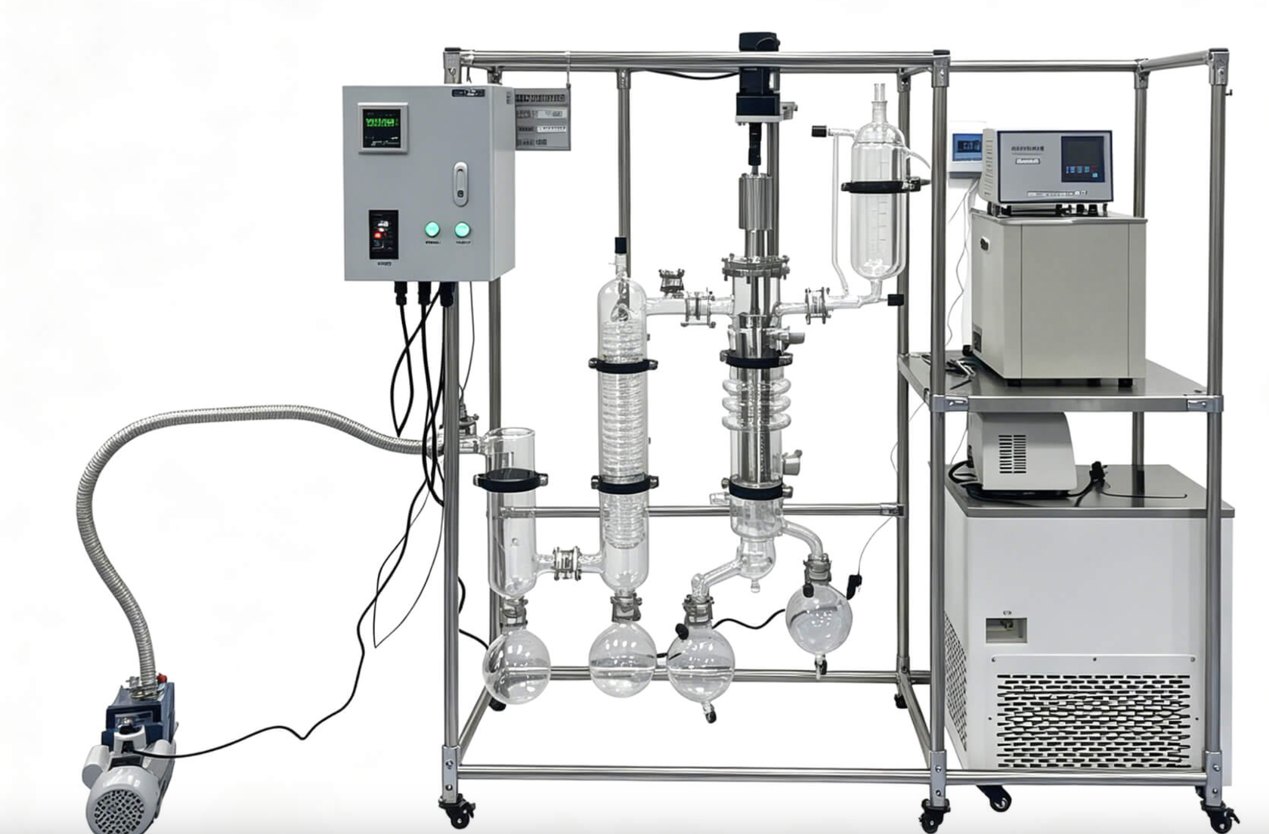
The AVF60 is a short-path molecular distillation apparatus built around a Ø 60 mm borosilicate glass evaporator body with 0.06 m² of evaporation.
View Product →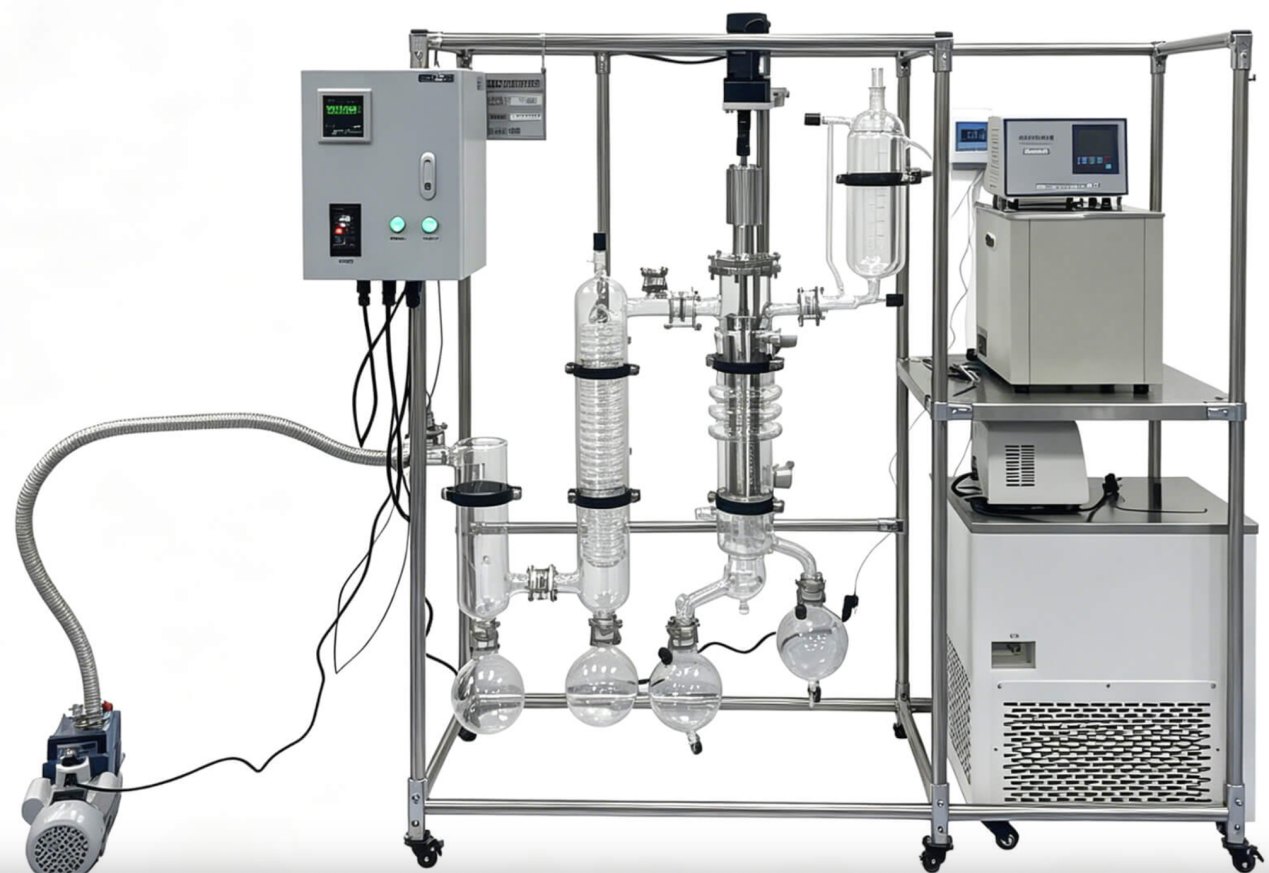 AVF80
AVF80Short Path Molecular Distillation Unit
The AV-F80 is a short-path molecular distillation apparatus built around a Ø 80 mm borosilicate glass evaporator body with 0.1 m² of evaporation area.
View Product →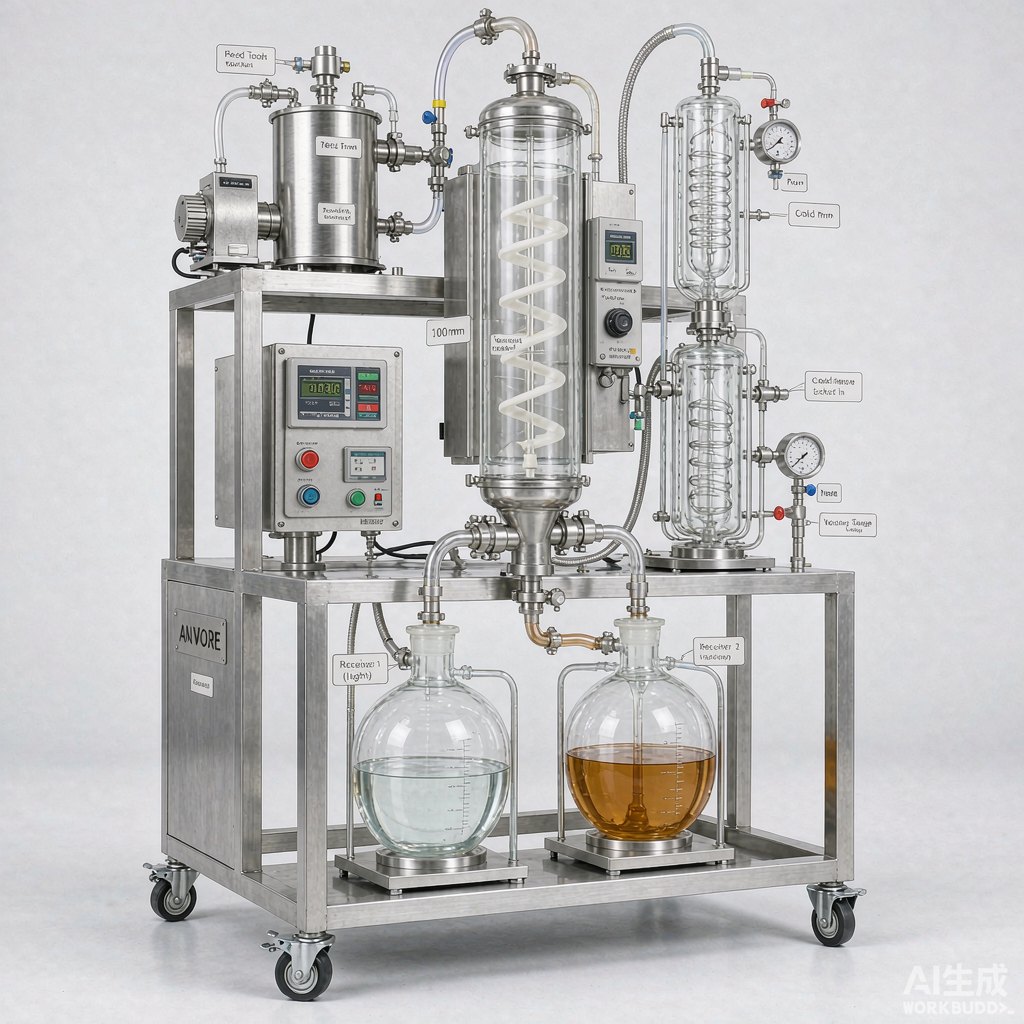 AVF100
Vacuum Short Path Distillation Equipment
The AV-F100 is a pilot-scale short-path molecular distillation apparatus built around a Ø 100 mm borosilicate glass evaporator body with 0.15 m² of.
View Product →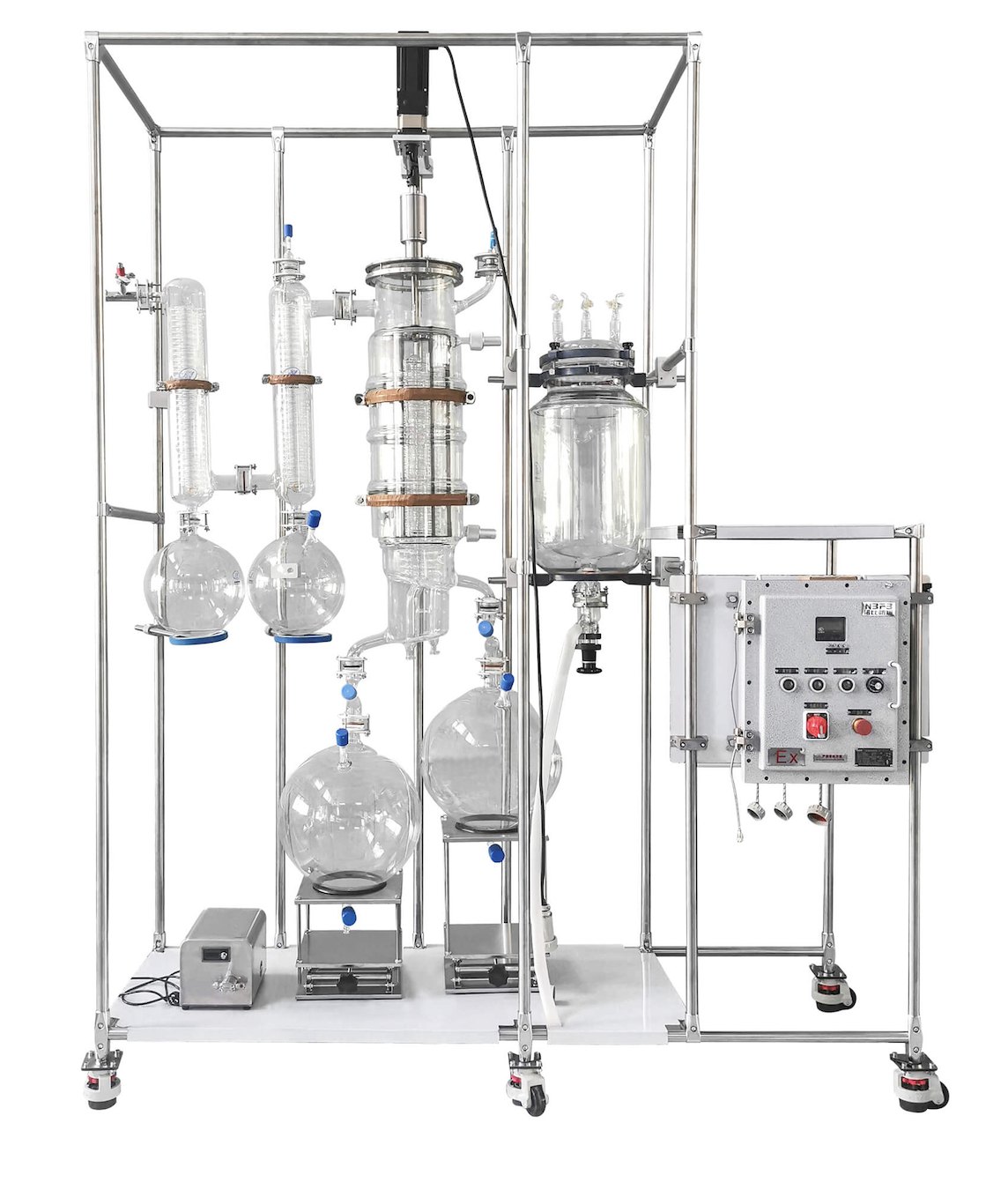 AVF150
Wiped Film Molecular Distillation System
The AV-F150 is a pilot-production short-path molecular distillation apparatus built around a Ø 150 mm borosilicate glass evaporator body with 0.25 m².
View Product →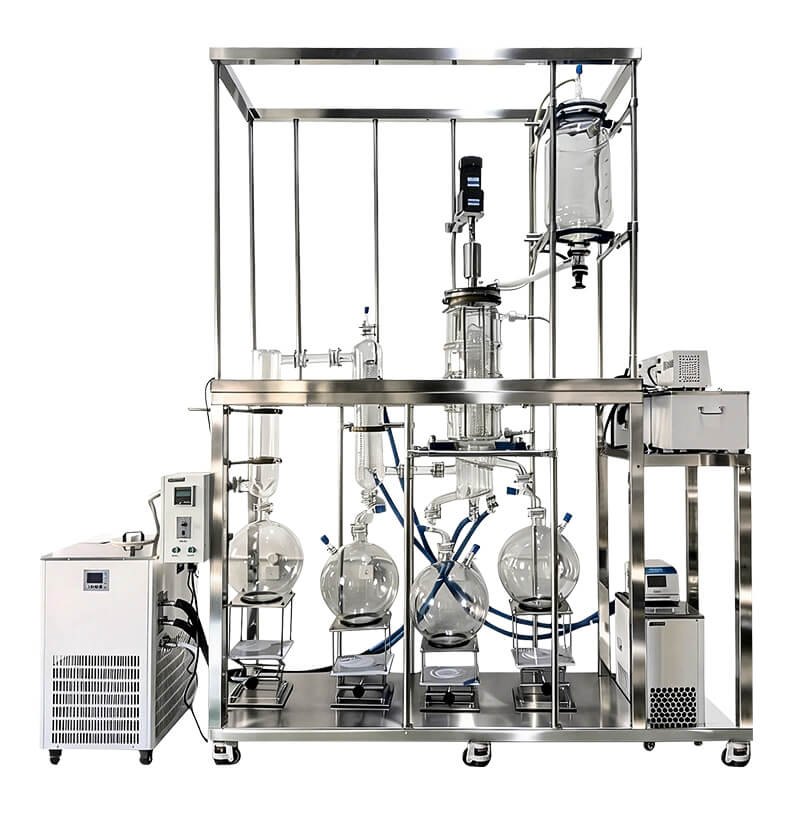 AVF200
Short Path Molecular Distillation Equipment
The AV-F200 is a production-scale short-path molecular distillation apparatus built around a Ø 200 mm borosilicate glass evaporator body with 0.35 m².
View Product →Short Path Molecular Distillation System — Glass
All-glass molecular distillation path — full visibility, corrosion-free contact, laboratory scale.
Learn More →