Nanocellulose (CNF / MFC)
with a Wiped-Film Thin-Film Evaporator
A continuous dewatering process engineered for high-viscosity, heat-sensitive nanofiber suspensions — preserving nanostructure from dilute feed to 20–40% solids paste.
| Application | Continuous low-temperature dewatering / concentration of dilute nanocellulose (CNF / MFC) aqueous suspensions |
|---|---|
| Material Challenge | High viscosity at rising solids · heat-sensitive nanofibers · irreversible agglomeration · wall adhesion and fouling |
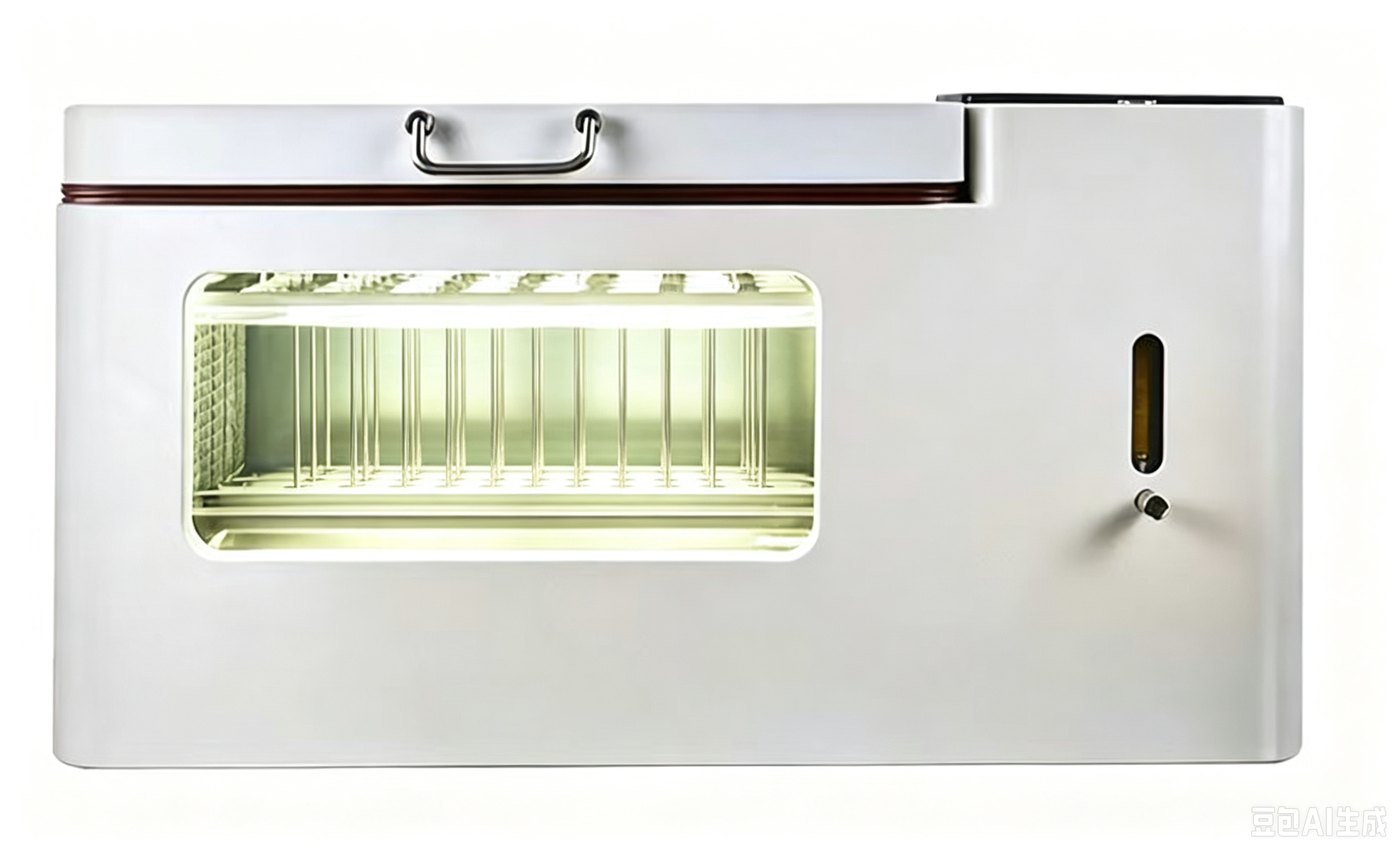
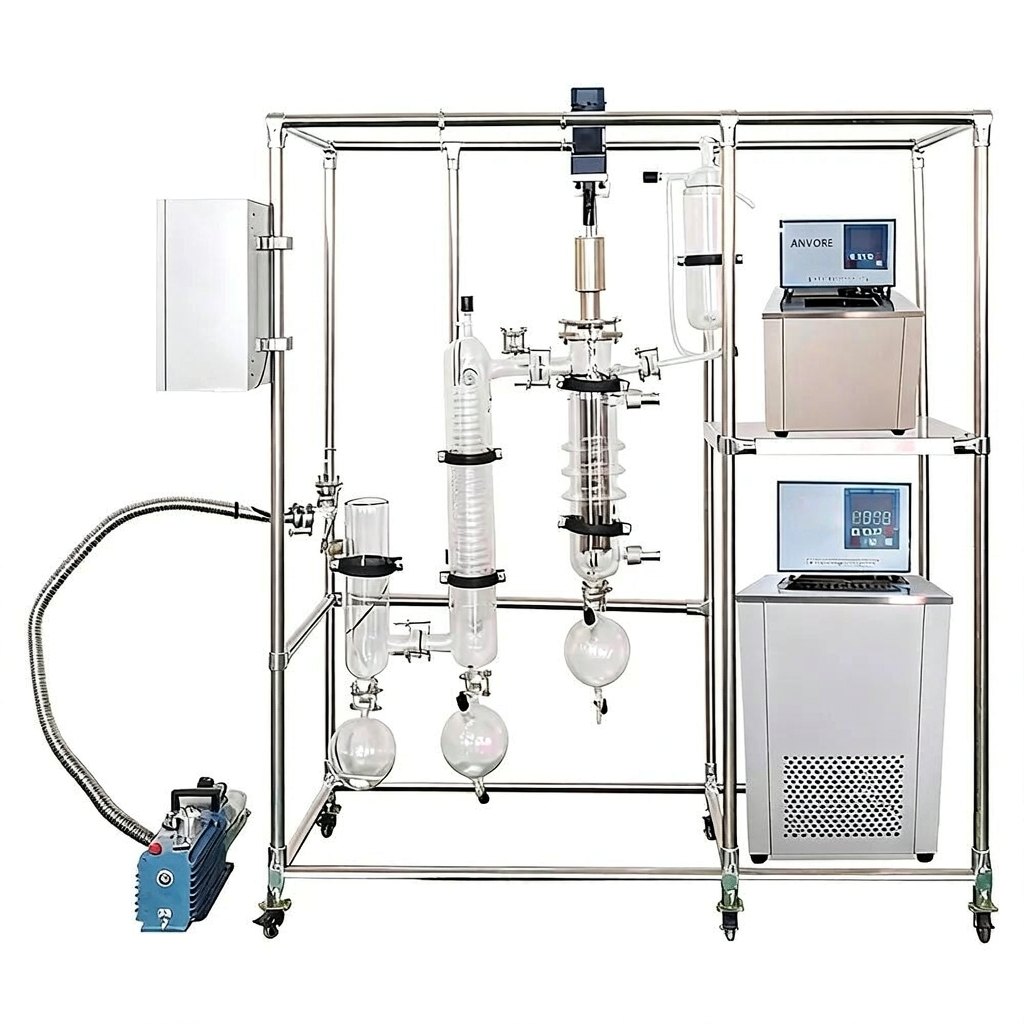
| Equipment | ANVORE wiped-film thin-film evaporator — glass benchtop (0.06 m²) to stainless-steel industrial units |
| Key Outcomes | 40–60 °C evaporation · seconds-level exposure · intact, re-dispersible fibers · 20–40% solids in a single pass · continuous production |
1 Nanocellulose: A Green Nanomaterial Across Industries
Nanocellulose (CNF/MFC) is produced from natural biomass such as wood pulp, bamboo and straw. With high transparency, outstanding mechanical strength, enormous specific surface area, biocompatibility and full biodegradability, it is replacing synthetic materials across a wide range of high-end applications:
| Industry | Application | Function |
|---|---|---|
| New Energy / Lithium Batteries | Separator coatings, electrode binders, solid-state electrolyte matrices | Heat and puncture resistance; longer cycle life; PVDF-free green formulation |
| Packaging & Degradable Films | High-barrier transparent nanocellulose films | Oxygen and water-vapor barrier for food, medical and cosmetic packaging |
| Composites & Reinforcement | Reinforcing filler for plastics, resins and rubber | Higher tensile strength and toughness at lower weight |
| Paper & Textiles | Specialty paper additive; fabric finishing agent | Strength, smoothness, crease resistance and moisture management |
| Cosmetics & Biomedical | Natural thickener / suspending agent; wound dressings, drug carriers, scaffolds | Safe, non-toxic, high thickening efficiency and suspension stability |
| Environmental & Water Treatment | Modified adsorbents for heavy metals, oil–water separation, air filtration | Green, high-performance adsorption substrate |
2 The Dewatering Challenge
Across the whole production chain, dewatering the dilute nanocellulose suspension is the recognized process bottleneck that directly determines final product quality:
- Irreversible fiber agglomeration. Nanofibers carry strongly bound surface water. Atmospheric drying or kettle concentration exposes the fibers to prolonged heat, causing irreversible hydrogen-bond re-bonding into clumps that can never be re-dispersed — the nanostructure is destroyed and downstream films, coatings and composites fail.Rising viscosity, wall adhesion and coking. As water is removed, viscosity rises sharply. Conventional evaporators accumulate material and overheat locally, causing scaling and coking, high cleaning cost, and poor production continuity.Low dewatering efficiency and high energy cost. Vacuum ovens and centrifuges only achieve preliminary pre-concentration. Reaching high-solids paste requires long, low-throughput processing chains that block industrialization.
The industry answer: low-temperature, short-exposure, forced thin-film evaporation — removing free and surface-bound water while fully preserving the fiber morphology.
3 The ANVORE Solution: Wiped-Film Thin-Film Evaporator
ANVORE wiped-film evaporators are specifically optimized for the high-viscosity, agglomeration-prone, heat-sensitive nature of nanocellulose slurries. The working principle: dilute feed enters at the top of the evaporator, where high-speed hinged PTFE blades spread it into an ultra-thin turbulent film on the heated wall; a high-vacuum pump set lowers the boiling point of water so moisture evaporates gently and rapidly; vapor is condensed and recovered overhead while the concentrated high-solids paste discharges continuously from the bottom — fully automatic, continuous operation.
- Low-temperature, short-exposure heating. Water boils at 40–60 °C under high vacuum and the film is exposed for only seconds to tens of seconds — no thermal agglomeration, no hardening; the discharge remains fully dispersible with intact nanostructure.Forced wiping — no wall adhesion. Self-adapting elastic blades continuously renew the heating surface. Even at high final viscosity there is no static build-up, no scaling or coking; mirror-polished walls leave no fiber residue.Doubled dewatering efficiency, continuous production. The ultra-thin film dramatically reduces heat-transfer resistance. A single pass concentrates dilute suspension to 20–40% solids, replacing multi-stage pre-concentration chains.High-purity, contamination-free construction. Stainless-steel product contact with optional borosilicate glass viewing column; PTFE seals release no metal ions — suitable for TEMPO-oxidized and carboxylated grades and for biomedical / cosmetic standards.Intelligent, repeatable process control. Feed rate, heating temperature, rotor speed and vacuum are independently adjustable and storable as recipes, giving high batch-to-batch consistency and an easy path from R&D data to production.
4 Complete Dewatering Process Flow
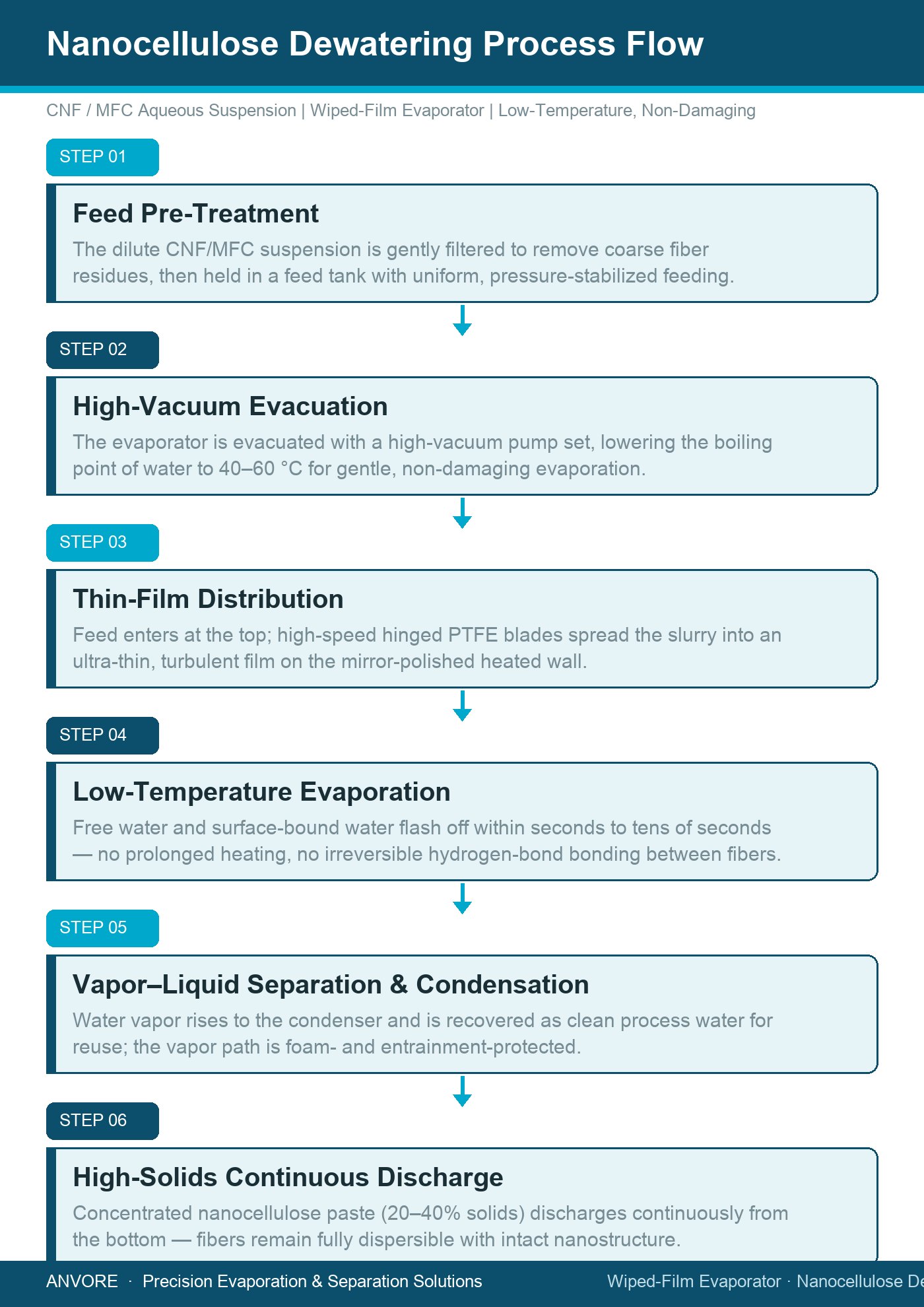
The process runs continuously through eight stages:
Step 1 — Feed pre-treatment.The dilute CNF/MFC suspension is gently filtered to remove coarse fiber residues, then held in a feed tank with uniform, pressure-stabilized feeding.
Step 2 — High-vacuum evacuation.The evaporator is evacuated so that water boils at 40–60 °C instead of 100 °C, enabling gentle non-damaging evaporation.
Step 3 — Thin-film distribution.Feed enters at the top; high-speed hinged PTFE blades spread the slurry into an ultra-thin turbulent film on the mirror-polished heated wall.
Step 4 — Low-temperature evaporation.Free water and surface-bound water flash off within seconds to tens of seconds — no prolonged heating, no irreversible hydrogen bonding between fibers.
Step 5 — Vapor–liquid separation & condensation.Water vapor rises to the low-temperature condenser and is recovered as clean process water for reuse, reducing operating cost.
Step 6 — High-solids continuous discharge.Concentrated paste at 20–40% solids discharges continuously from the bottom; fibers remain fully re-dispersible with intact nanostructure.
Step 7 — Direct downstream use.The paste feeds directly into degradable films, battery-separator coatings, composite reinforcement and cosmetic thickeners — no re-fibrillation step required.
Step 8 — Verification & continuous operation.Solids content is verified per batch; the self-cleaning rotor keeps the heating surface clean for stable multi-day production runs.
5 Typical Operating Parameters
| Parameter | Typical Value |
|---|---|
| Evaporation temperature (under vacuum) | 40–60 °C |
| Product residence time on heating surface | Seconds to tens of seconds |
| Single-pass final solids content | 20–40 wt% |
| Rotor blades | Hinged PTFE, self-adapting, variable speed |
| Heating wall | Mirror-polished stainless steel (optional glass viewing column) |
| Seals | PTFE, no metal-ion release |
| Feeding | Pressure-stabilized, metered, continuous |
| Condensate | Clean process water, recovered for reuse |
Values are typical operating ranges for nanocellulose suspensions; exact set points are tuned during commissioning for each fiber grade and modification type.
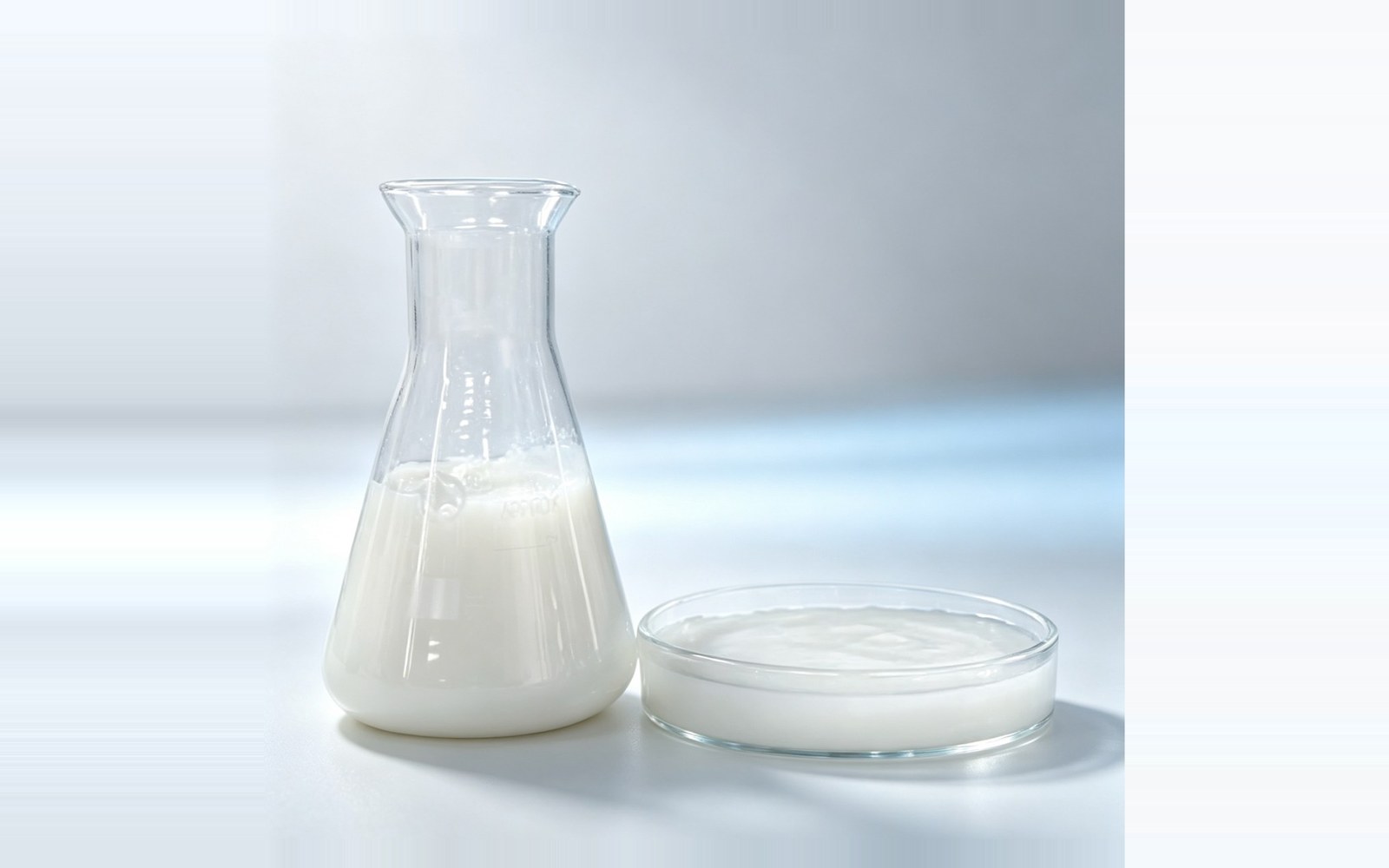
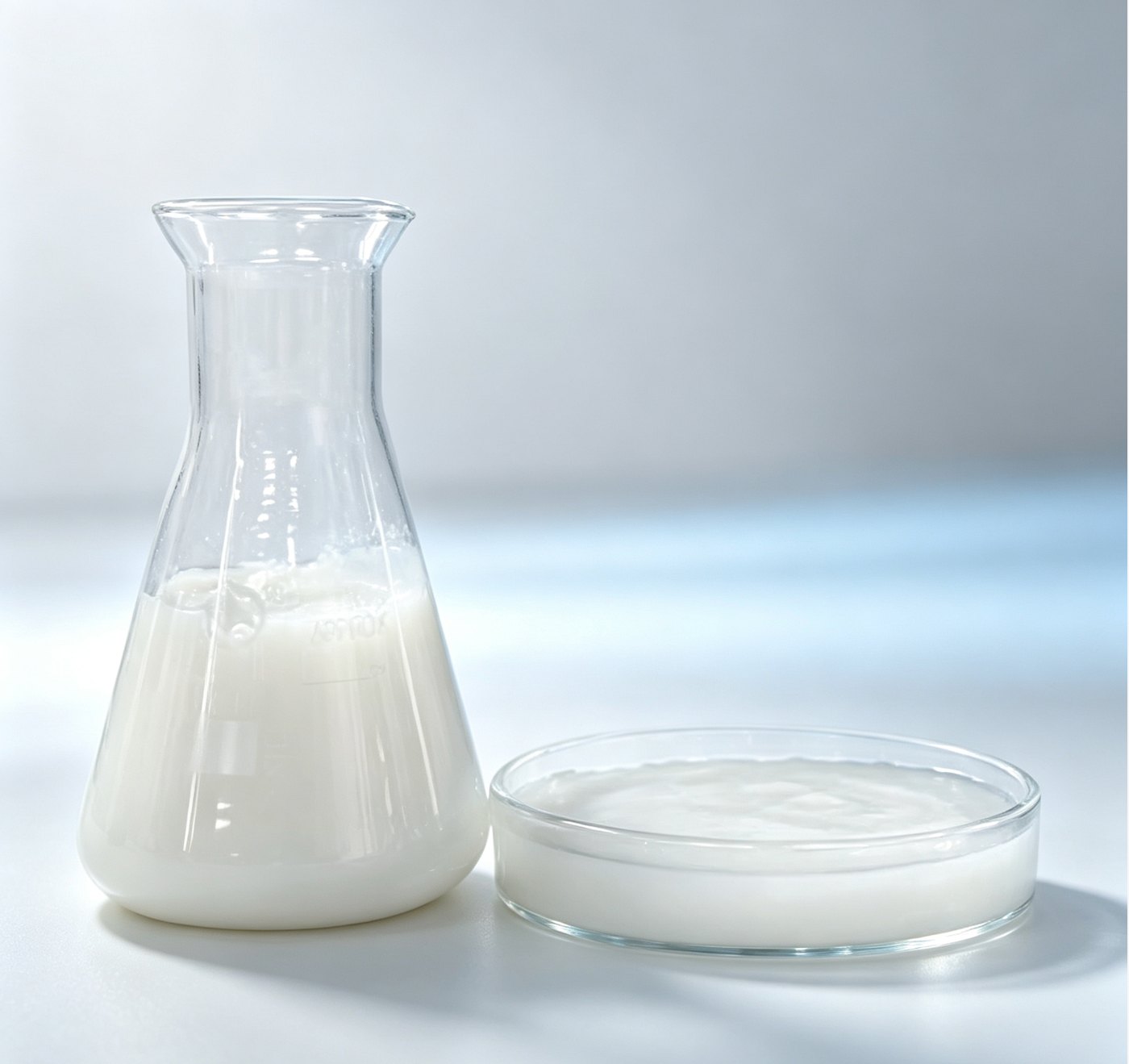
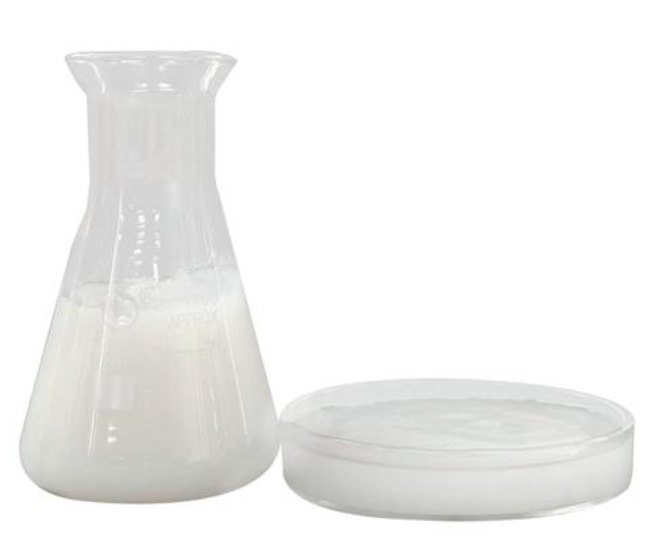
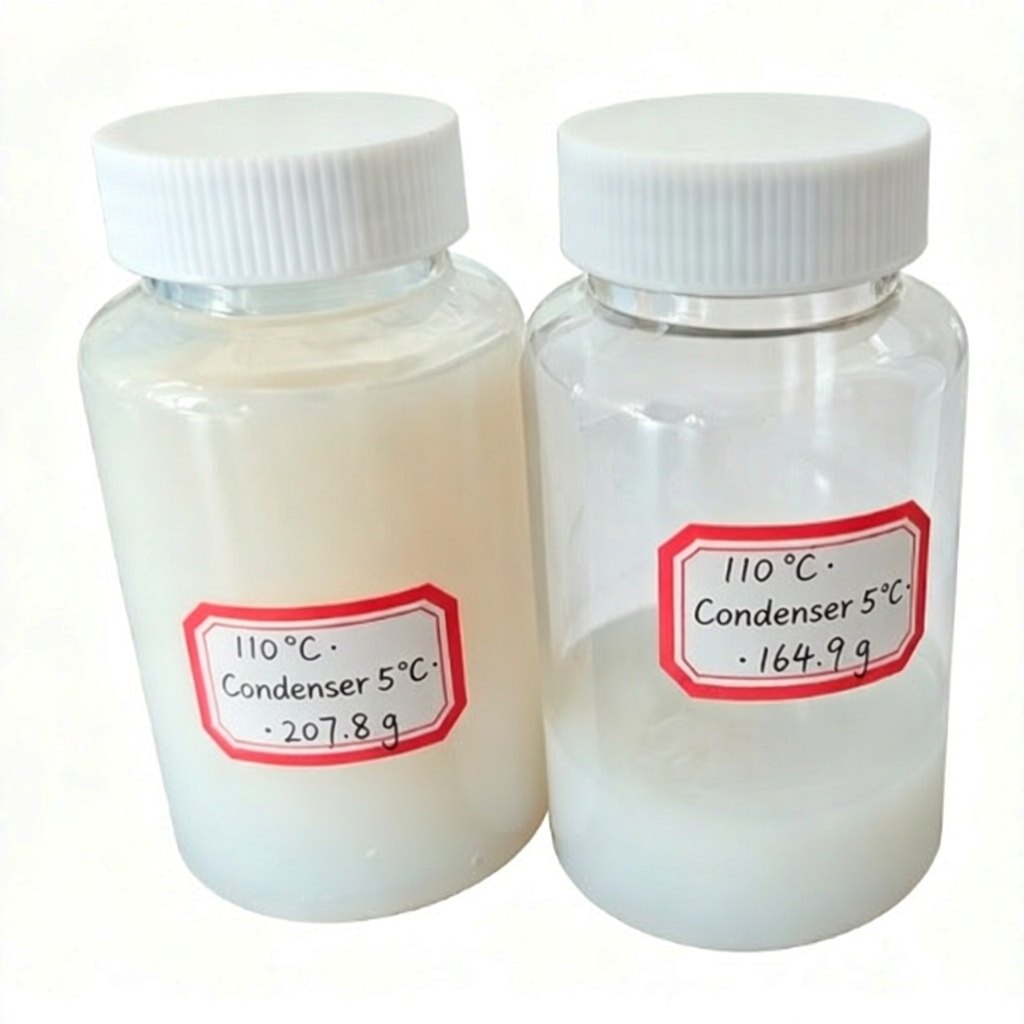
06 — Feed and Dewatered Product
7 ANVORE Equipment Selection Guide
| Stage | Model Series | Evaporation Area | Throughput | Highlights |
|---|---|---|---|---|
| Laboratory / R&D | Glass series | 0.06–0.25 m² | 0.5–8 L/h | Visible glass column for film observation; ideal for recipe screening |
| Pilot validation | Stainless 100–300 | 0.15–1 m² | 5–80 L/h | Automatic feed and discharge options; process scale-up verification |
| Industrial production | Custom multi-unit lines | Custom | Ton-scale lines | Multi-stage vacuum and heat-recovery systems for minimum energy cost |
8 Conclusion
For a green nanomaterial whose value depends entirely on preserving its nanostructure, low-temperature, non-damaging, high-efficiency dewatering is the core process that determines both product quality and production capacity. Wiped-film thin-film evaporation — with low-temperature short exposure, no agglomeration, high concentration, high cleanliness and true continuous operation — is the definitive answer to the nanocellulose dewatering bottleneck.
ANVORE provides customized dewatering solutions for nanocellulose and other heat-sensitive, high-viscosity materials, with one-stop service from laboratory trials through industrial-scale plants.
Contact ANVORE for a tailored nanocellulose dewatering process proposal, equipment specifications and on-site trial videos.