by 316L Stainless-Steel Short-Path Molecular Distillation
How an energy & chemical enterprise restored spent desulfurization amine to fresh-solvent quality with low-temperature, high-vacuum physical separation — cutting solvent losses and hazardous-waste cost at the source.
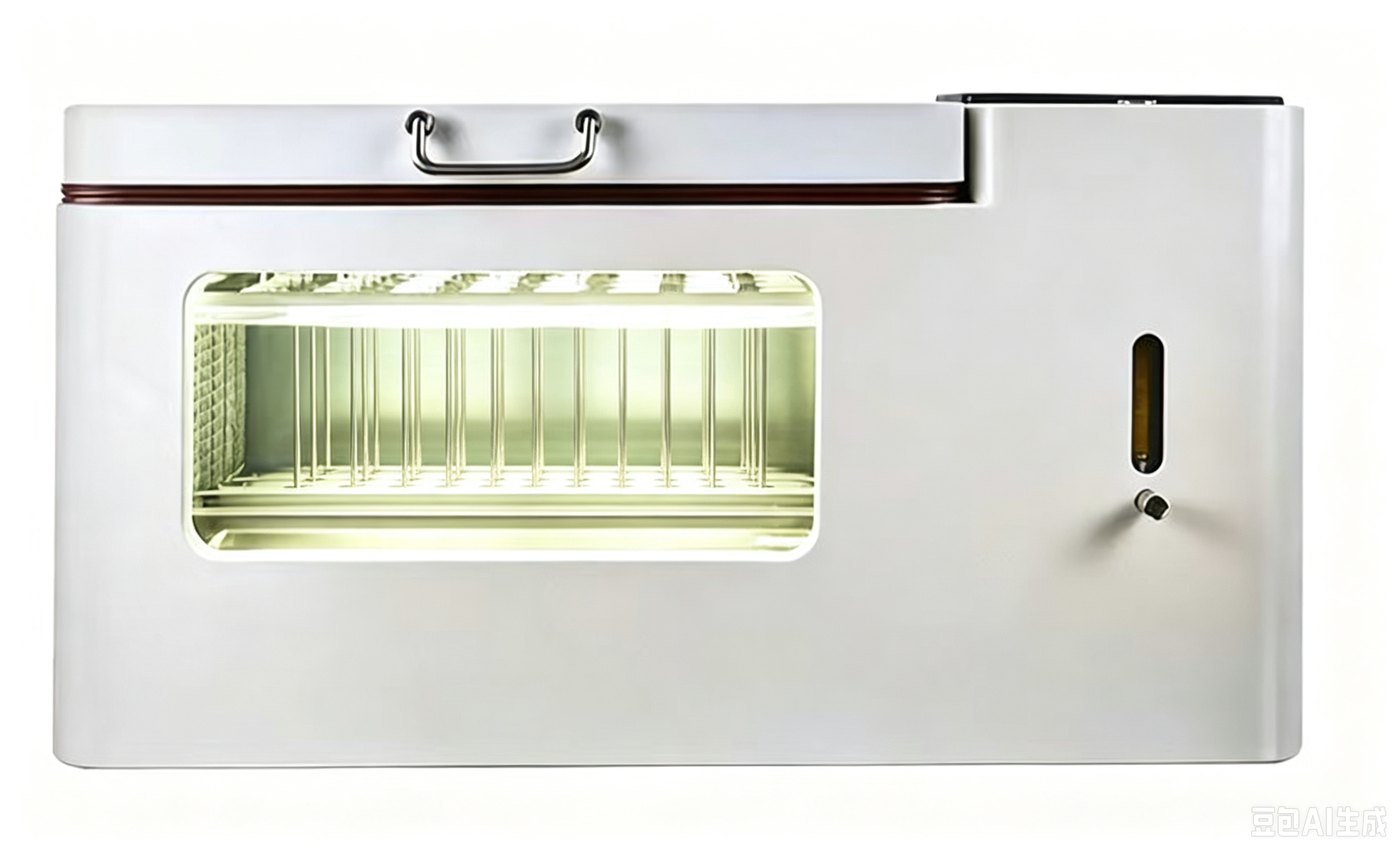
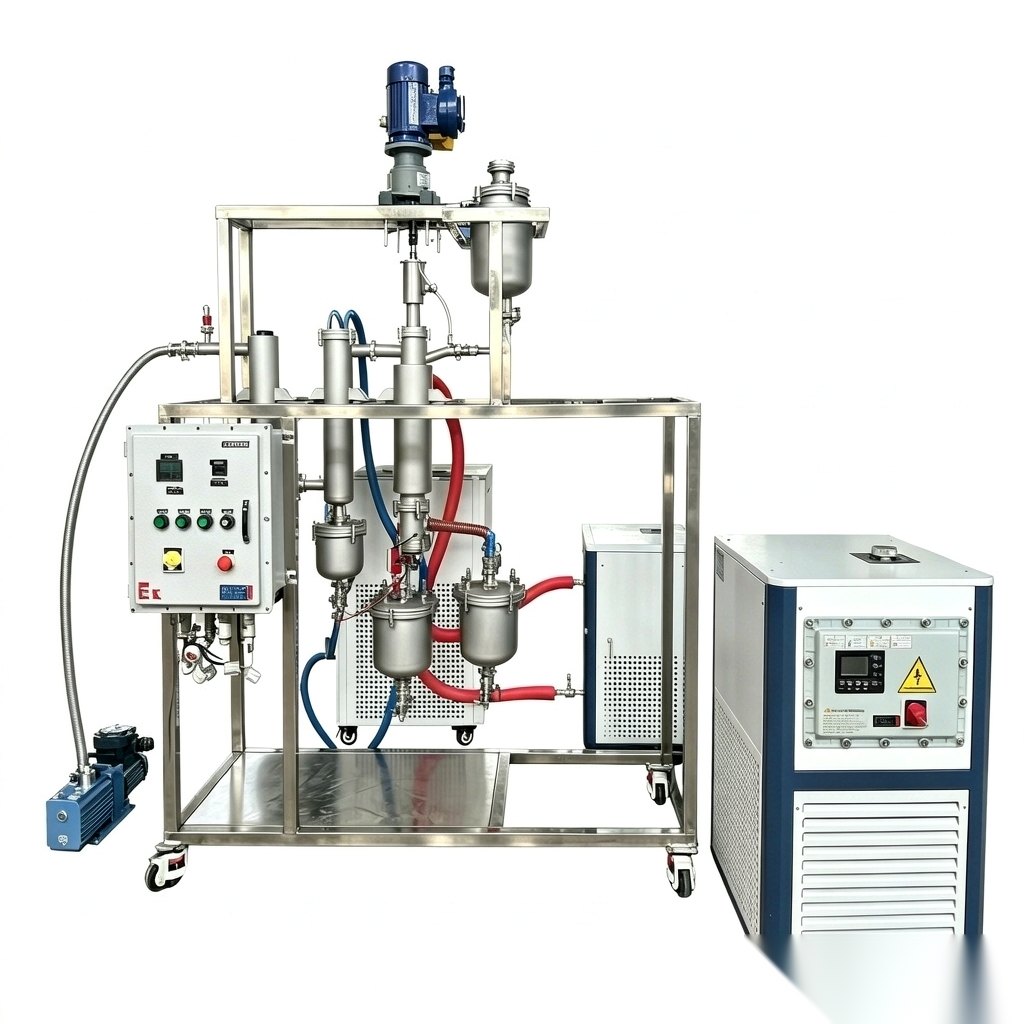
EQUIPMENT IN FOCUS 316L stainless-steel short-path molecular distillation systemWiped-film evaporator with internal short-path condenser, PTFE magnetic-coupling seals, multistage vacuum train, thermostatic heating circulation, dual automatic receivers.
1. Application Overview
In natural gas treating, coal chemical and power-plant desulfurization units, MDEA/MEA amine solutions circulate continuously as the workhorse absorbent for H2S/CO2 removal. Over long service loops the solvent accumulates heat-stable salts, tars, colloidal matter and organic degradation products. The result is well known to every plant operator: foaming in the absorber, declining acid-gas pickup, accelerated corrosion and rising hazardous-waste disposal costs.
Conventional regeneration routes struggle on this stream. Atmospheric or vacuum distillation requires temperatures above 160 °C — hot enough to crack heat-sensitive amines and lose more than 15% of the solvent per pass — while ion-exchange resin purification carries high consumable cost and poor tolerance to fouled feed.
ANVORE recently commissioned an 316L stainless-steel short-path molecular distillation system at an energy & chemical enterprise for pilot-scale continuous regeneration of spent MDEA amine solution. Low-temperature, high-vacuum physical separation recovered high-purity amine and drastically reduced residue volume — closing the loop for low-cost, in-plant solvent recycling.
2. Why Spent Amine Is a Hard Stream to Purify
The customer's coal-gas desulfurization plant faced four chronic problems with its lean-amine loop:
P1 · Continuous impurity enrichment —long circulation builds up heat-stable salts, heavy tar and degraded organics; the amine darkens and desulfurization absorption capacity drops by more than 30%.
P2 · Heavy losses in conventional regeneration —vacuum distillation above 160 °C decomposes heat-sensitive amines; single-pass recovery losses exceed 15%, demanding constant fresh-solvent make-up.
P3 · High environmental cost —spent amine is classified as hazardous waste; several tonnes per month are shipped out at premium disposal prices.
P4 · Corrosion and leakage risk —weakly alkaline, salt-laden amine attacks glass equipment; leaking seals release toxic vapors and complicate workshop safety management.
After benchmarking resin purification, conventional rectification and thin-film evaporation — none of which balanced recovery purity, amine loss and equipment corrosion resistance — the customer selected ANVORE stainless-steel molecular distillation for the pilot verification.
3. The ANVORE Solution: Stainless-Steel Molecular Distillation System
Configured specifically for corrosive, heat-sensitive, high-boiling amine duty, the delivered skid answers each pain point:
1. Corrosion-proof construction —evaporator, condenser, piping and receivers all in medical-grade 316L stainless steel with PTFE magnetic-coupling sealed wiper blades; resists amines and heat-stable salts, eliminates glass breakage and leakage, and meets plant explosion-proof requirements.
2. High vacuum, low temperature —multistage vacuum train reaching ≤0.1 Pa ultimate pressure slashes the vaporization temperature; the whole separation runs at 85–110 °C, far below the amine's atmospheric boiling point.
3. Dynamic wiped film —high-speed PTFE blades spread a ≤0.5 mm ultra-thin film for maximum heat/mass transfer; light amine vapors reach the internal condenser within the shortest path while heavy salts, tar and colloids concentrate in the residue stream — single-stage deep separation without multi-stage rectification.
4. Continuous automated operation —thermostatic circulating heating unit, precision metering feed pump and dual automatic receivers support 24 h unattended feed at 0.5–4 L/h; pilot data scales directly to industrial units and the modular skid interfaces with upstream pretreatment and downstream circulation lines.
5. Purely physical separation —no acid, alkali or extraction solvent is added; recovered amine needs no neutralization and, after fine filtration, returns directly to the absorber. Residue volume — and hazardous-waste cost — falls sharply.
4. Complete Regeneration Process Flow
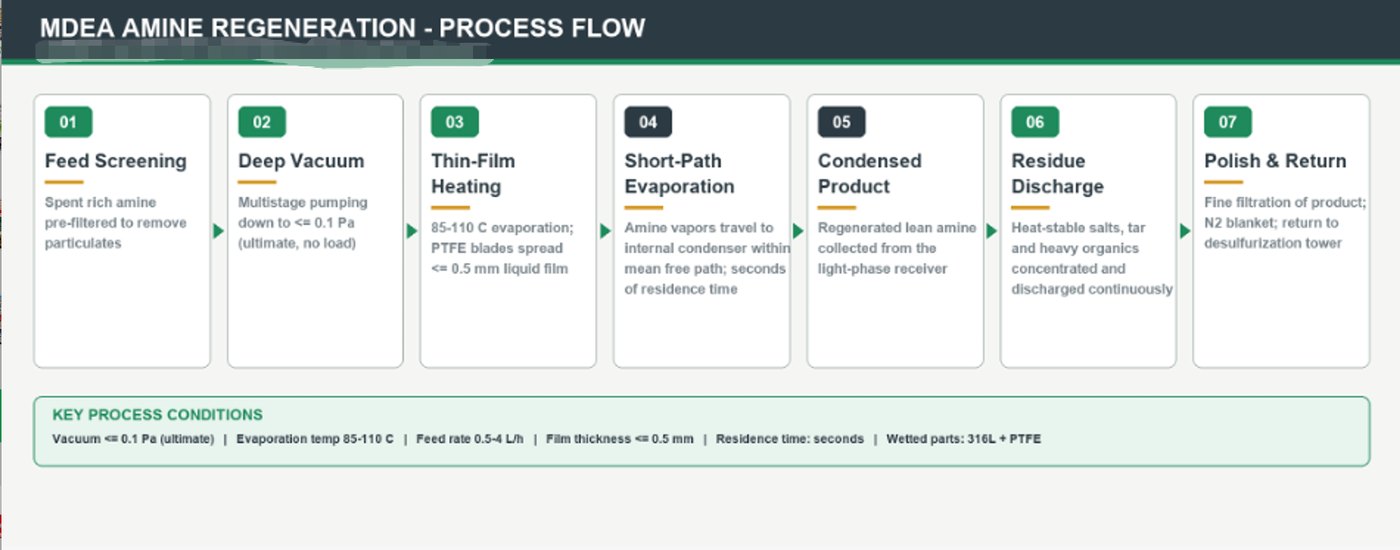
The pilot campaign ran as a fully continuous, closed-loop process. Each stage below maps to the flow diagram:
Step 1 · Feed ScreeningSpent rich amine is pre-filtered to remove particulates and free oil.
Step 2 · Deep VacuumThe multistage pumping train evacuates the still to ≤0.1 Pa (ultimate, no load).
Step 3 · Thin-Film HeatingThe jacketed evaporator holds 85–110 °C while PTFE wiper blades spread the feed into a ≤0.5 mm falling film.
Step 4 · Short-Path EvaporationAmine vapors traverse the mean-free-path distance to the built-in condenser within seconds of residence time, avoiding thermal degradation.
Step 5 · Condensed ProductRegenerated lean amine condenses on the internal surface and is collected in the light-phase receiver.
Step 6 · Residue DischargeHeat-stable salts, tar and heavy organics concentrate at the bottom and are discharged continuously from the residue port.
Step 7 · Polish & ReturnThe product is fine-filtered, kept under a nitrogen blanket and returned to the desulfurization tower.
5. Typical Operating Parameters
| Parameter | Typical range / description |
|---|---|
| Feed | Spent MDEA rich amine (heat-stable salts, tar, degradation products) |
| Evaporator | 316L stainless-steel short-path, wiped film |
| Ultimate pressure (no load) | ≤ 0.1 Pa |
| Operating evaporation temperature | 85–110 °C |
| Film thickness | ≤ 0.5 mm |
| Residence time | Seconds |
| Feed rate (pilot unit) | 0.5–4 L/h, continuous |
| Wetted materials | 316L stainless steel, PTFE |
| Receivers | Dual automatic light/heavy-phase collection |
6. Field Trial Results
The pilot trial ran continuously on the customer's spent MDEA stream with results beyond expectation:
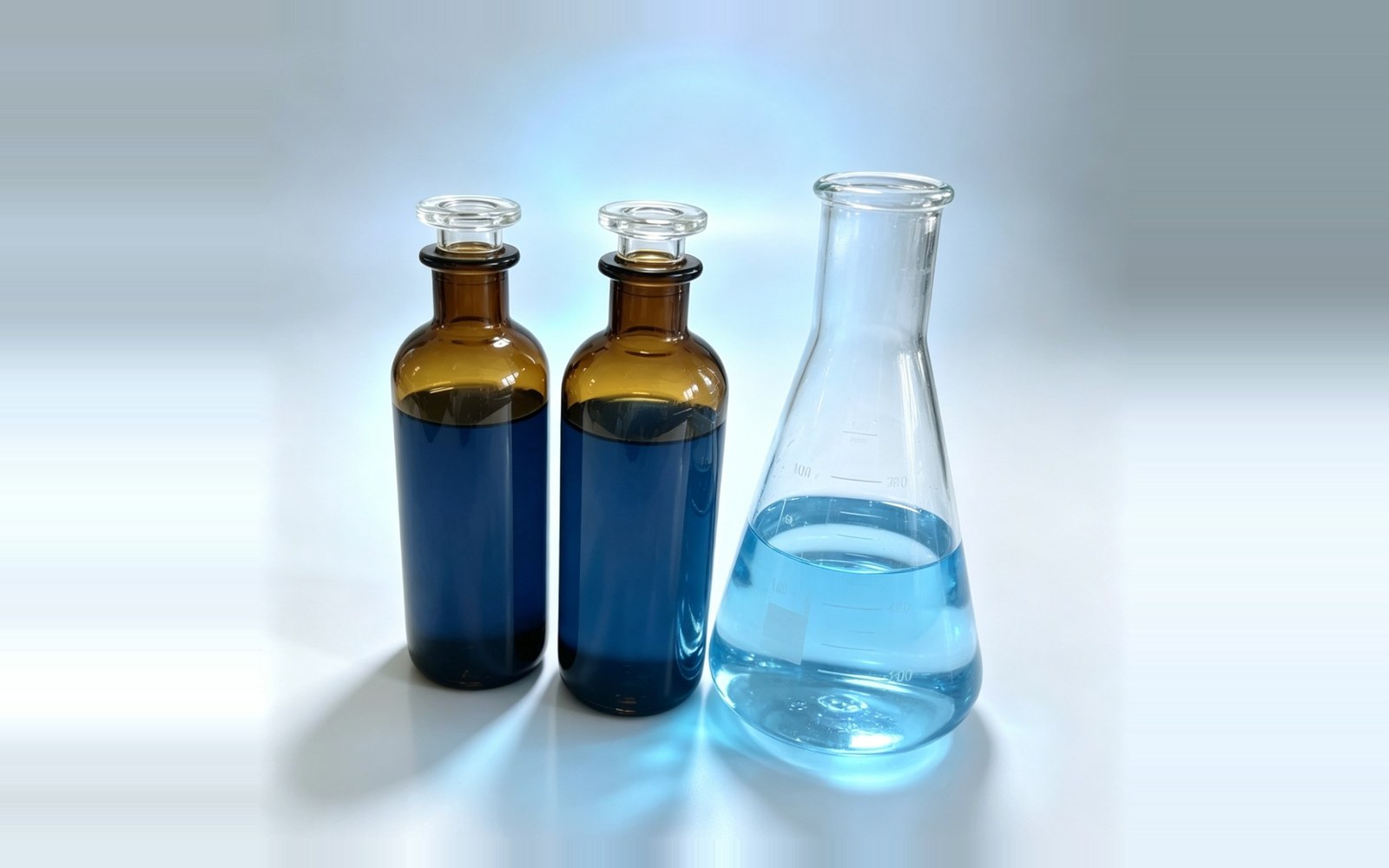
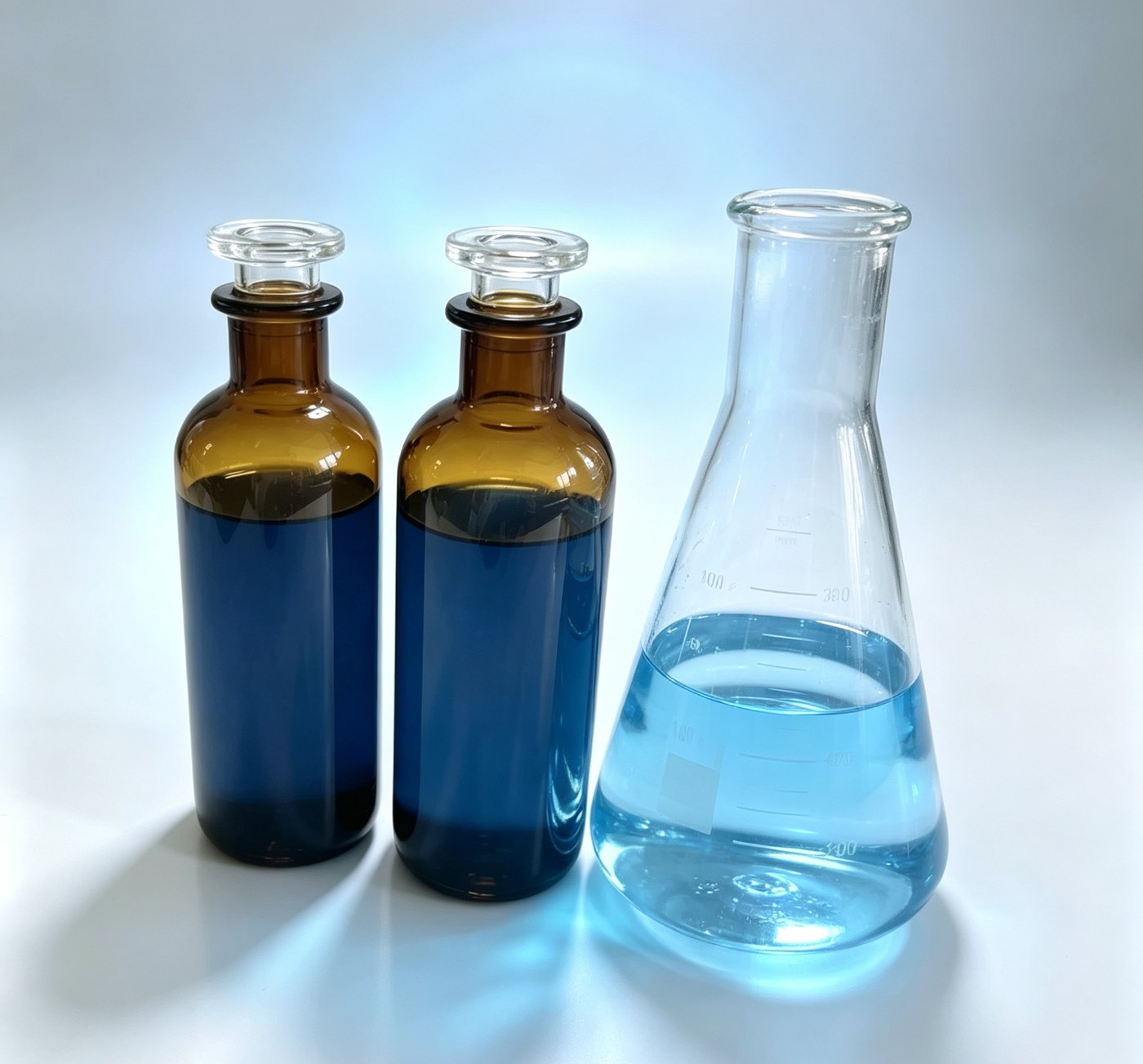
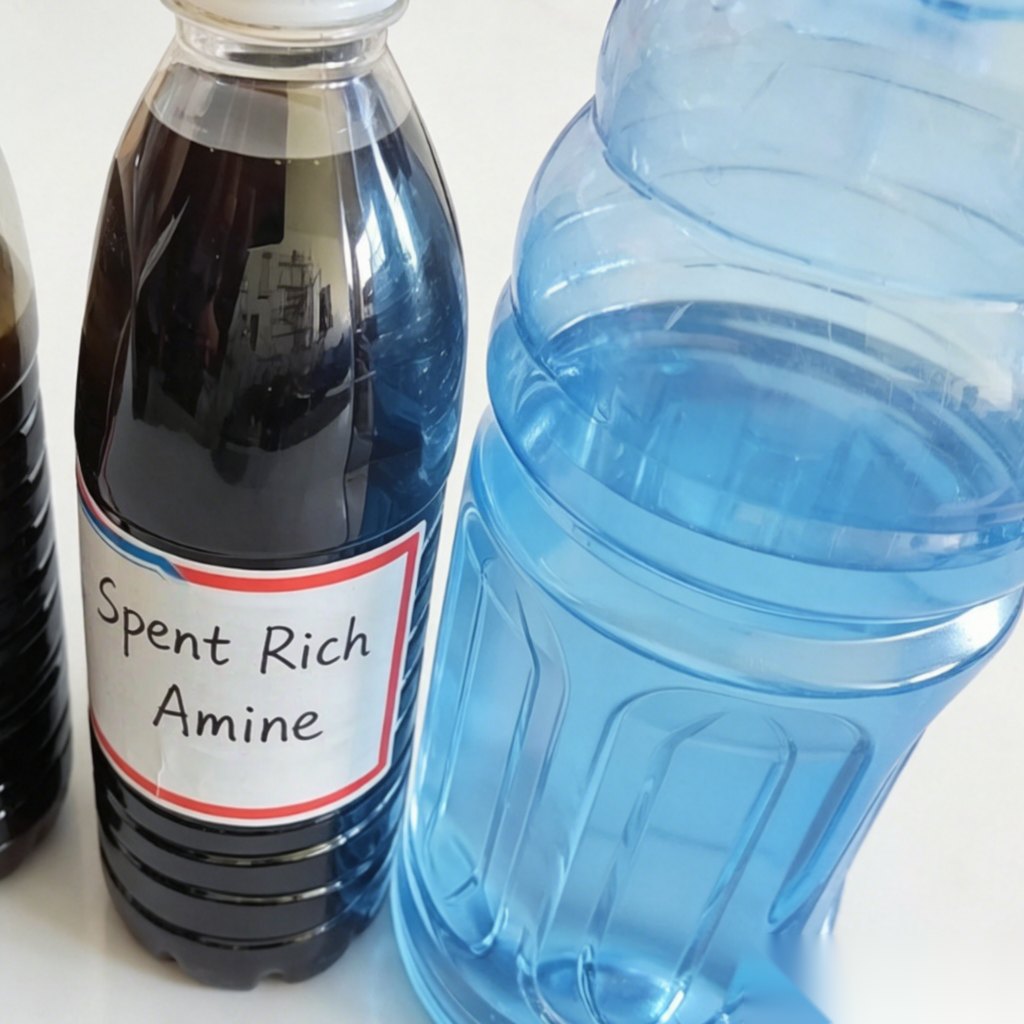
Amine quality restored —heat-stable salts, colloid and degradation impurities were removed; the regenerated amine ran clear and bright, with specifications back to fresh-solvent standard and full recovery of desulfurization absorption performance.
Feedstock loss controlled —thermal decomposition of the heat-sensitive amine was eliminated; solvent make-up frequency dropped markedly versus the conventional high-temperature route.
Hazardous-waste burden reduced —residue volume after purification fell sharply, cutting outsourced disposal frequency and cost.
Stable, reliable operation —the all-stainless corrosion-resistant train showed no corrosion or leakage in long salt-laden alkaline service; the vacuum system ran steady and the wiper blades resisted fouling and coking, matching continuous chemical-plant duty.
7. Beyond Amine Regeneration
The same stainless-steel molecular distillation platform extends to many corrosive and heat-sensitive separations:
- Petrochemical solvent recovery and refining of high-boiling organic intermediates.Pharmaceutical purification of heat-sensitive actives and separation of natural functional ingredients.Resource recovery of industrial waste liquids and de-ashing of high-viscosity corrosive streams.Deacidification of animal and vegetable oils, biodiesel polishing, and fine fractionation of flavors and fragrances.
8. Conclusion & One-Stop Scale-Up
For desulfurization plants, amine regeneration is not a distillation problem — it is a materials, vacuum and film-hydrodynamics problem solved simultaneously. The 316L short-path molecular distillation system delivers all three: corrosion-proof construction, ≤0.1 Pa deep vacuum with 85–110 °C low-temperature separation, and a wiped ultra-thin film that recovers amine at fresh-solvent quality while cutting hazardous waste at the source.
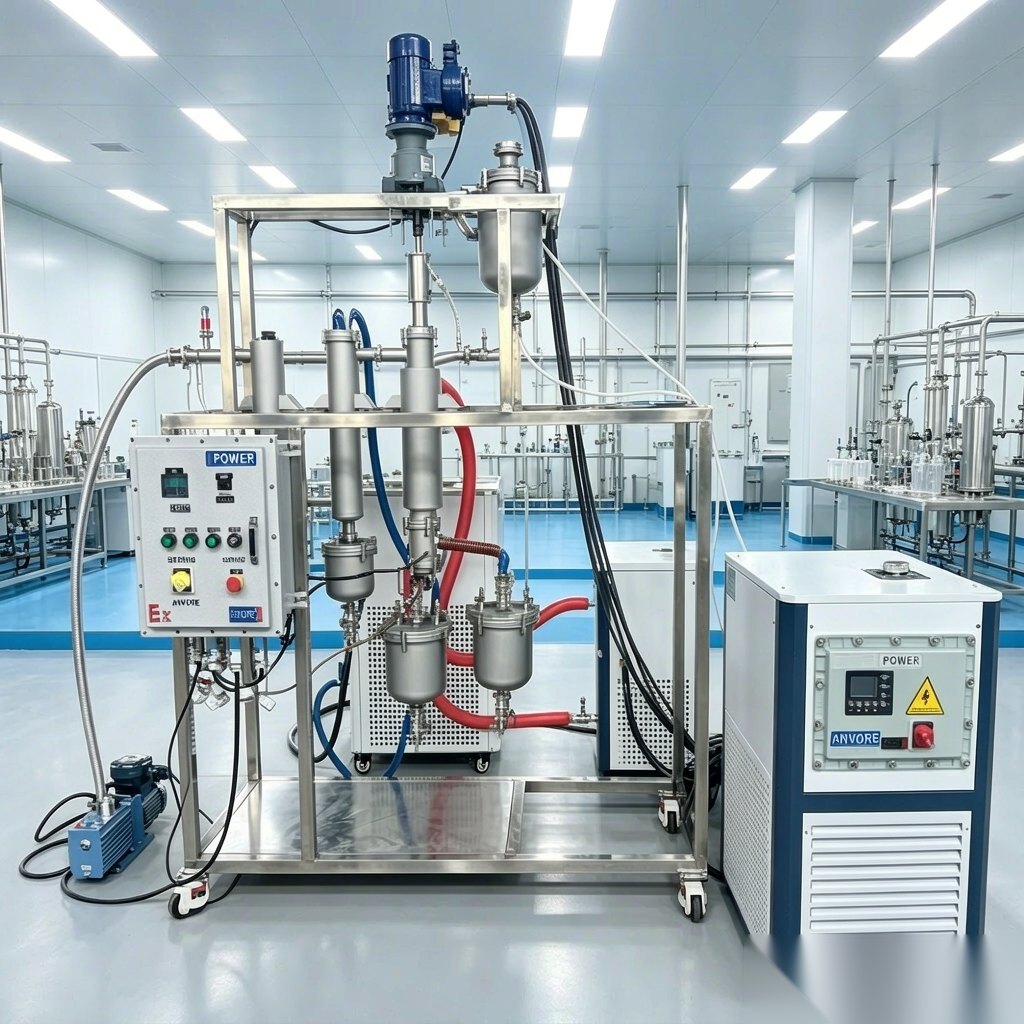
ANVORE supports every step from bench trial to plant: material testing in our lab, custom process design, on-site installation and commissioning, operator training, and direct scale-up of pilot data to industrial stainless-steel units. The stainless-steel molecular distillation series is in stock and available for on-site testing.
Facing spent-amine regeneration, corrosive-material purification or heat-sensitive solvent recovery? Contact ANVORE for free material testing, tailored process design and one-to-one equipment selection.