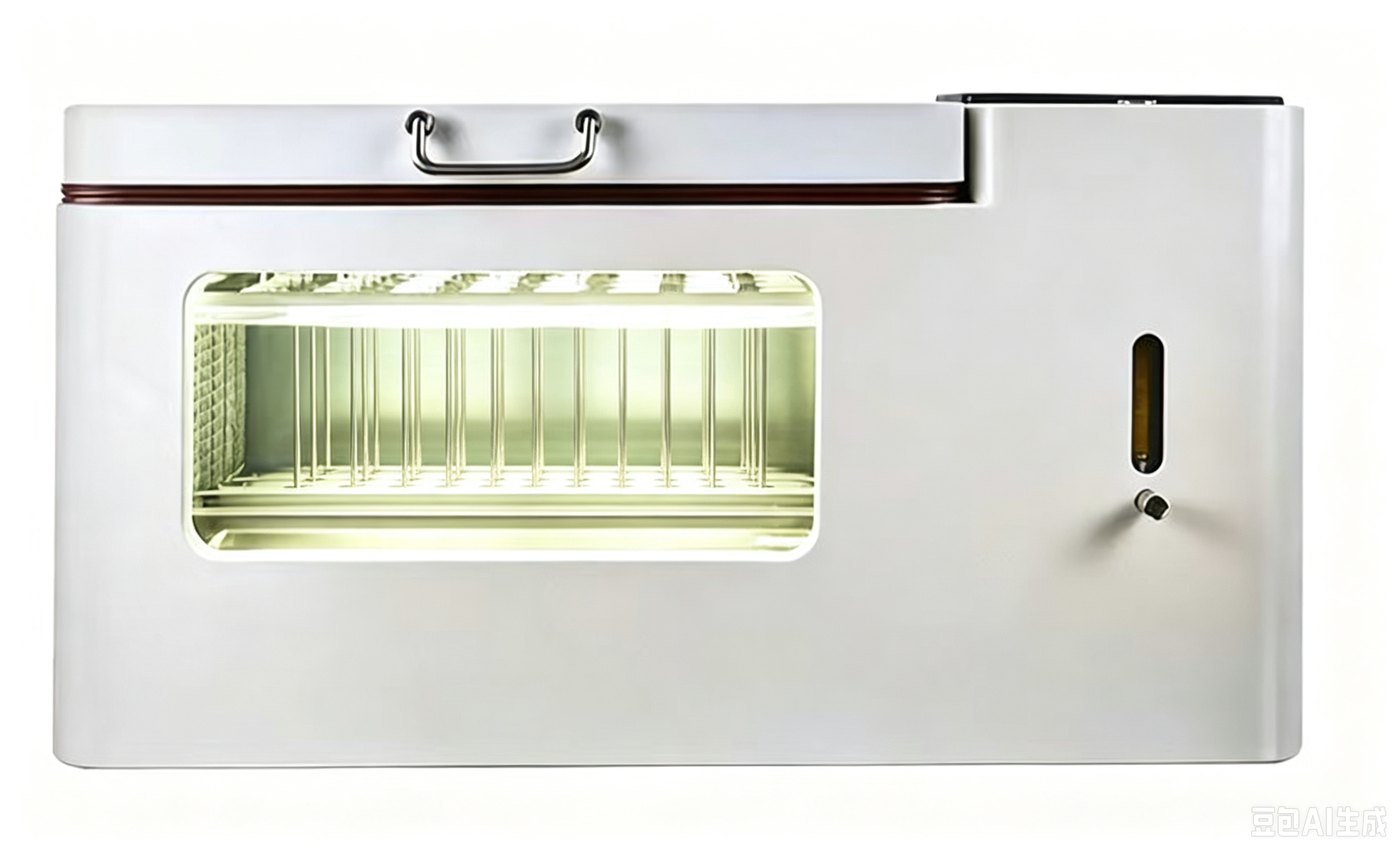
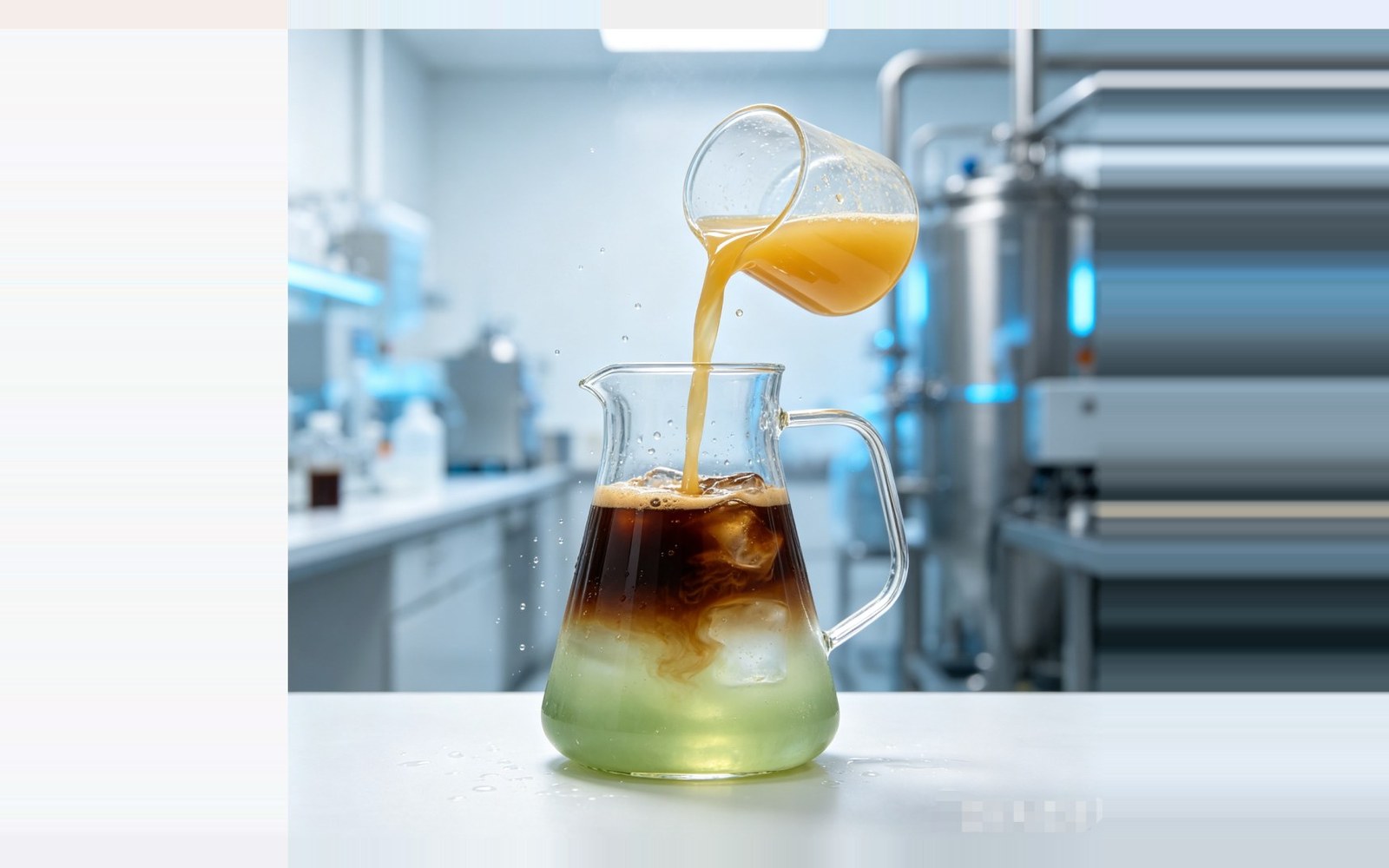
Closed vacuum evaporation, aroma recovery and nitrogen protection for juice, tea, coffee and botanical concentrates
FEED → AROMA → CONCENTRATE → POLISH → STORE
Water removal is product design: too hot, too long or too oxygen-rich, and a bright juice comes back as a flat brown liquid. ANVORE assembles thin-film evaporation, rectification aroma recovery and on-site nitrogen into one closed, low-oxygen line.
1.Application overview
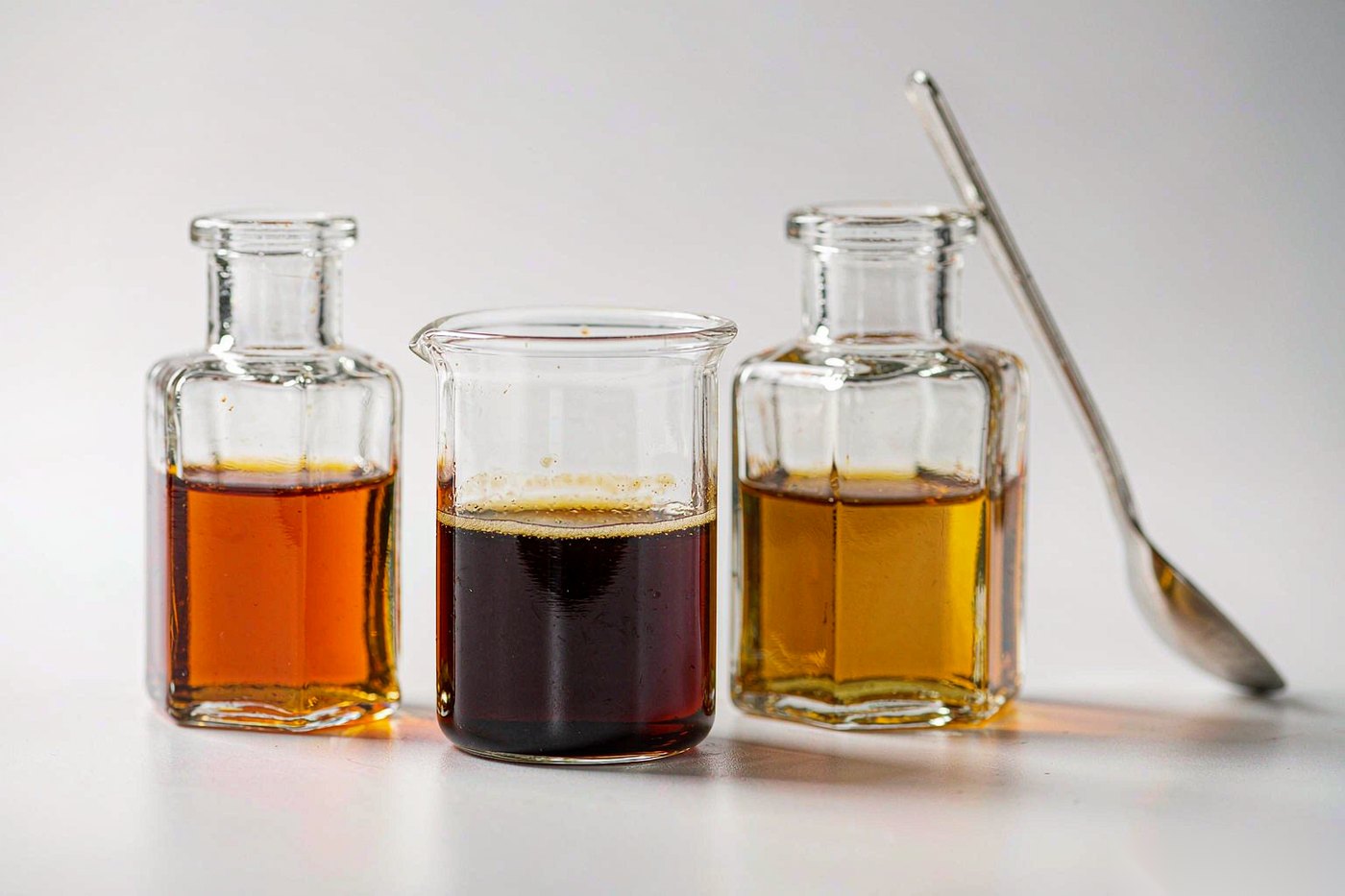
Beverage ingredients — fruit juice concentrates, tea and coffee extracts, botanical infusions, syrups and flavour bases — are produced by removing water while preserving the volatile top-notes, colour and nutritional compounds that define the finished drink. Concentration is therefore a gentle-separation problem, not a boiling problem.
Three failures dominate poorly designed lines: thermal damage from long residence at high temperature, aroma stripping when volatiles leave with the vapour and are never recovered, and oxidative browning driven by air ingress during evaporation, storage and packing. ANVORE addresses each with a dedicated platform, operated together as one closed system.
2. The line-up
| PLATFORM | ROLE IN THE LINE | TYPICAL CONDITIONS |
|---|---|---|
| Thin-film evaporator | Concentration workhorse — single-pass vacuum evaporation; wiped surface handles the high-viscosity late stage where conventional calandrias stall | 1–50 mbar · 40–80 °C · 1–5 s residence |
| Rectification column | Aroma recovery before concentration; also dealcoholization, debittering and acid stripping of juice and tea bases | Vacuum · kettle 30–80 °C · reflux 1:1–5:1 |
| Nitrogen generator | On-site PSA or membrane N2 for sparging, blanketing, closed transfer and MAP packing — no cylinders, no logistics | 99.5–99.9% purity · dew point −40…−60 °C |
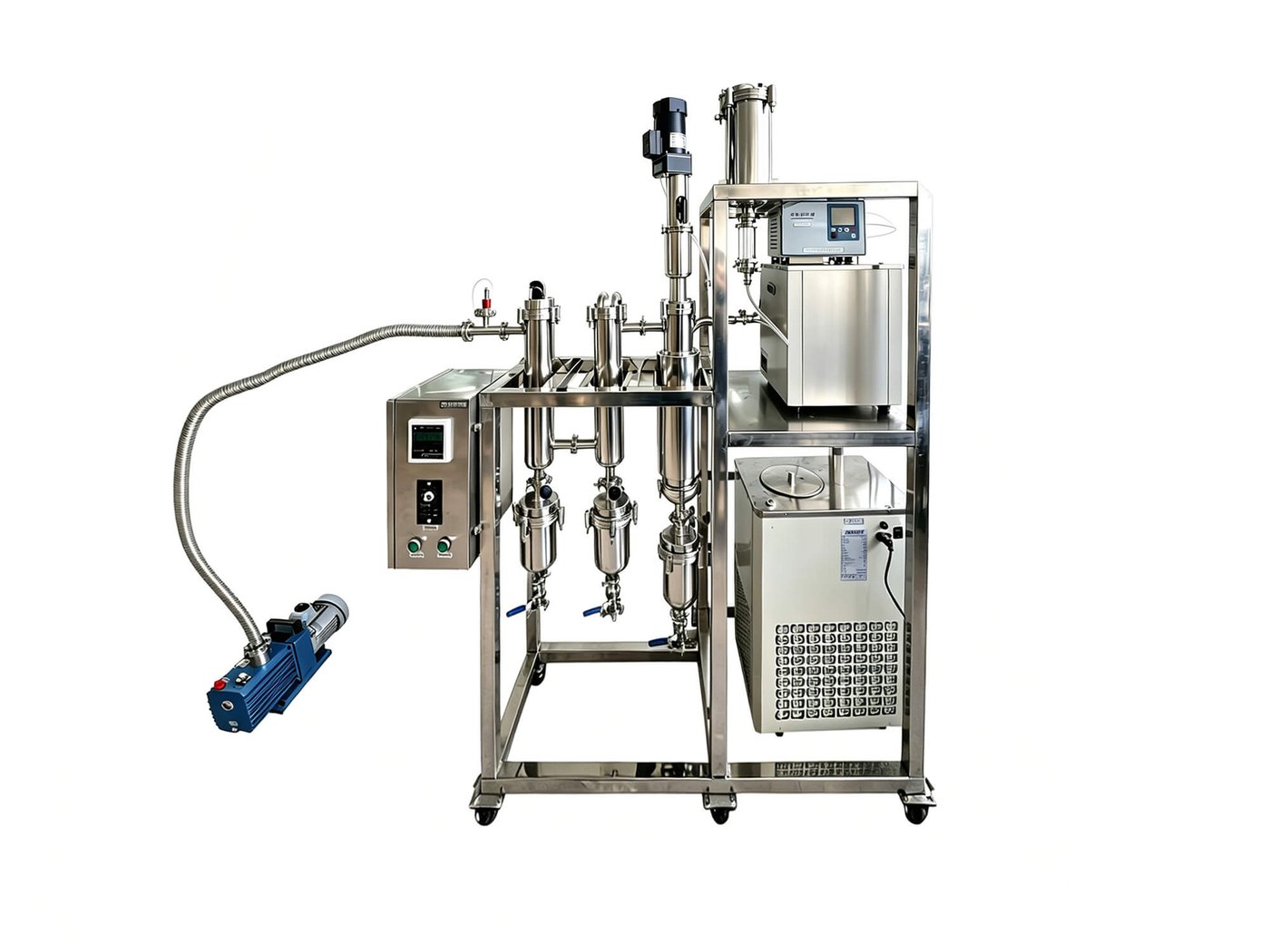
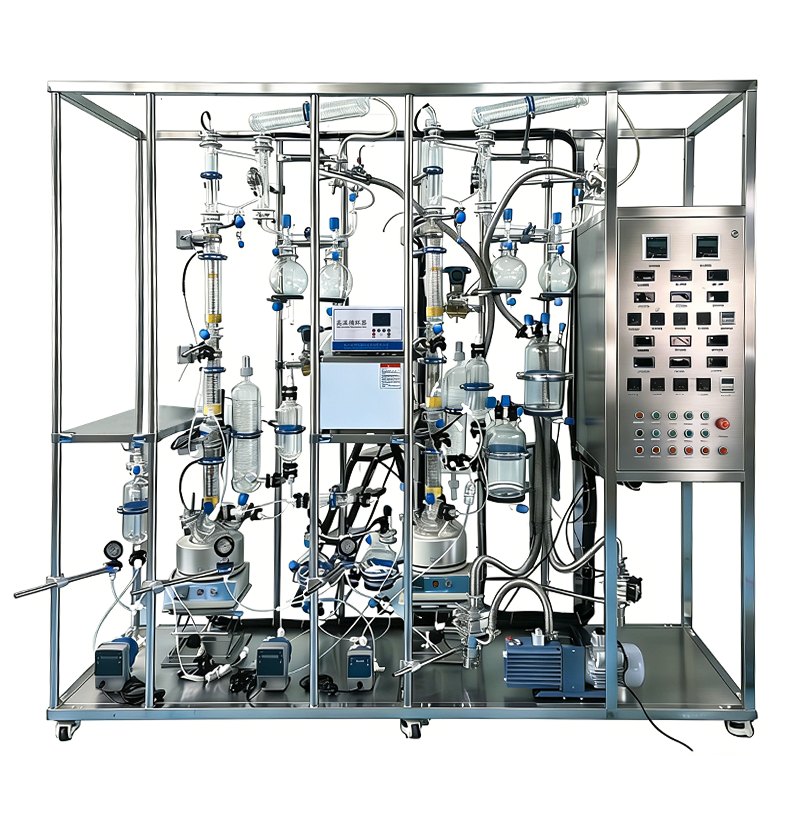
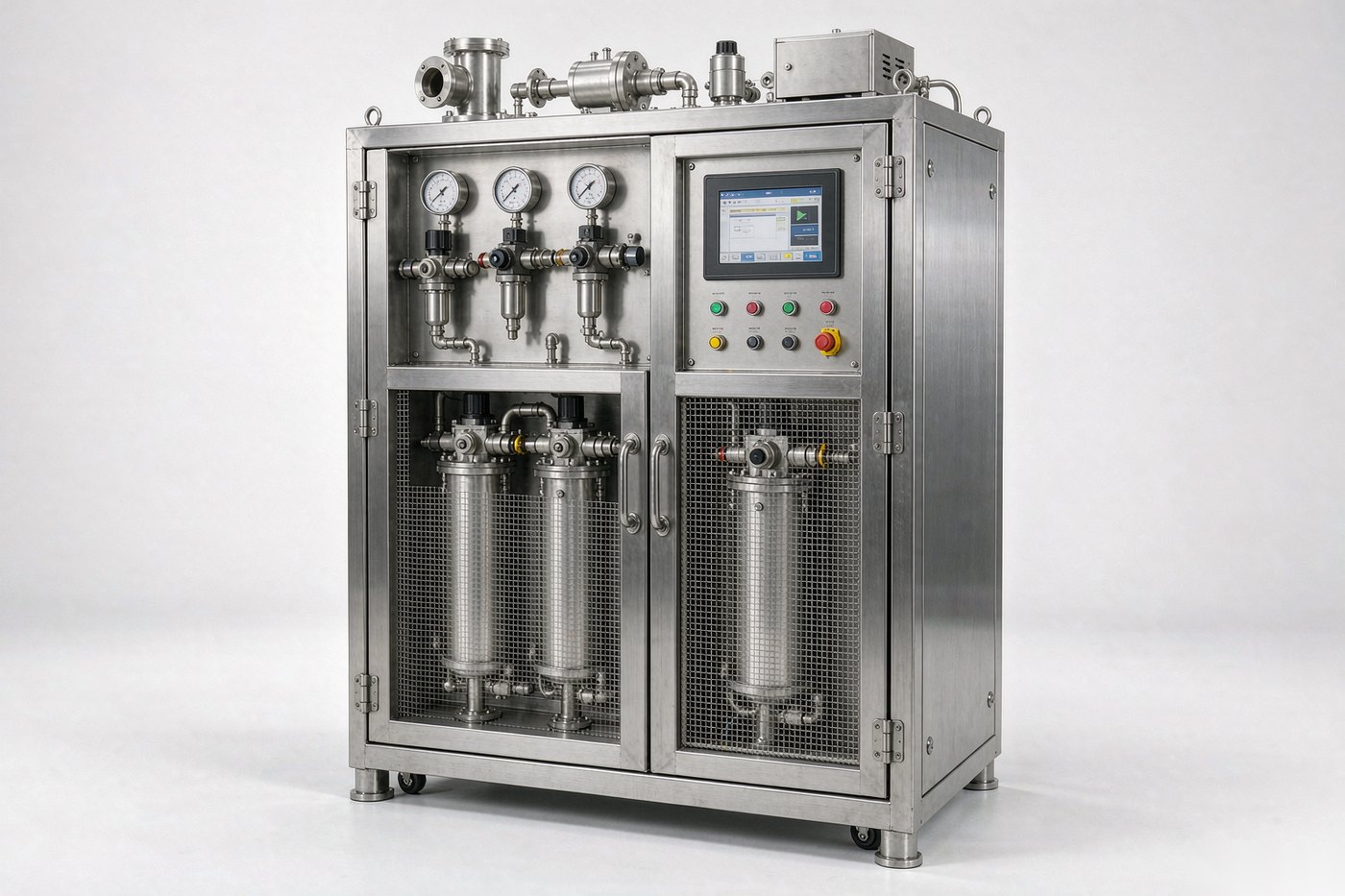
3. Process flow
The line runs as five stages on a single ladder; nitrogen enters at stages 1, 3 and 5 from the on-site generator.
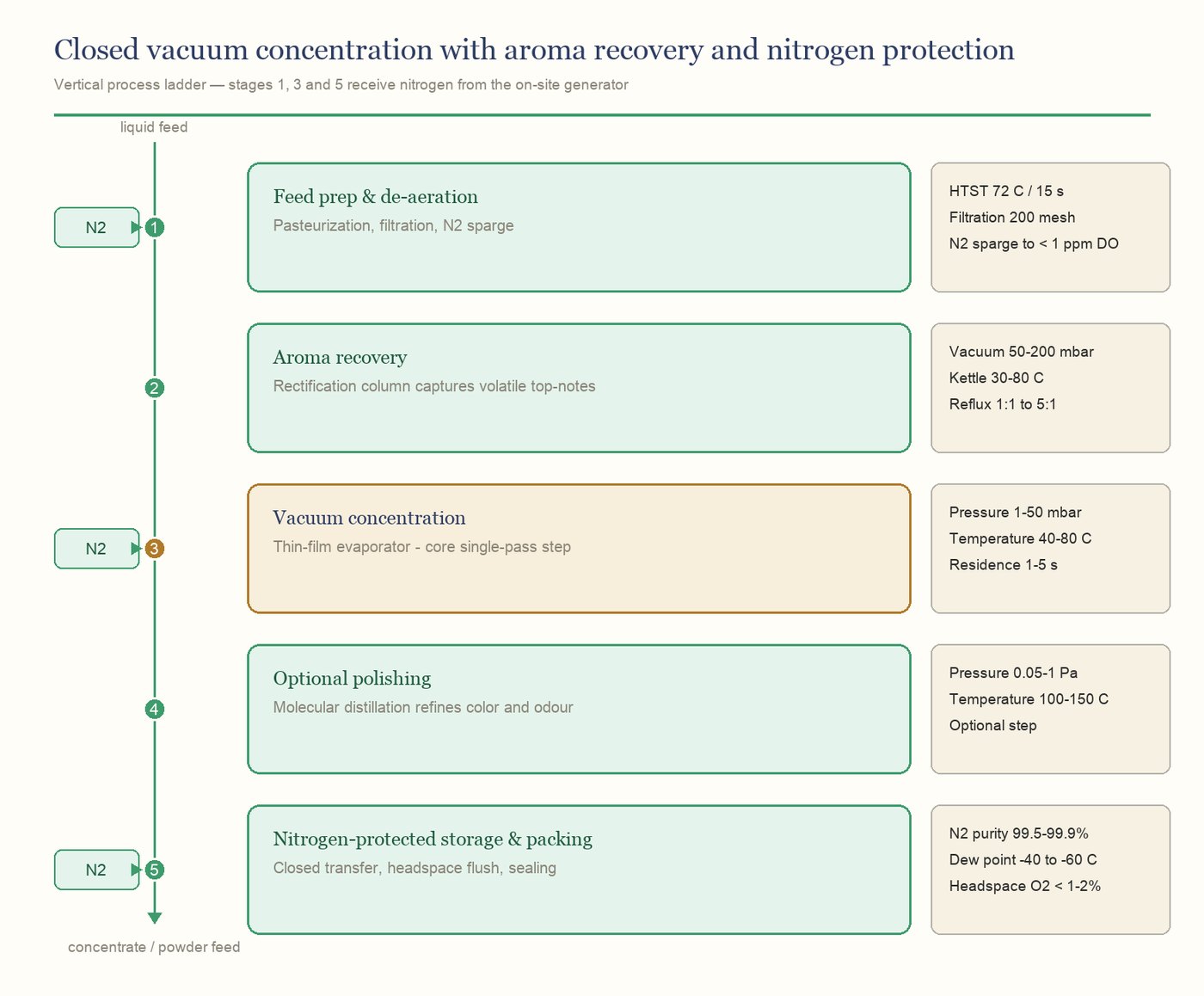
3.1. Feed prep & de-aeration —HTST pasteurization where required, fine filtration, then nitrogen sparging to strip dissolved oxygen before any heat is applied.
3.2. Aroma recovery —The rectification column captures volatile top-notes as a separate essence fraction; the stripped feed continues to concentration without losing its fragrance.
3.3. Vacuum concentration —The thin-film evaporator removes water in a single pass at 40–80 °C under deep vacuum — seconds of residence, no thermal lag, high brix in one stage.
3.4. Optional polishing —Where colour, odour or residual solvents need refinement, a short-path molecular distillation pass gently polishes the concentrate.
3.5. Nitrogen-protected storage & packing —Concentrate moves through closed, blanketed pipework into tanks held under N2; packages are flushed so residual headspace oxygen stays below 1–2%.
Parameters & closing
| PARAMETER | TYPICAL RANGE |
|---|---|
| Evaporation pressure | 1–50 mbar (thin-film stage) |
| Product-side temperature | 40–80 °C, seconds of residence |
| Aroma recovery | essence fraction collected at reflux 1:1–5:1 |
| Nitrogen purity / dew point | 99.5–99.9% N2 / −40…−60 °C after drying |
| Storage headspace oxygen | < 2% O2 under continuous blanket |
| Packaged residual oxygen | < 1–2%, verified per batch |
Configurations scale from glass and bench-top units for recipe development to full stainless production trains, and the same platforms extend naturally into powder production when a spray dryer is added downstream. ANVORE provides product trials, sizing and layout engineering, commissioning, operator training and long-term service support.