PSA and Membrane Systems Supplying Modified Atmosphere Packaging Lines
| 99.5–99.9% | O₂ < 2% | 24 / 7 |
|---|---|---|
| NITROGEN PURITY ON DEMAND | RESIDUAL OXYGEN IN PACKAGE | GENERATED ON SITE, NO CYLINDERS |
1 WHY PACKAGING NEEDS ON-SITE NITROGENThe quality case for modified atmosphere packaging
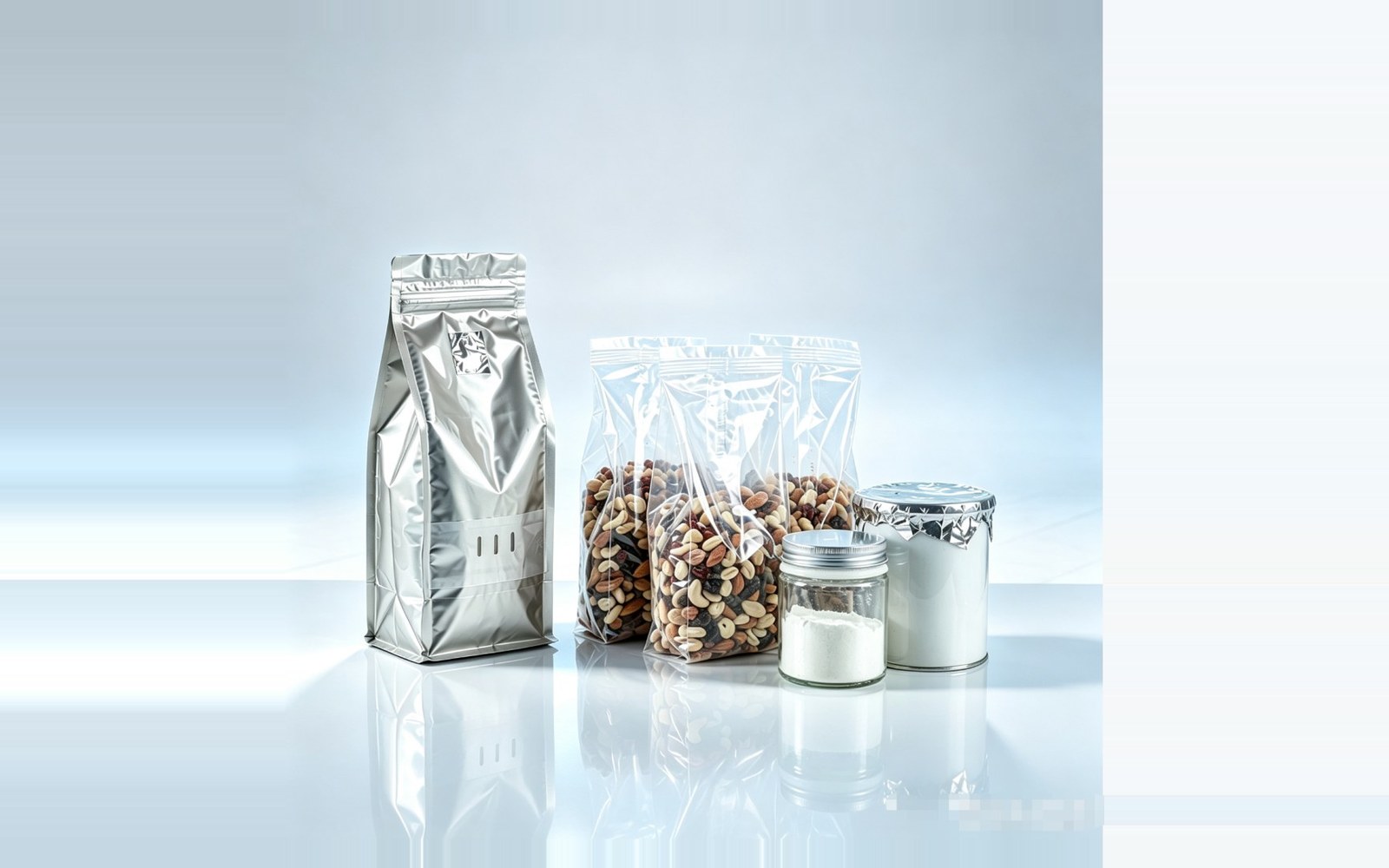
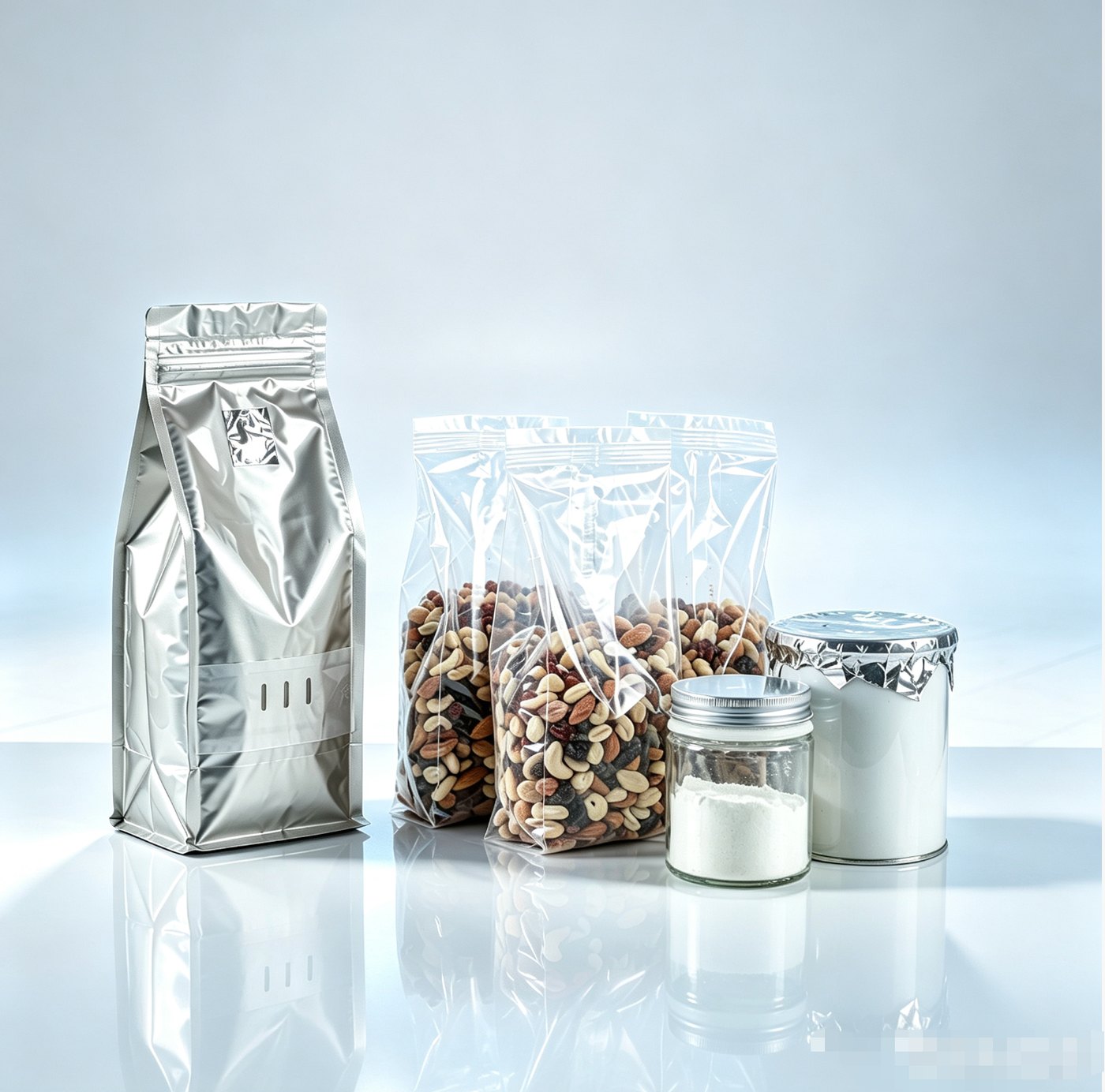
Oxygen is the enemy of packaged food: it turns roasted coffee rancid, oxidises the fats in nuts and snacks, discolours dairy powders and shortens every "best before" date on the shelf. Modified atmosphere packaging (MAP) solves this by replacing the air inside a package with high-purity nitrogen before sealing — an invisible, tasteless and completely food-safe gas that simply pushes oxygen out and keeps it out.
The economics, however, depend on how the nitrogen is supplied. Cylinder and liquid bulk supply tie a packaging line to deliveries, rental contracts, evaporation losses and price volatility. An on-site generator produces nitrogen from ambient air, at the purity the line actually needs, exactly when the line needs it — typically cutting gas cost per pack by more than half while removing supply interruptions from the risk list.
2 THE GENERATION PLATFORMTwo proven technologies, one supply philosophy
| PSA NITROGEN GENERATOR | MEMBRANE NITROGEN GENERATOR | |
|---|---|---|
| Working principle | Carbon molecular sieve adsorbs oxygen under pressure; twin towers alternate automatically | Selective permeation of oxygen through hollow-fibre bundles at pressure |
| Typical purity | 99–99.999%, best for high-purity MAP | 95–99.5%, best for flushing and blanketing duties |
| Purity control | Purity rises with cycle time; PLC adjusts automatically to demand | Purity set by simply adjusting the product valve |
| Best suited for | Coffee, milk powder, infant formula and other oxygen-critical packs | Snack flushing, canister purging and general inerting at scale |
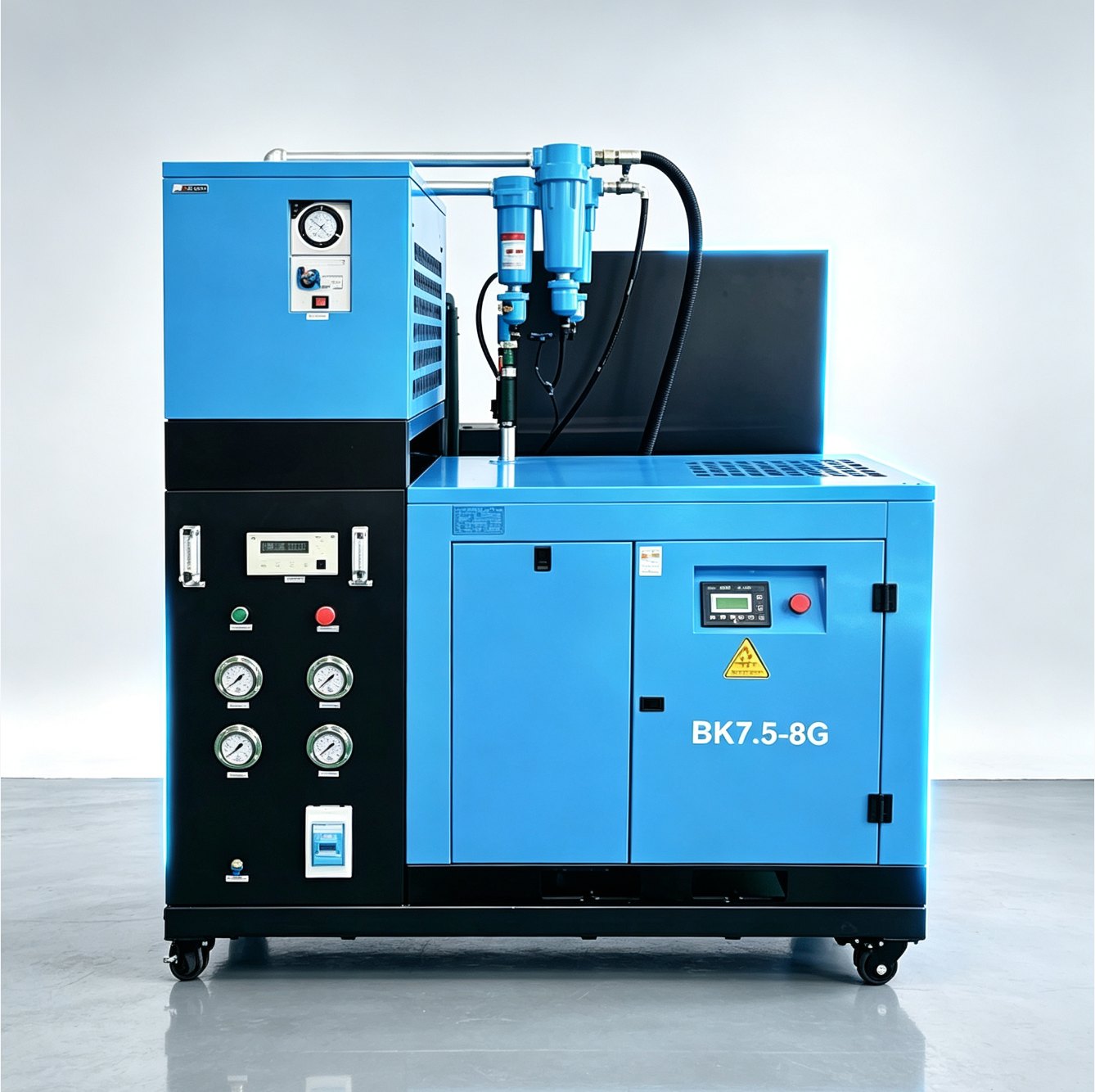
Both technologies share the same front end — oil-free compressed air, coalescing filtration and refrigerant drying — and the same back end: a buffer receiver, an in-line oxygen analyser and a distribution manifold feeding the packaging line. ANVORE engineers the complete train as one system, so purity, pressure and dew point are guaranteed at the filling head, not just at the generator outlet.
3 PROCESS FLOWFrom ambient air to a sealed, oxygen-free package
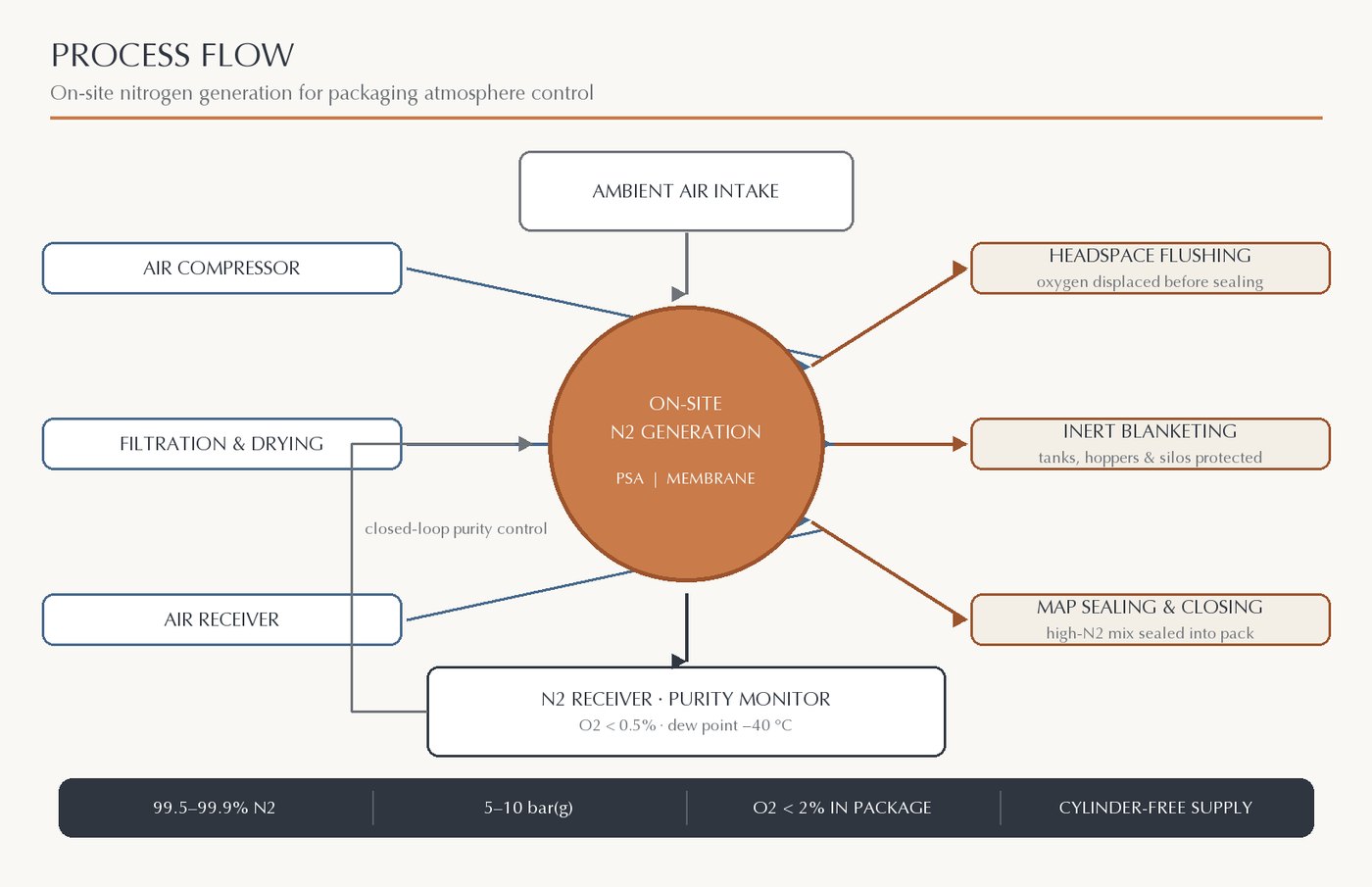
- Headspace flushing.A nitrogen lance or filling-bowl purge displaces air from the package immediately before the sealing jaw — the classic duty for snack pouches and coffee bags.
- Inert blanketing.Storage tanks, powder hoppers and silos above the line are held under a gentle nitrogen blanket so product never meets oxygen between process and pack.
- MAP sealing and closing.Vacuum-and-gas chambers draw a deep vacuum, backfill with nitrogen (or an N₂/CO₂ mix) and seal in one motion, locking residual oxygen below 2%.
Because every duty draws from the same buffer, the generator tracks the packaging line in real time: the oxygen analyser trims purity, the receiver absorbs peaks and the closed-loop control guarantees the gas at the sealing jaw never drifts.
4 KEY PARAMETERS AND BENEFITSWhat a well-engineered nitrogen system delivers
| PARAMETER | TYPICAL PACKAGING DUTY |
|---|---|
| Nitrogen purity | 99.5–99.9% (PSA) / 95–99.5% (membrane), set per product |
| Delivery pressure | 5–10 bar(g), matched to the sealing equipment |
| Dew point | −40 °C or better after drying, protecting powder flow |
| Residual oxygen | < 2% in package headspace; < 1% for coffee and infant formula |
| Supply mode | Fully automatic on-site generation, 24/7, no cylinders |
- Lower cost per pack.Generating nitrogen on site typically costs a fraction of cylinder or bulk liquid supply, and the saving compounds with every shift.
- Uninterrupted supply.No deliveries to schedule, no changeover gaps, no evaporation losses — the line never waits for gas.
- Safer and cleaner.No high-pressure cylinder handling in production areas; dew-point-controlled, oil-free gas protects both product and packaging machines.
ANVORE sizes every system from the packaging line backwards — peak consumption, duty profile and target shelf life — then supports it with commissioning, oxygen-analyser calibration and remote monitoring. From a single snack line to a multi-line coffee plant, on-site nitrogen turns atmosphere control from a purchased utility into an owned capability.