1. Executive Summary
P-Chlorobenzaldehyde is a high-value aromatic aldehyde intermediate used in pharmaceuticals, agrochemicals, and dyes. Because it is strongly heat-sensitive and prone to oxidation, polymerization, and discoloration at elevated temperatures, conventional vacuum rectification struggles to deliver pharmaceutical-grade purity with acceptable yield. ANVORE short-path wiped-film molecular distillation solves this problem by separating on the basis of mean free-path differences rather than boiling-point differences, keeping the product at low temperature for only a few seconds.
2. Feed Properties and Separation Challenge
- Product: p-chlorobenzaldehyde (4-chlorobenzaldehyde)Appearance: light-yellow to amber liquid or crystalline solid at room temperatureNormal boiling point: ~213–214 °CThermal sensitivity: aldehyde group oxidizes to acid; polymerization/condensation under prolonged heatingTypical impurities: residual toluene, chlorinated by-products, benzoic acid derivatives, polymeric resinTarget: remove low-boiling solvents and high-boiling resin/chlorinated impurities while preserving the aldehyde group and color
3. Process Principle
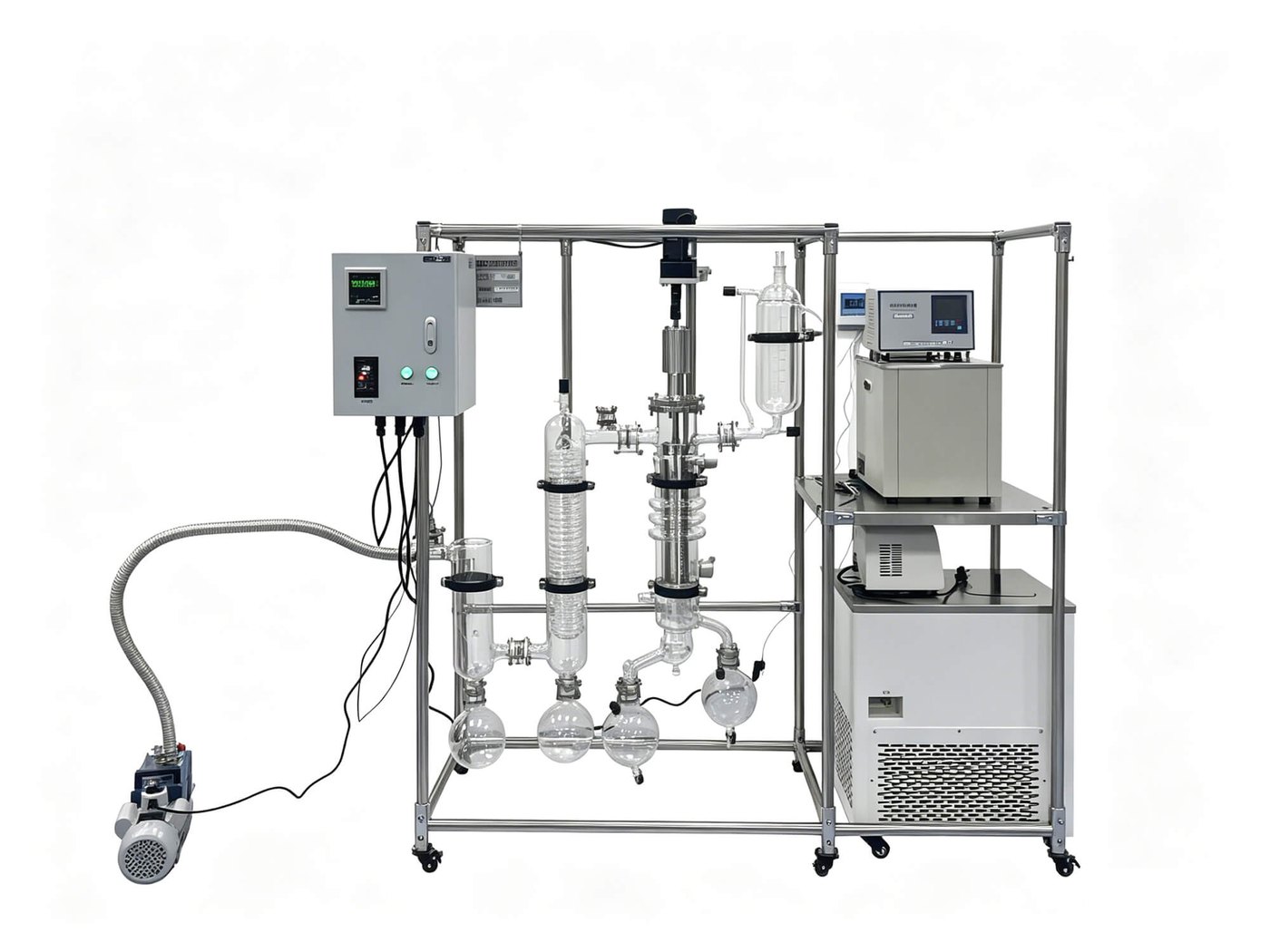
In an ANVORE short-path molecular distillation unit, the feed is spread into a micrometer-thin liquid film by a high-speed PTFE wiper on the heated evaporator wall. Under high vacuum (0.1–100 Pa), the mean free path of the lighter p-chlorobenzaldehyde molecules is longer than the distance to the internal condenser, so they fly directly to the cold surface and are collected. Heavier resin and chlorinated impurities have shorter mean free paths and fall back to the residue path. There is no boiling or bubble formation, so thermal exposure is limited to a few seconds.
4. Complete Purification Process Flow
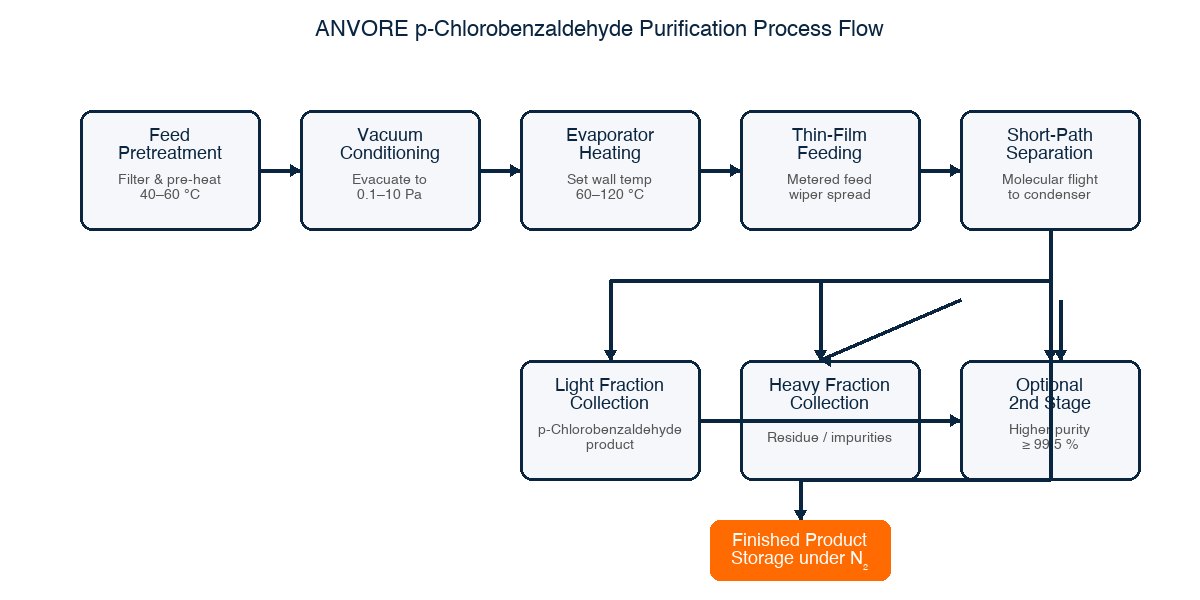
The following flowchart summarizes the main process stages. Detailed operating steps for each stage are given below.
4.1 Feed Pretreatment
Crude p-chlorobenzaldehyde is first filtered to remove solid residues and mechanically suspended matter. If the crude is partially crystalline or highly viscous, it is gently pre-heated to 40–60 °C to lower viscosity and ensure homogeneous flow. Pre-heating is kept below the onset temperature for oxidation.
4.2 Vacuum Conditioning
The vacuum system (diffusion pump plus mechanical backing pump, or a dry screw pump set) is started before heating. The entire distillation path is evacuated to the target pressure, typically 0.1–10 Pa. A leak-free, fully closed path is essential because aldehydes oxidize rapidly on contact with air.
4.3 Evaporator Temperature Setting
The evaporator wall is heated to the separation temperature. For p-chlorobenzaldehyde this is normally 60–120 °C, far below the atmospheric boiling point. The low operating temperature is possible because the absolute pressure is in the pascal range. The internal condenser is held at 20–40 °C by a circulating chiller.
4.4 Continuous Feeding and Film Formation
The pretreated feed is metered into the evaporator at a controlled flow rate by a peristaltic or gear pump. The PTFE wiper rotates at 100–400 rpm, spreading the feed into a thin, uniform liquid film (0.1–1 mm). Uniform wiping prevents hot spots and ensures all material passes through the evaporation zone quickly.
4.5 Separation Inside the Evaporator
Inside the high-vacuum gap between the heated wall and the internal condenser, p-chlorobenzaldehyde molecules (and residual low-boiling solvent) evaporate and travel to the condenser surface, where they condense into the light-fraction collector. Chlorinated resin, high-boiling oligomers, and non-volatile solids remain in the liquid film and are wiped downward into the heavy-fraction residue receiver.
4.6 Optional Secondary Distillation
For pharmaceutical-grade specifications, the light fraction from the first pass is fed into a second ANVORE stage operating at slightly lower pressure and optimized temperature. This second pass removes trace chlorinated impurities and raises the final purity above 99%.
4.7 Product Collection and Storage
The purified p-chlorobenzaldehyde light fraction is collected under vacuum into a cooled receiver. The receiver is blanketed with nitrogen before breaking vacuum, minimizing oxidation and color development. The final product is transferred to storage containers under inert atmosphere.
5. Typical Operating Parameters
| Parameter | Typical value |
|---|---|
| Feed | Crude p-chlorobenzaldehyde, filtered |
| Feed pre-heat temperature | 40–60 °C |
| Evaporator temperature | 60–120 °C |
| Operating pressure | 0.1–10 Pa (first pass) |
| Condenser temperature | 20–40 °C |
| Wiper speed | 100–400 rpm |
| Feed rate (lab/pilot) | 0.5–3 L h⁻¹ |
| Inert gas | Nitrogen |
| Final purity | ≥ 99 % (single pass), ≥ 99.5 % (two-stage) |
| Yield improvement vs. rectification | 15–30 % |
6. Purification Results
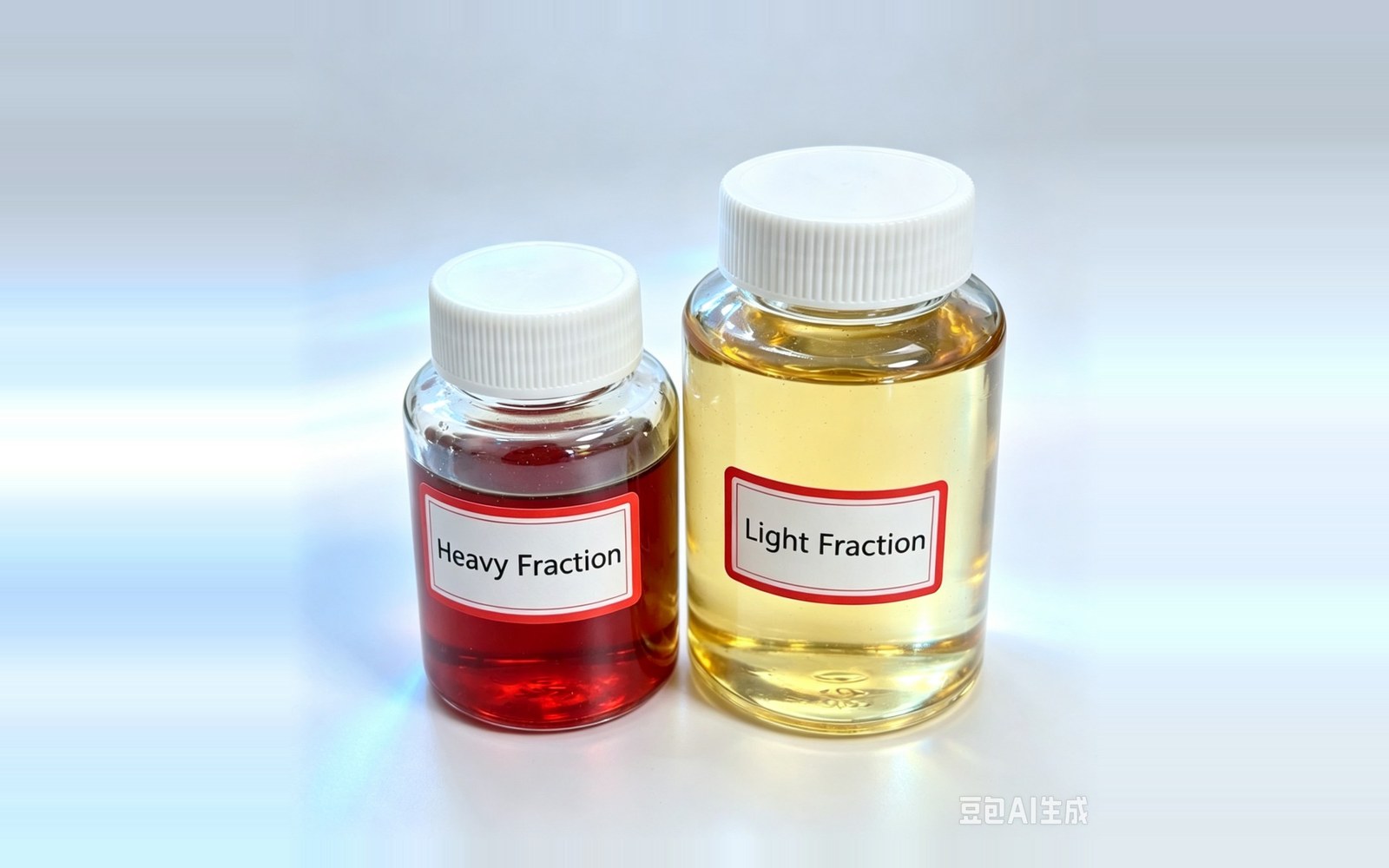
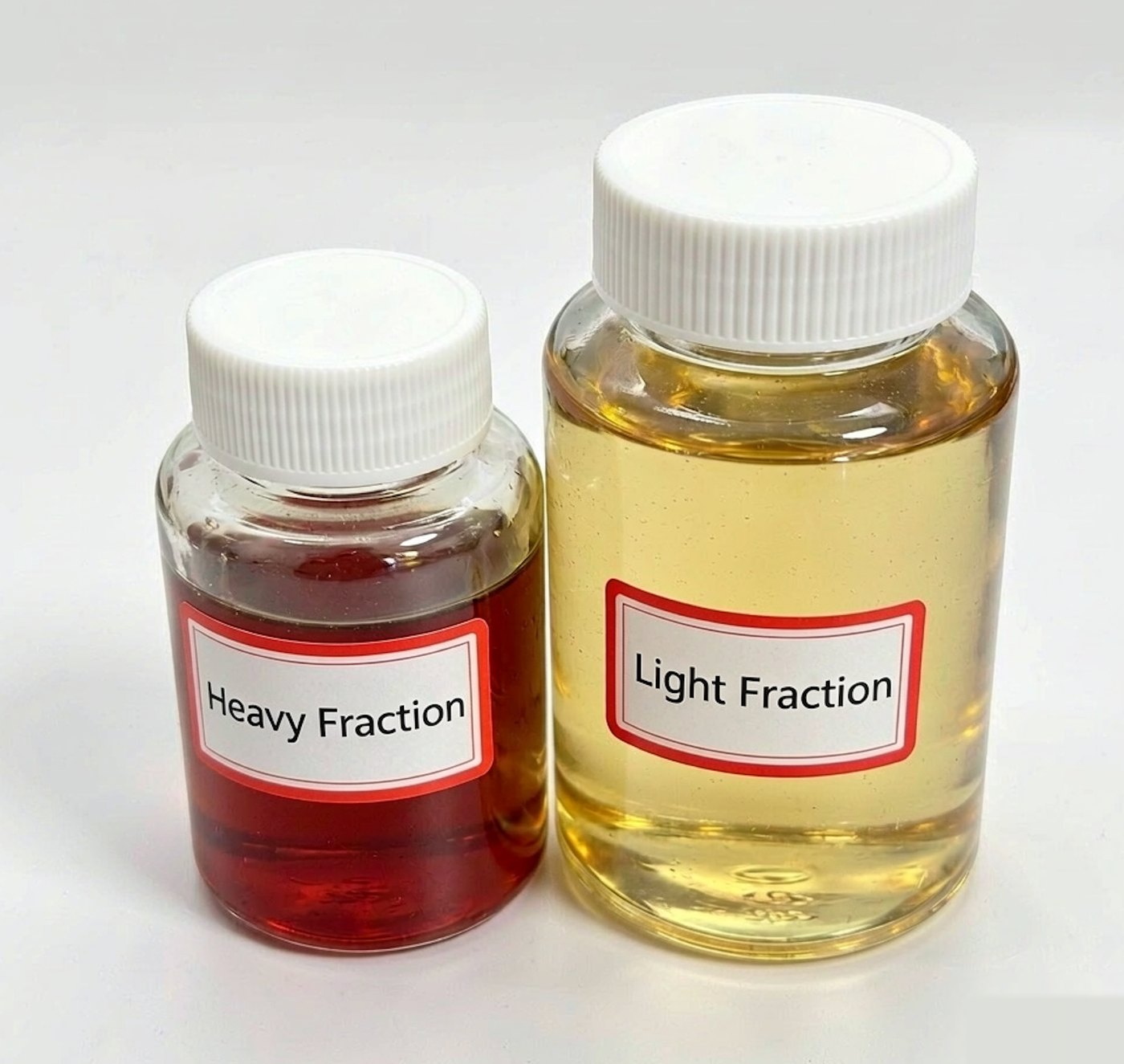
The photographs below show the crude feed and the separated fractions after ANVORE molecular distillation.
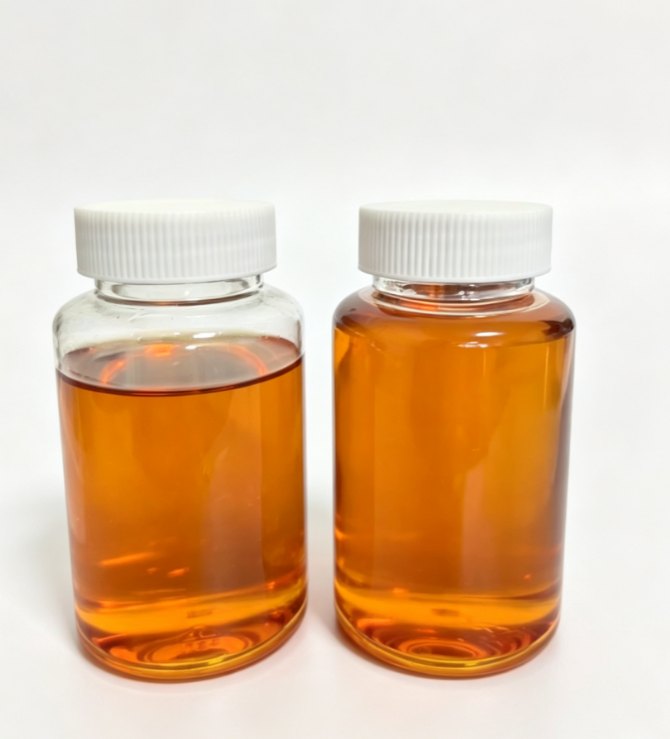
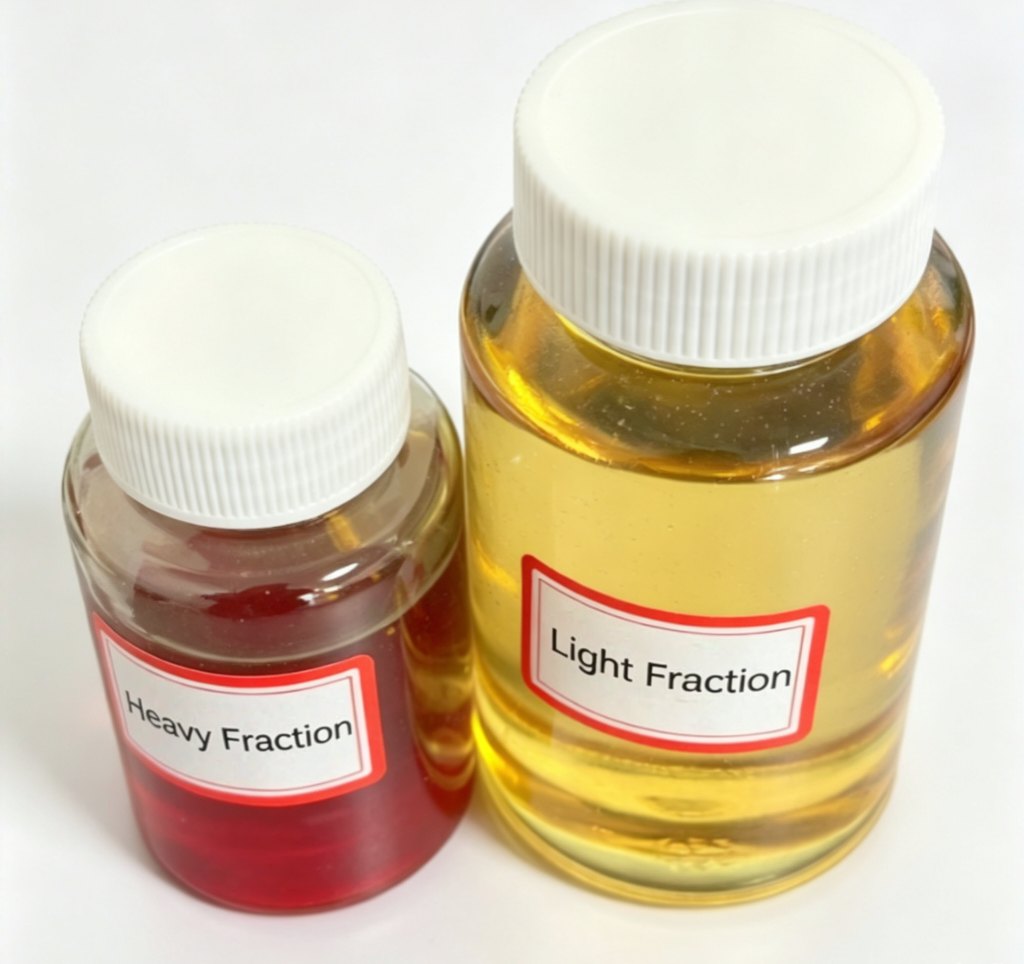
After purification, the light fraction is a clear, pale-yellow liquid that meets pharmaceutical intermediate specifications. The heavy fraction is a dark-red to brown residue containing chlorinated polymers and non-volatiles.
7. Why ANVORE Molecular Distillation System
- Low-temperature, high-vacuum operation protects the aldehyde group from oxidation.Seconds-long residence time prevents thermal polymerization and discoloration.Single-pass high purity reduces repeated distillation and improves yield.Corrosion-resistant wetted materials (borosilicate glass, PTFE seals) withstand chlorinated feedstocks.Independent control of temperature, vacuum, feed rate, and wiper speed simplifies scale-up from lab to production.
8. Recommended Equipment
- Laboratory / process development: ANVORE MOL-F80 glass short-path molecular distillation systemPilot / small production: ANVORE THIN-B80S stainless-steel wiped-film molecular distillation systemAuxiliaries: vacuum pump set, low-temperature circulator for condenser, nitrogen generator for inert blanketing
9. Conclusion
ANVORE short-path molecular distillation provides an effective low-temperature route for purifying heat-sensitive, high-boiling aromatic aldehydes such as p-chlorobenzaldehyde. By replacing long-duration high-temperature rectification with a seconds-long high-vacuum separation, it delivers higher purity, better color stability, and improved yield while reducing polymerization losses. For a custom process evaluation or free feasibility trial, contact ANVORE technical support.