1. Executive Summary
Epoxy resin intermediates are high-boiling, heat-sensitive chemical intermediates whose purity directly determines the adhesion, weatherability, and pass rate of the final epoxy resin product. Conventional distillation requires high-temperature boiling, which causes oxidation, incomplete impurity removal, and significant material loss. ANVORE short-path wiped-film molecular distillation separates these intermediates at low temperature under high vacuum in seconds. A recent customer trial on an ANVORE 80 mm (0.1 m²) laboratory unit confirmed purity, recovery, and batch-to-batch consistency targets.
2. Feed Properties and Separation Challenge
- Feed: epoxy resin synthesis intermediate (amber, viscous liquid)High boiling point; decomposes/oxidizes under prolonged high-temperature heatingThermal sensitivity: epoxy groups and unreacted monomers degrade above their stability windowImpurities: residual small-molecule solvents, unreacted monomers, and light-boiling componentsTarget: strip light impurities and residual solvent under vacuum while keeping the valuable intermediate below its degradation temperature
3. Process Principle
ANVORE short-path molecular distillation separates on the basis of mean free-path differences rather than boiling-point differences. The feed is spread into a micrometer-thin film by a high-speed wiper on the heated evaporator wall. Under high vacuum (0.1–100 Pa), light impurity molecules (residual solvent, unreacted monomers) travel directly to the internal condenser and are removed overhead, while the purified high-boiling intermediate flows down the wall as the residue product. There is no boiling or bubbling, so thermal exposure is limited to a few seconds.
4. Complete Purification Process Flow
The following flowchart summarizes the main process stages. Detailed operating steps for each stage are given below.
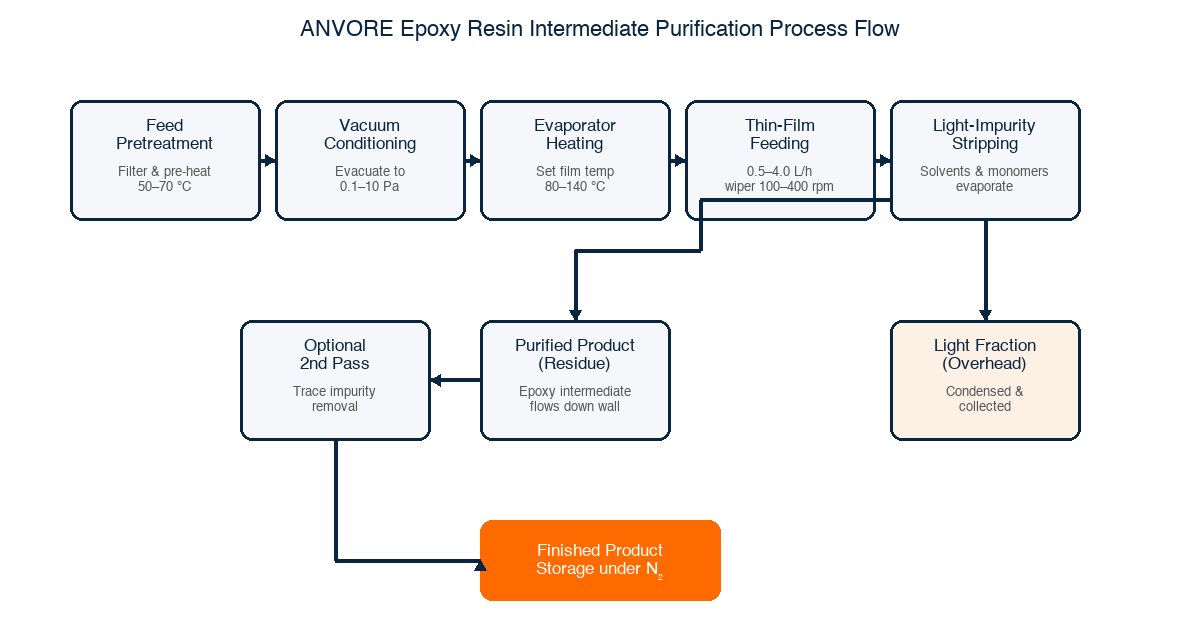
4.1 Feed Pretreatment
The crude intermediate is filtered to remove particulates and gels. Because epoxy intermediates are viscous, the feed is pre-heated to 50–70 °C (below its degradation window) to lower viscosity and ensure stable pumping. Optional vacuum dehydration removes free water before distillation.
4.2 Vacuum Conditioning
The vacuum group (diffusion/mechanical or dry pump set) is started first, and the whole distillation path is evacuated to 0.1–10 Pa. A leak-free closed loop protects the epoxy intermediate from oxidation and keeps the light impurity vapor path short.
4.3 Evaporator and Condenser Temperature Setting
The 80 mm evaporator (0.1 m² effective area) is heated to the selected film temperature, typically 80–140 °C depending on the intermediate grade — well below the atmospheric boiling point. The internal condenser is held at 20–40 °C so stripped solvents and monomers condense immediately.
4.4 Continuous Feeding and Thin-Film Formation
The pre-heated feed is metered in at 0.5–4.0 L/h by a gear or peristaltic pump. The wiper (100–400 rpm) spreads the feed into a uniform 0.1–1 mm film, preventing hot spots and ensuring every element of feed spends only seconds on the hot wall.
4.5 Light-Impurity Stripping
Inside the evaporation gap, residual solvents and unreacted monomers evaporate, fly the short distance to the internal condenser, and are collected overhead as the light fraction (solvent recovery or waste). The purified, high-boiling epoxy intermediate flows down the evaporator wall and is discharged as the residue product.
4.6 Optional Second Pass
For high-end specifications, the purified intermediate can be distilled a second time at slightly lower pressure and optimized temperature to further reduce trace light impurities and stabilize color.
4.7 Product Collection and Storage
The purified intermediate is collected hot from the residue outlet into a pre-heated, nitrogen-blanketed receiver to prevent moisture uptake and oxidation. The light fraction is collected separately for solvent recovery or disposal.
5. Typical Operating Parameters
| Parameter | Typical value |
|---|---|
| Equipment | ANVORE 80 mm wiped-film short-path unit, 0.1 m² |
| Feed | Epoxy resin synthesis intermediate, filtered |
| Feed pre-heat temperature | 50–70 °C |
| Feed rate | 0.5–4.0 L/h |
| Operating pressure | 0.1–10 Pa |
| Evaporator temperature | 80–140 °C (grade-dependent) |
| Condenser temperature | 20–40 °C |
| Wiper speed | 100–400 rpm |
| Residence time on hot wall | Seconds |
| Result | Light impurities/solvent stripped; purity meets downstream synthesis standard |
6. Trial Results
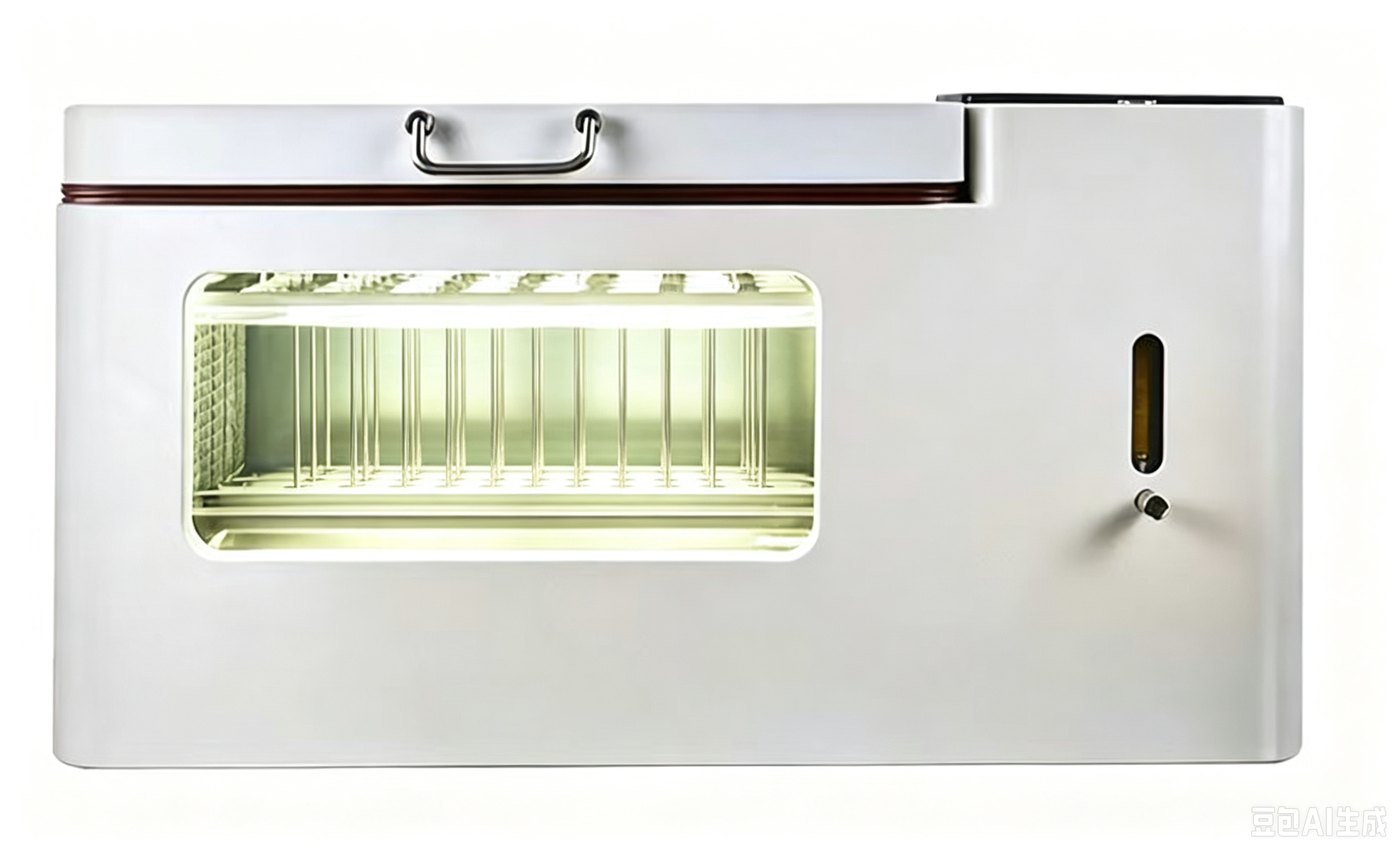
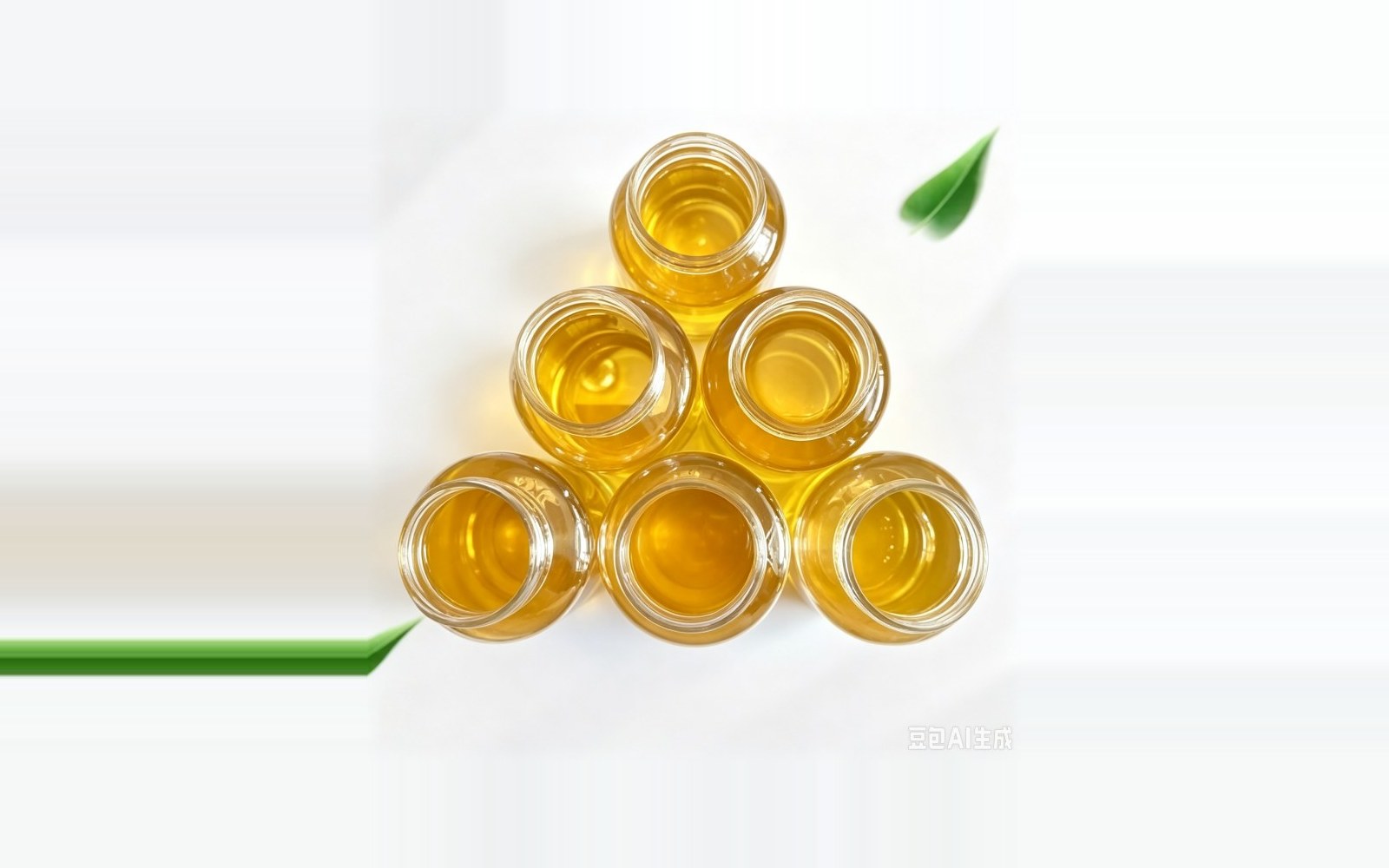
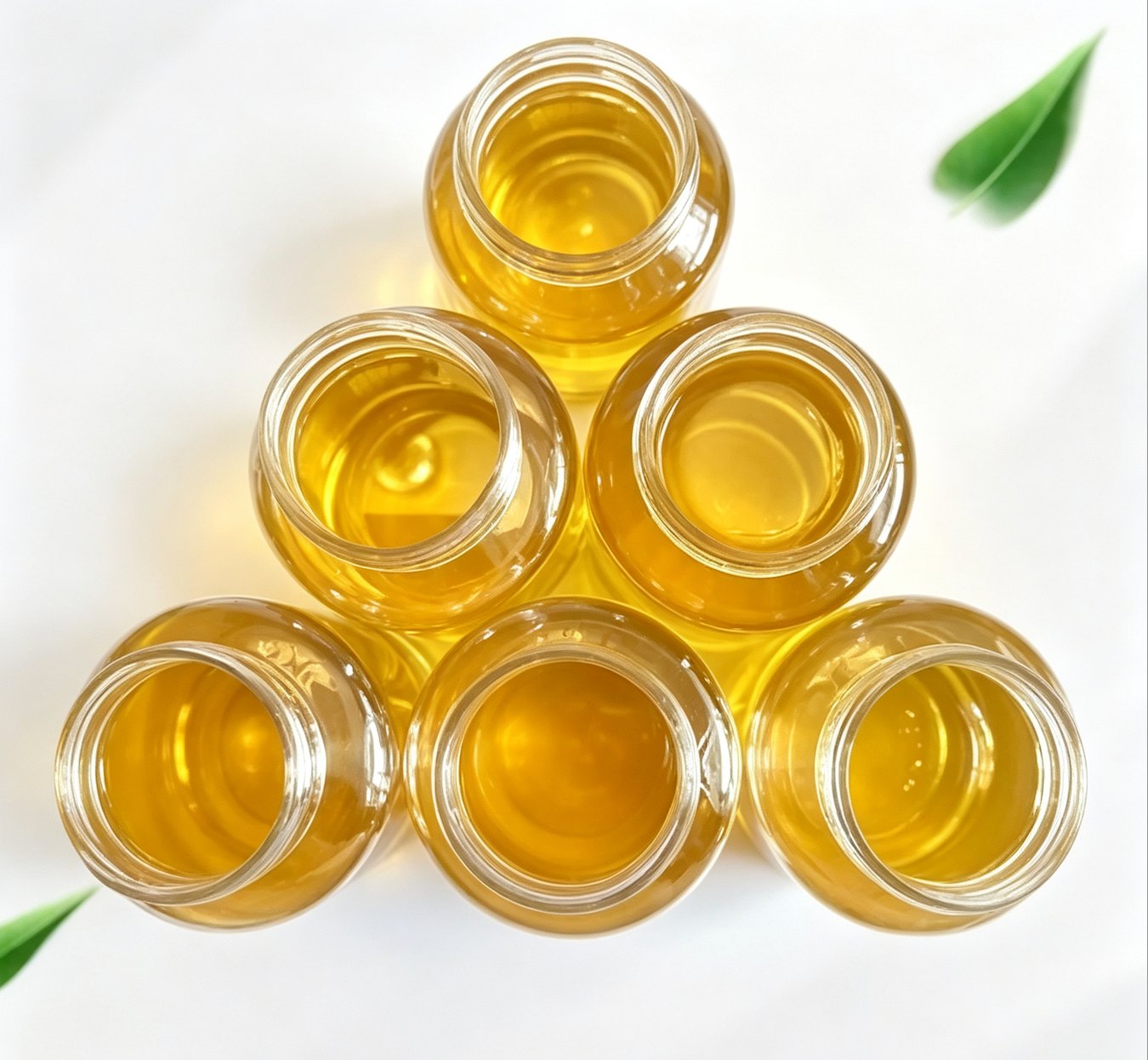
The photographs below show the crude epoxy resin intermediate feed and the ANVORE unit during the customer purification trial.
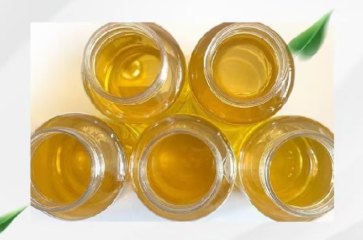
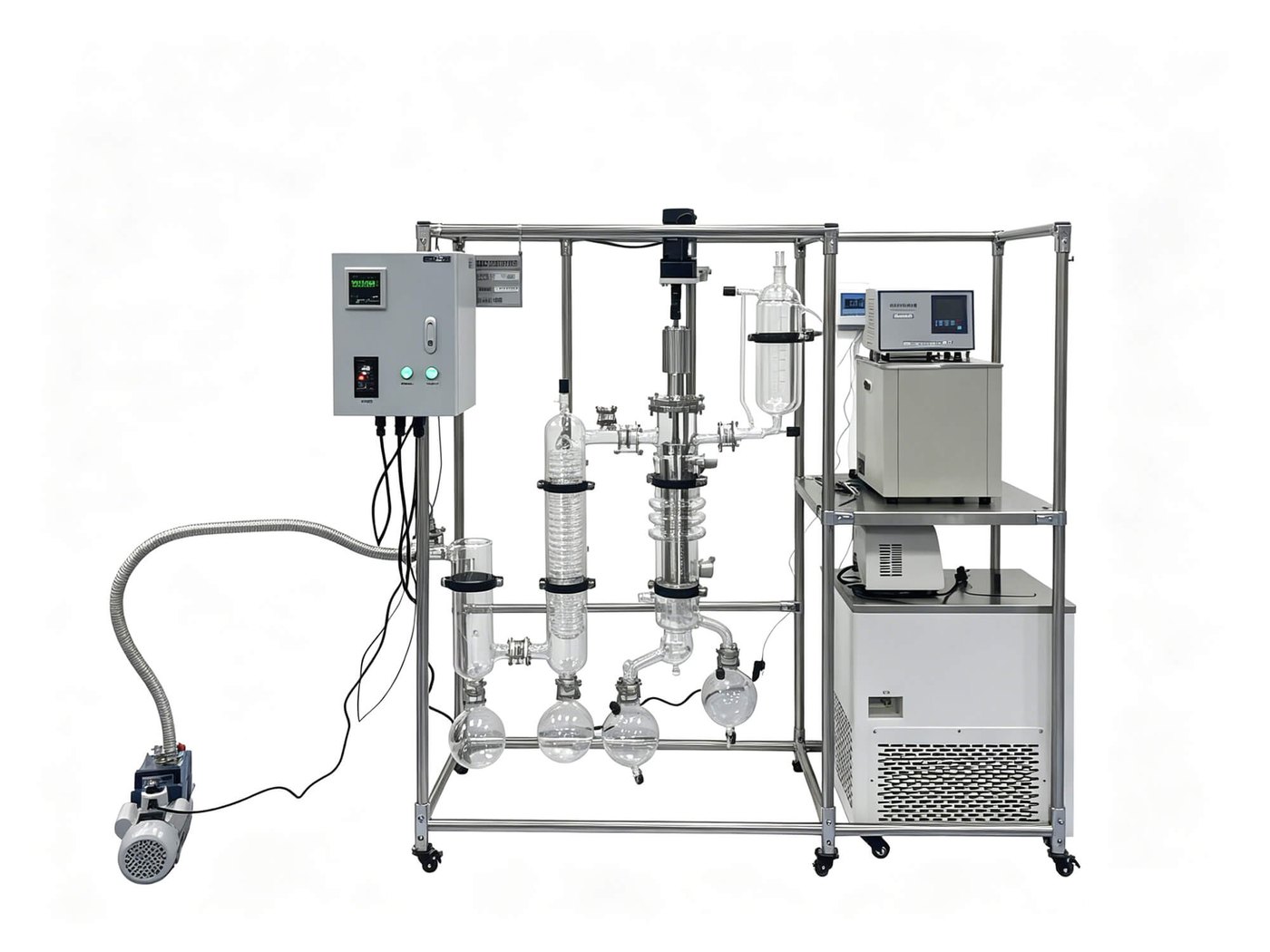
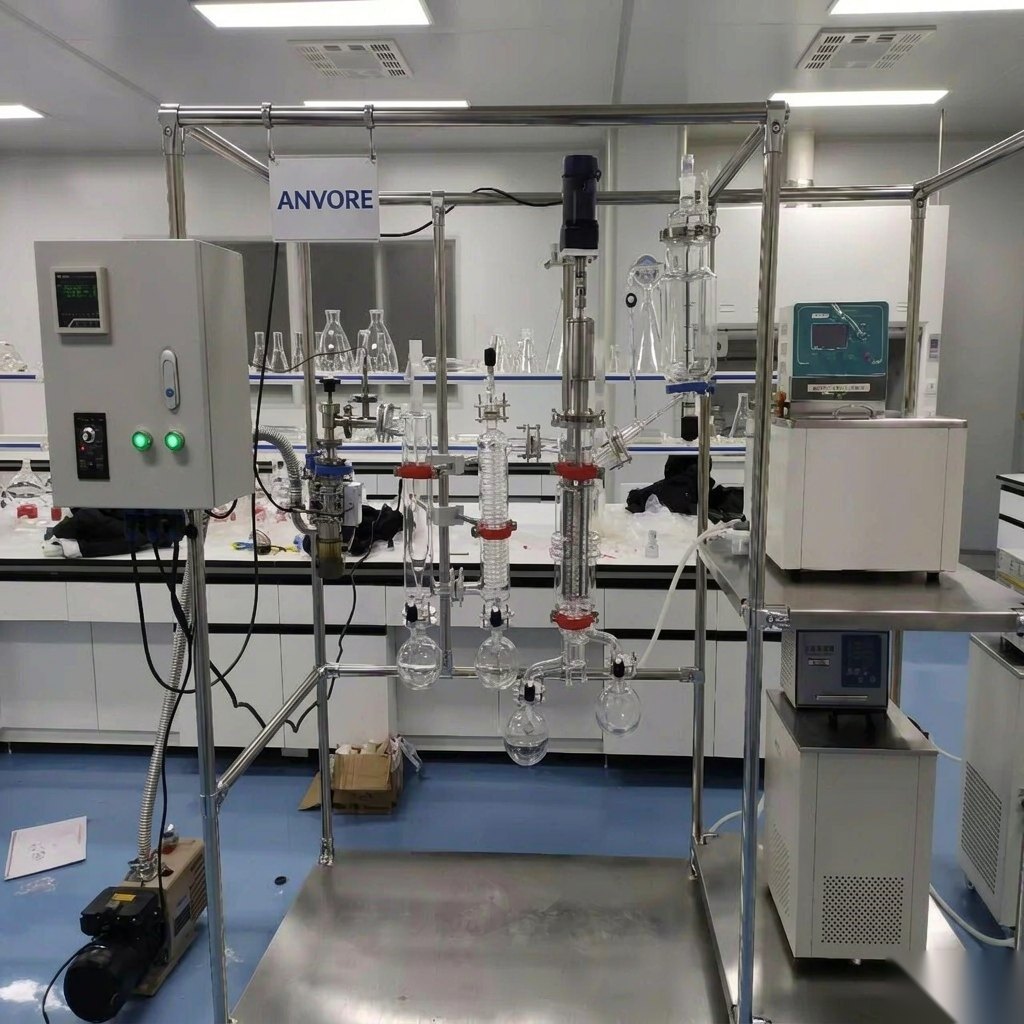
After purification, residual solvents, unreacted monomers, and light components are effectively removed; the intermediate purity meets downstream epoxy synthesis standards with significantly improved recovery and batch-to-batch consistency.
7. Why ANVORE
- High-vacuum, low-temperature operation protects heat-sensitive epoxy intermediates from oxidation and decomposition.Seconds-long residence time prevents degradation and discoloration.Precise stripping of light impurities improves final resin adhesion, weatherability, and pass rate.Uniform wiped-film technology gives stable, replicable results from lab to production.Compact, modular design fits standard laboratory space without modification.
8. Recommended Equipment
- Laboratory / process development: ANVORE glass short-path molecular distillation system (80 mm, 0.1 m²)Pilot / small production: ANVORE stainless-steel wiped-film molecular distillation systemAuxiliaries: vacuum pump set, low-temperature circulator, nitrogen generator for inert blanketing
9. Conclusion
ANVORE short-path wiped-film molecular distillation provides an effective low-temperature route for purifying high-boiling, heat-sensitive epoxy resin intermediates. By replacing high-temperature batch distillation with continuous, seconds-long high-vacuum separation, it delivers higher purity, higher recovery, and stable batch-to-batch consistency. For a custom process evaluation or free feasibility trial, contact ANVORE technical support.