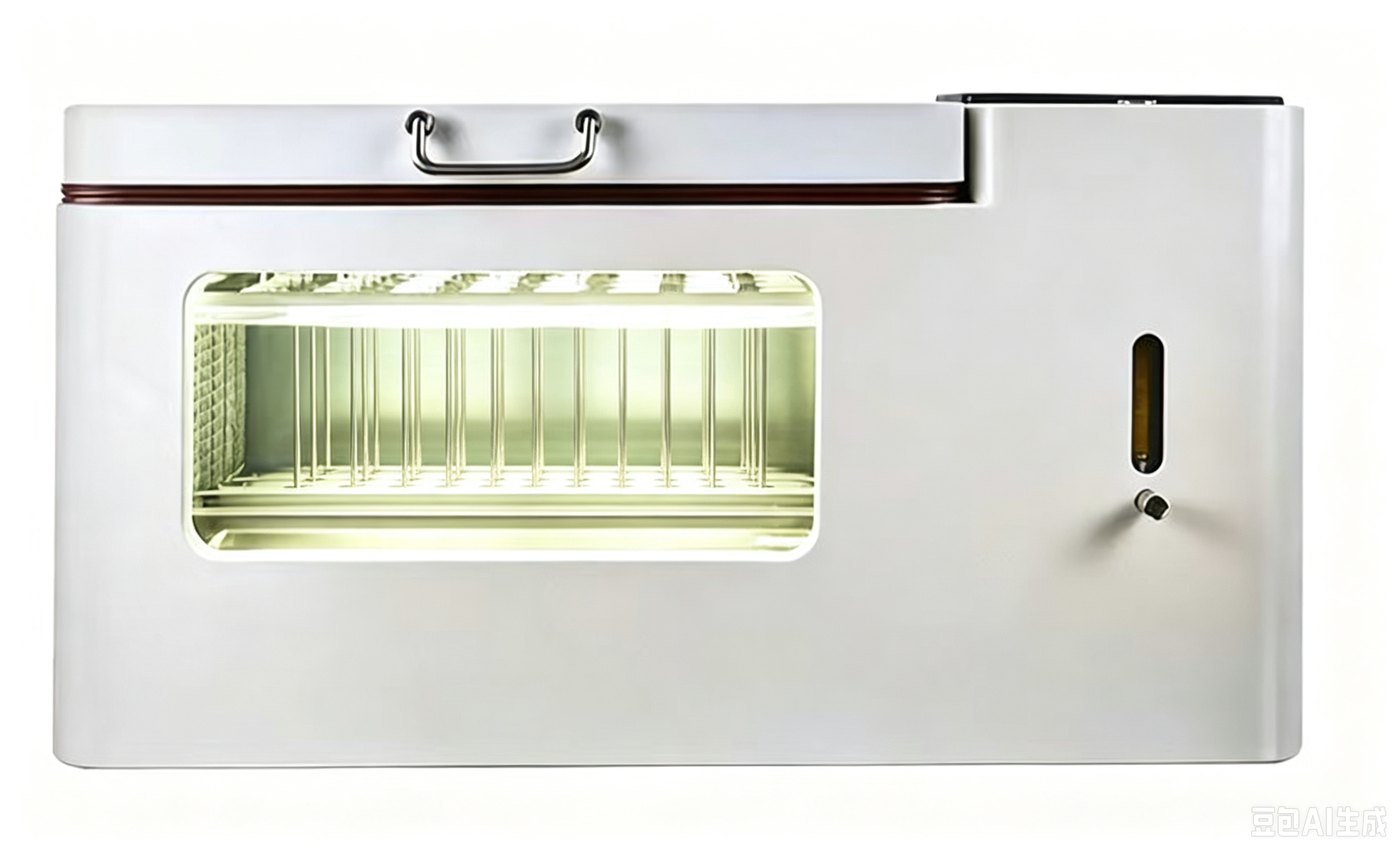
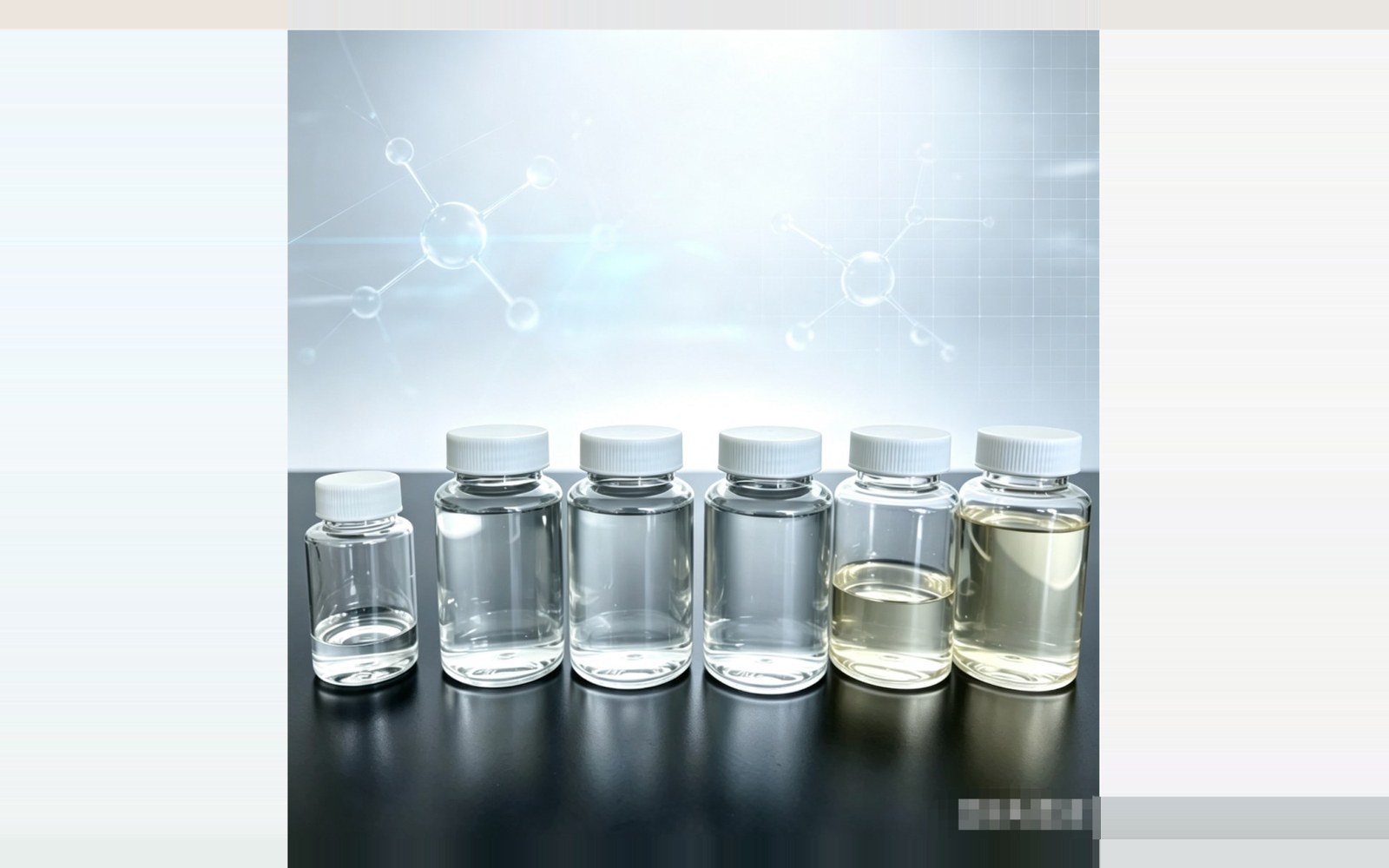
How ANVORE stainless-steel short-path molecular distillation removes ethanol from a 75% ethanol / 25% polysiloxane feedstock without thermal damage — and recovers the solvent for reuse.
1. Project Background & Challenges
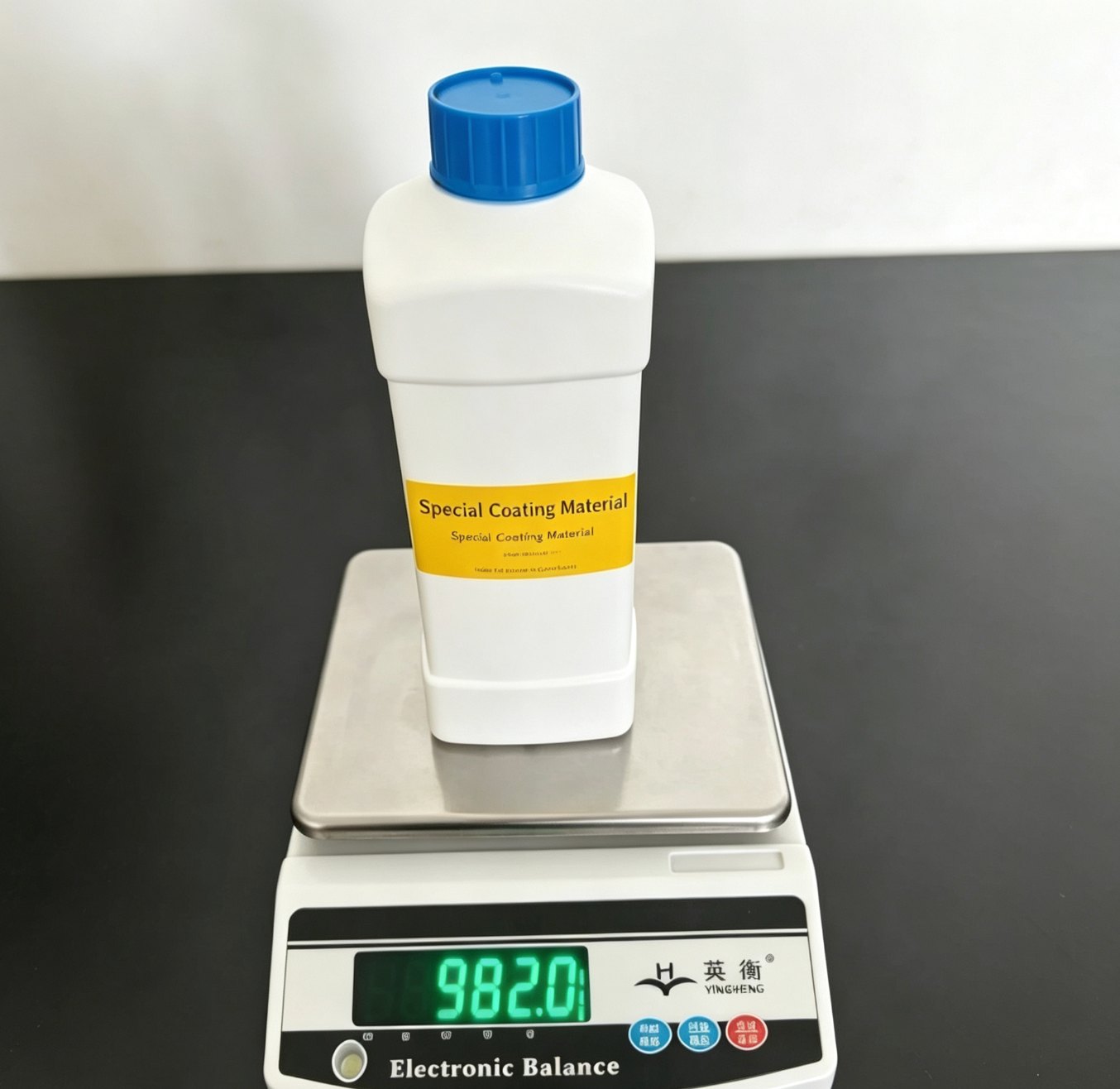
Polysiloxanes (silicone polymers) are core functional materials in high-end industrial coatings. Their exceptional temperature resistance, hydrophobicity, weathering resistance, adhesion and dielectric properties make them indispensable in automotive topcoats, industrial anti-corrosion coatings, premium hardware insulation coatings and high-temperature protective paints.
In commercial coating formulations, polysiloxane raw materials are frequently supplied as a 75% ethanol / 25% polysiloxane mixture. The ethanol acts as a dispersion solvent: it keeps the material homogeneous, lowers system viscosity and enables uniform spraying or coating application. Before the coating cures, however, this ethanol must be removed completely. Residual solvent causes pinholes, bubbling, poor gloss, incomplete curing and accelerated weathering failure in the finished coating.
The challenge is that polysiloxanes are high-viscosity, heat-sensitive polymeric materials. Conventional distillation processes tend to degrade them. This document explains why conventional devolatilization fails for this system, and how the ANVORE stainless-steel short-path molecular distillation system solves the problem with high-vacuum, low-temperature, thin-film separation.
2. Material and Process Objective
| Parameter | Value |
|---|---|
| Feed composition | 75% ethanol (light fraction / solvent) + 25% polysiloxane (heavy fraction / functional material) |
| Process goal | Complete ethanol removal at low temperature, with zero damage to polysiloxane performance |
| Solvent handling | High-recovery condensation of ethanol for recycling |
| Product target | High-purity coating-grade polysiloxane |
| End use | Specialty automotive topcoats, weathering-resistant coatings, hydrophobic coatings, anti-corrosion silicone coatings |
Detailed Technological Process
Step 1 Pre-treatment & Feeding Preparation
Filter raw polysiloxane-ethanol blend to remove tiny solid impurities. Load material into the feed tank, set and stabilize feed flow rate. The feed mixture: 75 wt% ethanol, 25 wt% polysiloxane.
Step 2 System Preheating & Vacuum Stabilization
Turn on heating system and cooling circulation, start vacuum pump set. Maintain the system at target ultra-high vacuum before feeding to guarantee low-temperature vaporization of ethanol.
Step3 Wiped-film Evaporation & Solvent Vaporization
Material flows into the distillation chamber. The rotary wiper blade continuously scrapes material into thin liquid film on the heating surface. Ethanol evaporates from the film under low temperature and high vacuum. Polysiloxane macromolecule remains in liquid phase.
Step4 Short-path Condensation & Ethanol Recovery
Ethanol vapor travels a short distance and condenses rapidly on the built-in cold condenser. Recovered ethanol is collected in light fraction receiving flask for reuse in production.
Step5 Collection of Desolvated Polysiloxane
The de-ethanol polysiloxane heavy fraction flows down and is collected in the heavy product receiver. The polymer is fully separated from ethanol solvent.
Step6 Post-testing
Test residual solvent content, viscosity and appearance of finished polysiloxane. Verify that ethanol residue meets coating production requirement.
3.Why Conventional Devolatilization Fails This System
Most coating plants still use kettle-type vacuum distillation, conventional rectification or atmospheric heating for solvent removal. For the ethanol–polysiloxane system, these processes share four critical weaknesses.
3.1 High-temperature, long-duration heating degrades the polymer
Conventional distillation relies on temperature to drive solvent evaporation. The entire batch is heated for extended periods. At elevated temperatures, polysiloxane macromolecules undergo crosslinking, aging and chain scission — viscosity rises, color yellows, and the hydrophobic, temperature-resistant and anti-aging properties that justify the material's use are lost. Downstream, this manifests as cracking, gloss loss and protection failure in the cured coating.
3.2 Incomplete solvent removal compromises curing
Kettle distillation processes a deep, stagnant liquid pool with poor heat transfer and insufficient gas–liquid separation. Ethanol residual levels stay high. During curing, the residual solvent slowly escapes, creating micropores and pinholes that reduce film density and corrosion protection below the standards required for premium coatings.
3.3 High material loss and production cost
During high-temperature agitation, light low-molecular-weight polysiloxane fractions evaporate together with the ethanol, and material cakes and chars on the vessel wall. Yield drops, kettle-bottom residue accumulates, and energy consumption per kilogram of product rises.
3.4 Poor solvent recovery, high environmental burden
In traditional processes, ethanol vapor is dispersed and only partially condensed. Large solvent quantities leave with the exhaust, wasting raw material and creating waste-gas treatment costs that conflict with fine-chemical green-production standards.
4. The ANVORE Solution: Stainless-Steel Short-Path Molecular Distillation
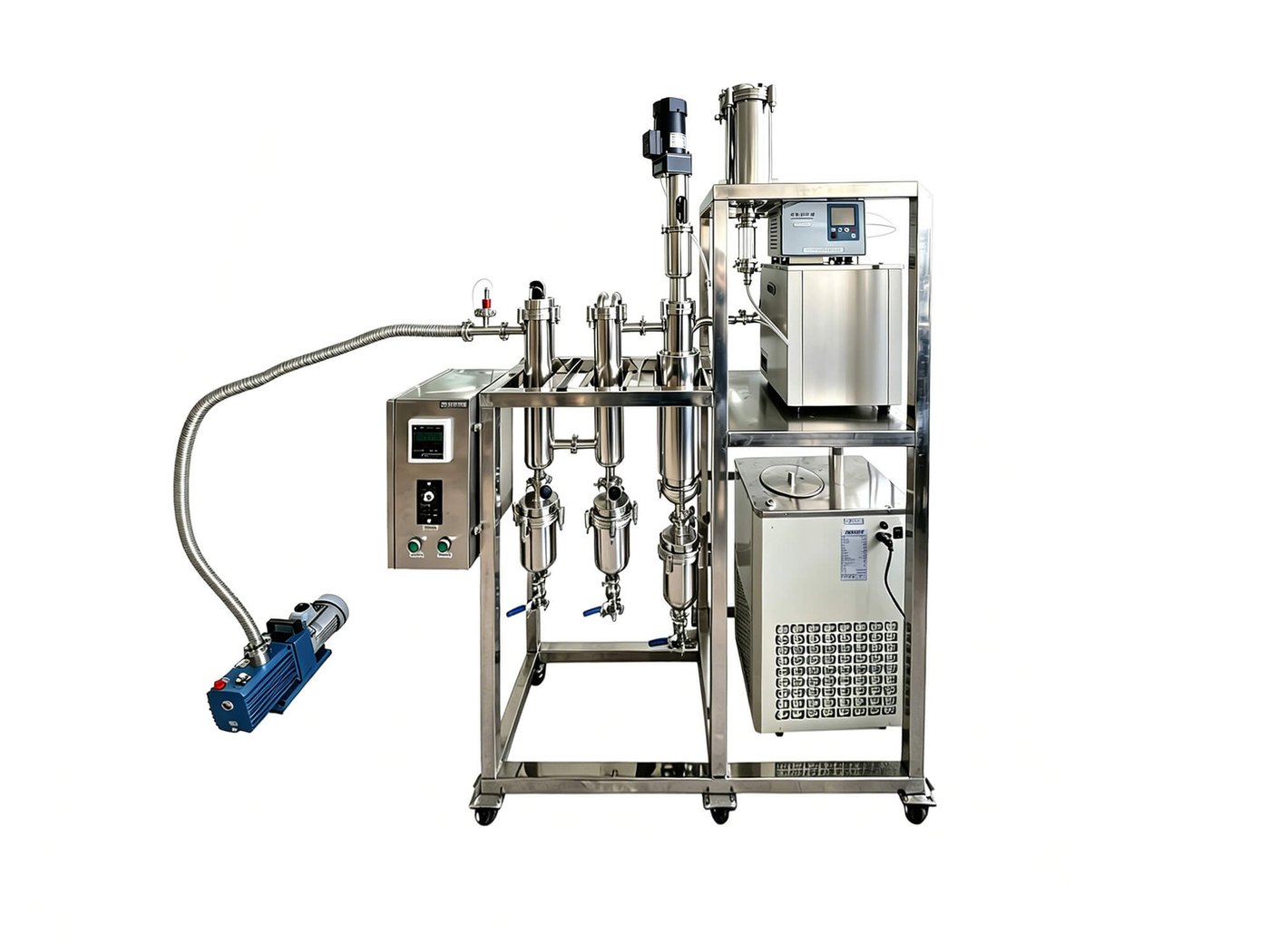
ANVORE stainless-steel short-path molecular distillation systems are engineered for exactly this class of problem — a volatile light fraction (ethanol) that must be stripped from a high-viscosity, heat-sensitive heavy fraction (polysiloxane) with minimal thermal stress and maximum solvent recovery.
4.1 Ultra-low temperature under high vacuum — no thermal damage
The system operates at 0.1–100 Pa (approximately 0.001–1 mbar). At this pressure, ethanol evaporates far below its atmospheric boiling point: the entire distillation runs in the 50–80 °C range, far below any temperature at which polysiloxane degrades. There is no thermal shock anywhere in the process — no oxidation, crosslinking, discoloration or performance decay. The hydrophobic, temperature-resistant and adhesion properties of the polymer pass intact into the finished coating.
4.2 Rotating wiped-film evaporation — high efficiency, no wall fouling
The rotating wiper system spreads the feed into a uniform ultra-thin film the moment it enters the evaporation chamber, multiplying the heat-transfer and evaporation area. Residence time on the heated surface is measured in seconds. This fundamentally solves the problems of deep-liquid pooling, uneven heating and wall coking typical of high-viscosity materials: ethanol escapes rapidly while the polysiloxane moves steadily through and out. Rotor speed adjusts to the viscosity of the specific batch.
4.3 All-stainless construction for chemical duty
The evaporation chamber, feed lines and collection system are built in stainless steel — resistant to ethanol, acids, alkalis and oxidation. Polished internal surfaces clean quickly and prevent cross-batch contamination, meeting the hygiene requirements of premium coating raw materials. High-grade PTFE vacuum sealing components maintain excellent chamber tightness, so vacuum remains stable over long production runs.
4.4 Precise light/heavy fraction split — ethanol recycled, cost and footprint reduced
The internal short-path condenser liquefies ethanol vapor the instant it leaves the film surface. Recovery rates far exceed conventional processes, and the recovered high-purity ethanol can be returned directly to feed preparation or equipment cleaning. The separation is purely physical — no reactions, no by-products — matching the environmental standards of fine-chemical and coating production.
4.5 Controllable process, scalable from bench to production
Smart control of temperature, rotor speed and vacuum allows parameters to be optimized per material viscosity and batch. ANVORE covers the full size range — laboratory, pilot and industrial production — so parameters developed at bench scale transfer directly to production scale without re-engineering the process.
5. Process Performance After Devolatilization
Material processed on the ANVORE stainless-steel molecular distillation system shows measurable improvements over conventionally treated product:
- Higher purity. Ethanol removal is complete; residual solvent is minimal. Coatings cure uniformlywithout pinholes, bubbles or gloss loss, with substantially improved film density and smoothness.Stable performance. The polysiloxane molecular structure is intact — no thermal aging. Weatheringresistance, hydrophobicity, high-temperature tolerance and adhesion all meet the demandingspecifications of specialty coatings.Lower production cost. Material loss is minimized and ethanol is recovered and recycled, cuttingboth raw-material and energy costs.Batch-to-batch consistency. Automated, precise parameter control delivers uniform devolatilizationacross every batch, eliminating quality drift.
6. Complete Process Line and One-Stop Service
For the ethanol–polysiloxane system and similar devolatilization duties, ANVORE configures complete turnkey lines:
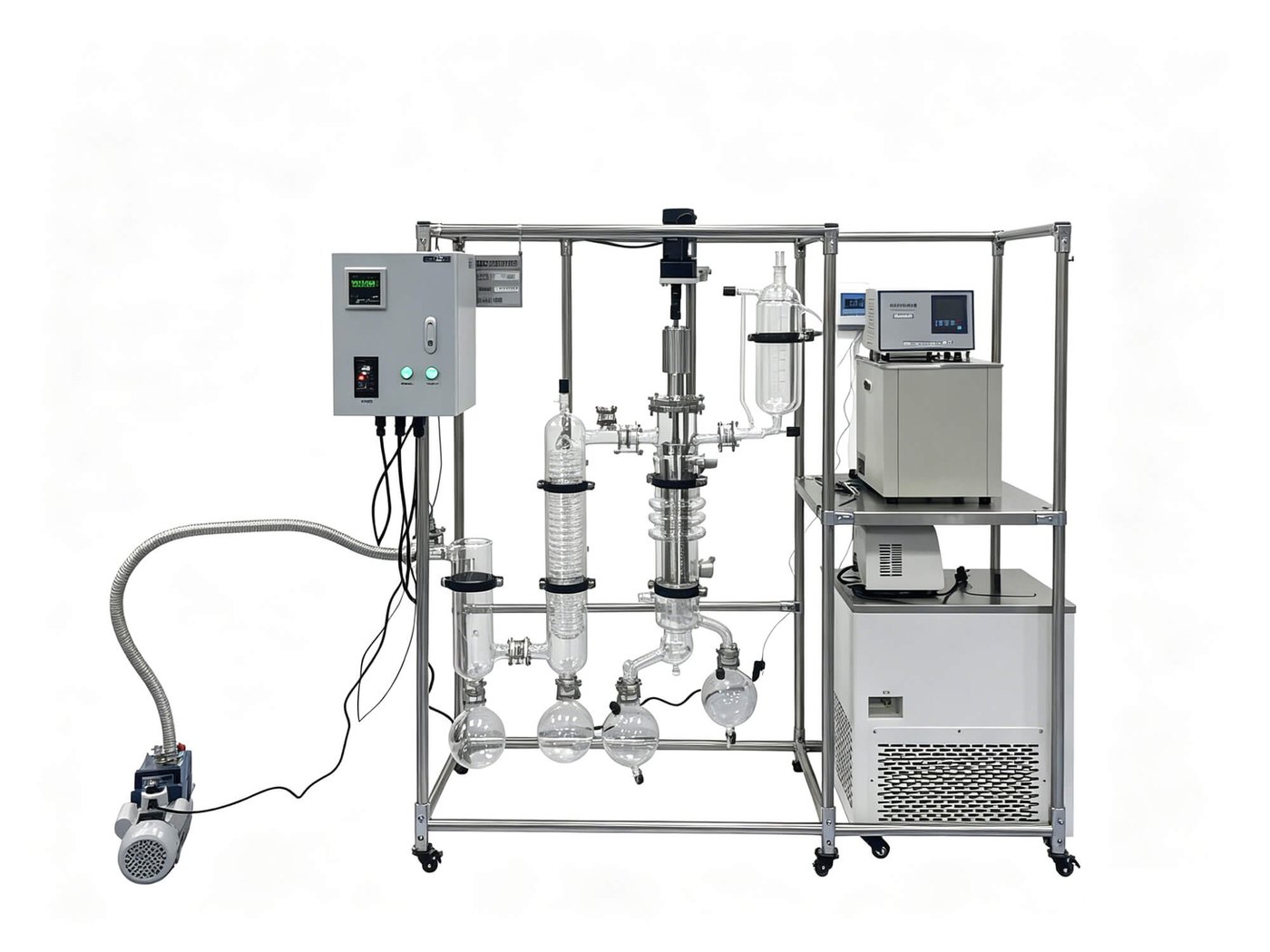
- Molecular distillation unit (stainless-steel wiped-film short-path evaporator);High-vacuum pump package matched to the required operating pressure;Heating and cooling circulators for jacket and condenser control;
- Precision metering feed system for viscous feeds; Dual fraction receivers for light (ethanol) and heavy (polysiloxane) collection;Optional on-site nitrogen generation for inert handling of moisture- and oxygen-sensitive intermediates.
Services include free sample trials, process development, equipment selection, on-site commissioning and operator training. Systems are configured to the customer's daily throughput, material viscosity and purity specification.
7. Conclusion
For heat-sensitive, high-viscosity polymers such as polysiloxanes, devolatilization is a separation problem that conventional thermal processes cannot solve without damaging the product. ANVORE stainless-steel short-path molecular distillation combines deep vacuum (0.1–100 Pa), low operating temperature (50–80 °C) and seconds-scale residence time to strip ethanol from a 75/25 ethanol–polysiloxane feedstock completely and gently — while condensing and recovering the solvent for reuse.
The result is a coating-grade polysiloxane with intact polymer performance, a cleaner environmental profile and a lower cost per kilogram — from laboratory trials to continuous production.