
Enriching Pesticide Residues in Fruit, Vegetable and Grain Extracts for Chromatographic Determination
PURPOSE enriching dilute extracts ◆ BATH RANGE 30–60 °C ◆ FINAL VOLUME 0.5–1.0 mL ◆ PROMISE no analyte degradation
WHY CONCENTRATION DECIDES FOOD RESIDUE RESULTS
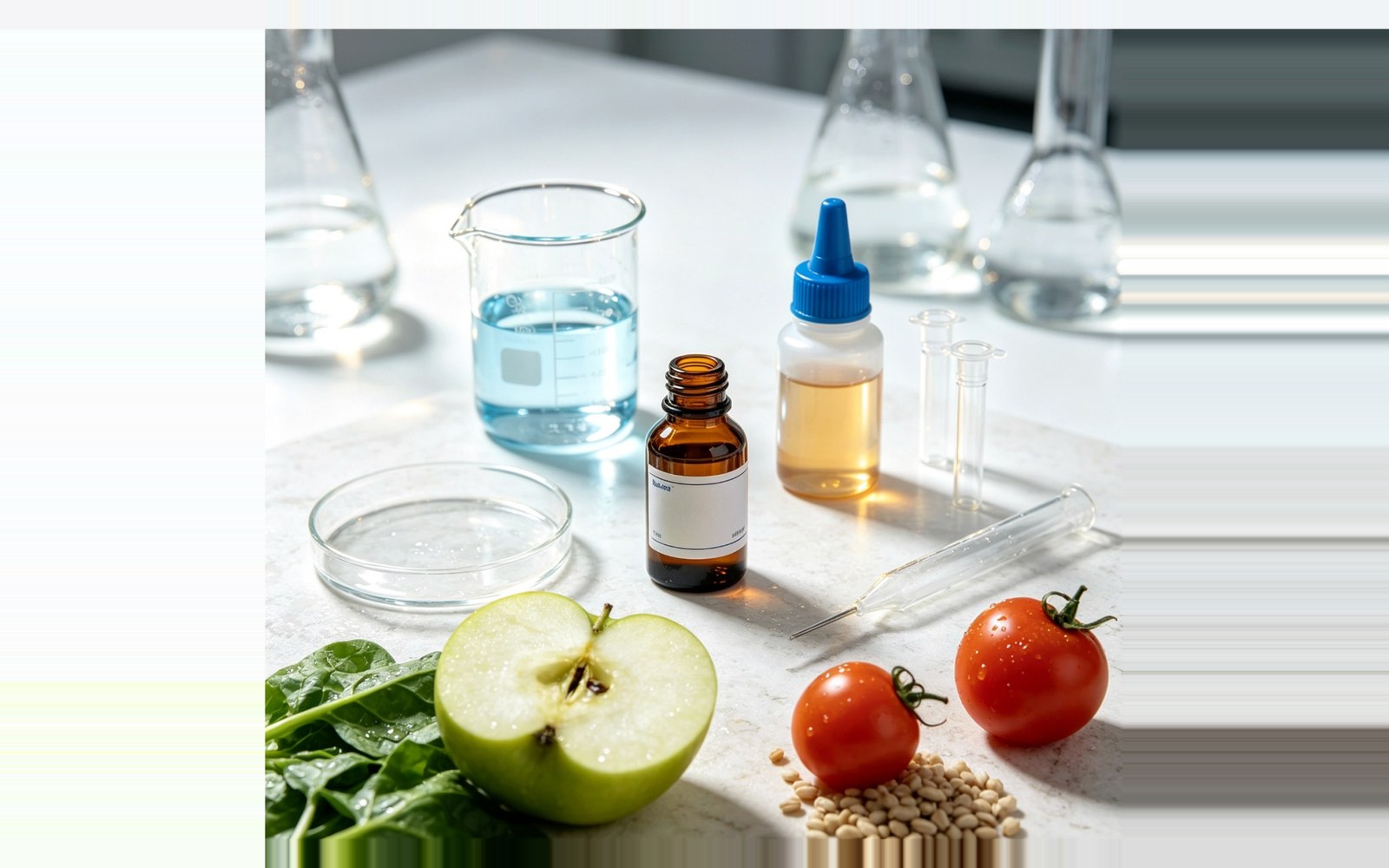
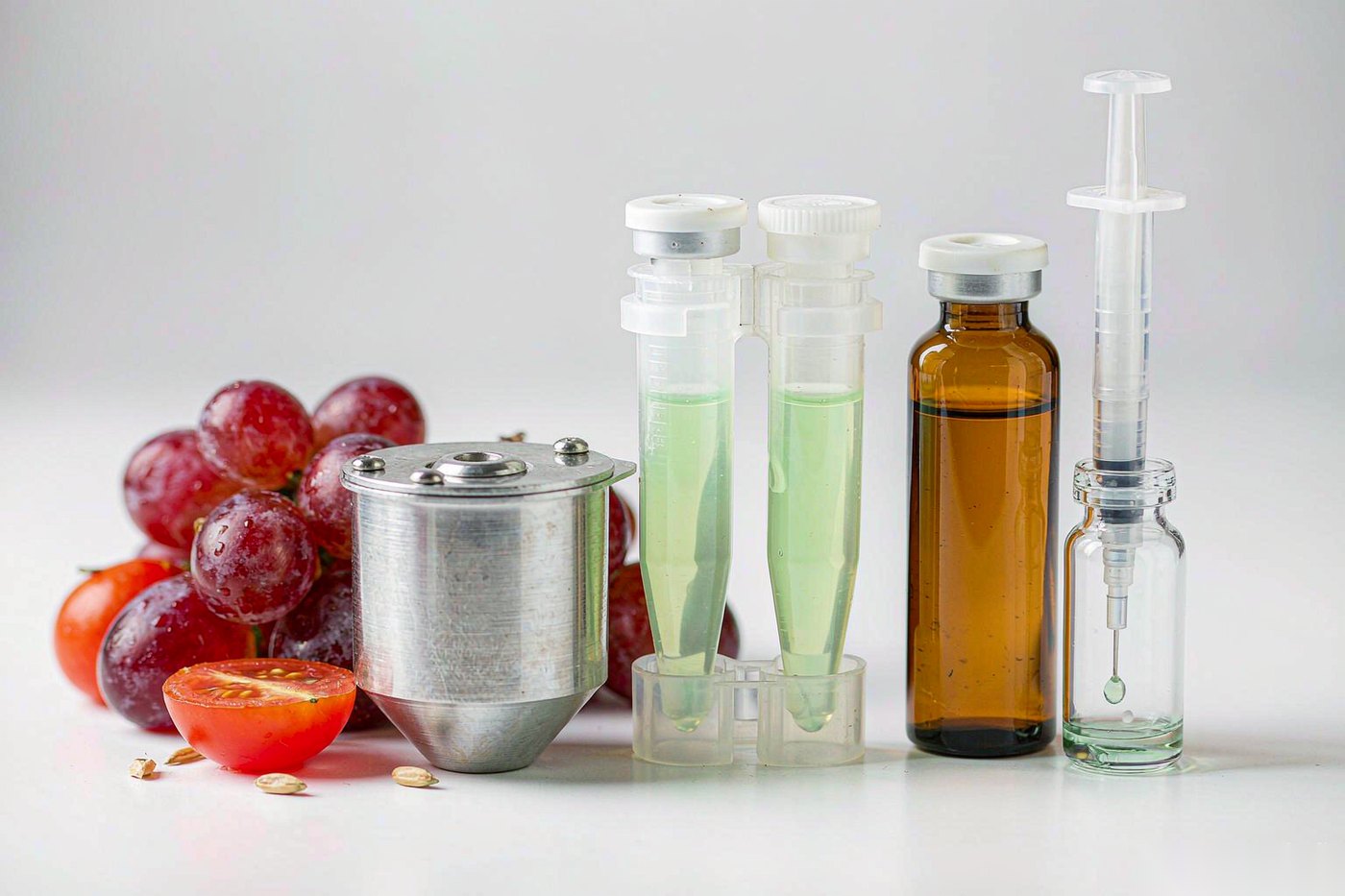
Maximum residue limits for pesticides in fruit, vegetables and cereals are set at the microgram-per-kilogram level. QuEChERS and related extraction methods answer with a well-designed chemistry — acetonitrile salting-out, dispersive SPE — but they deliver an extract that is still too dilute for the detector. Enriching that extract tenfold or more, reproducibly and without losses, is what separates a passing result from a missed violation.
The catch is that the same step can destroy the answer it is meant to reveal. Many pesticides are thermolabile, volatile or easily oxidised; a hot, uncontrolled evaporation degrades them before injection. And when twelve samples are concentrated twelve different ways, batch-to-batch consistency — the backbone of laboratory accreditation — disappears.
PROTECTING ANALYTES DURING ENRICHMENT
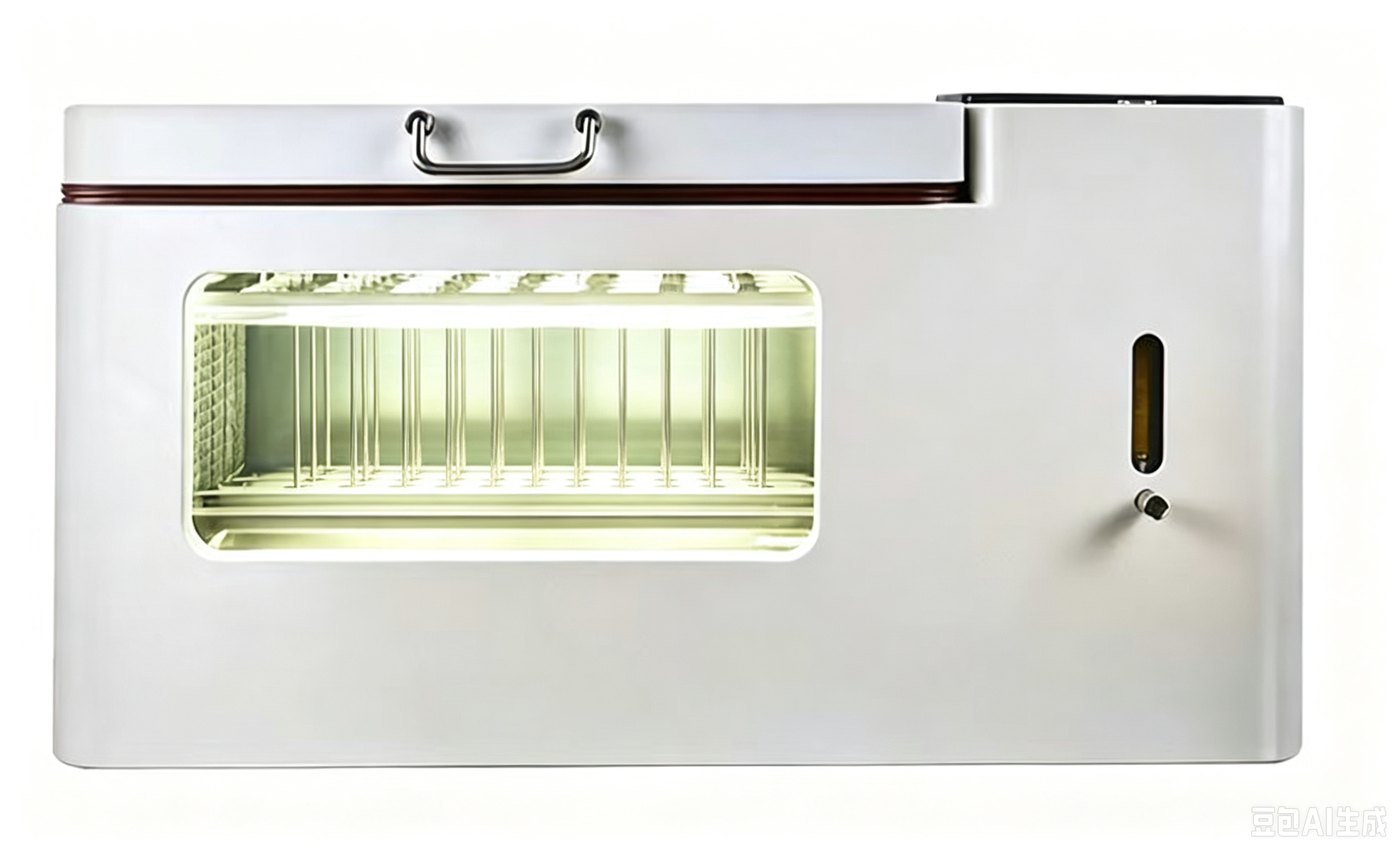
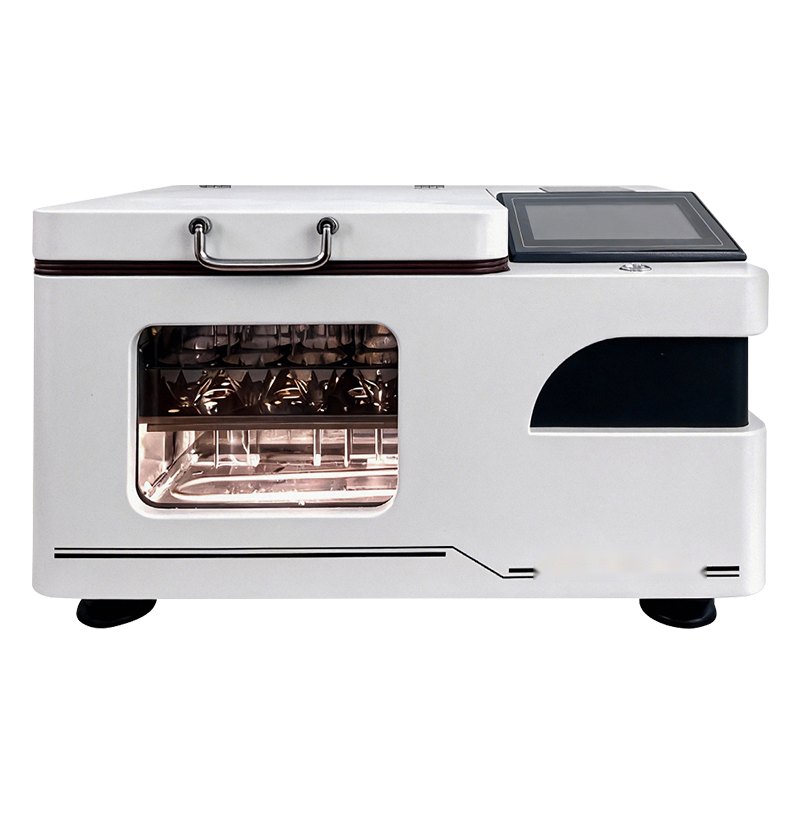
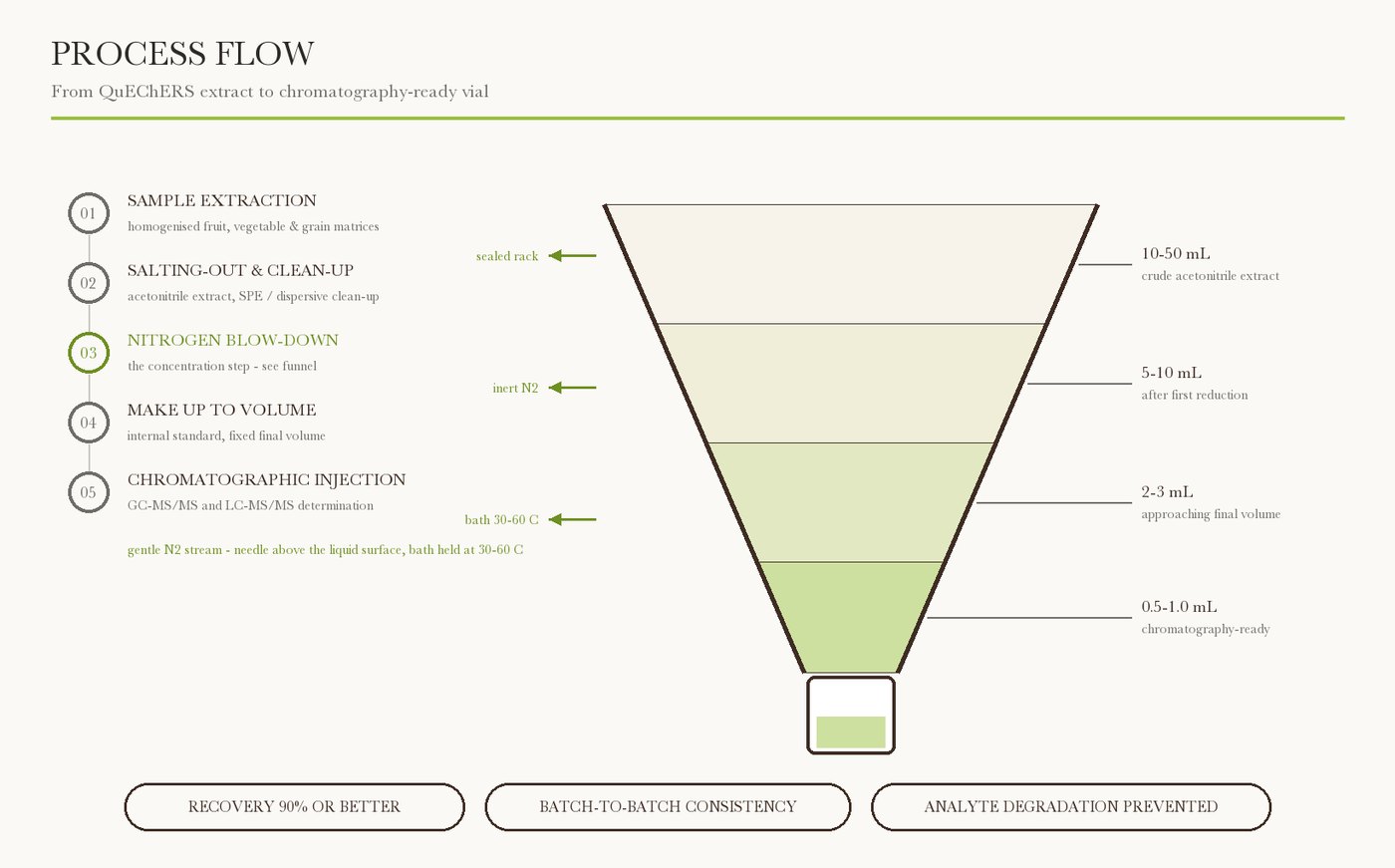
ANVORE nitrogen concentrator enriches samples by sweeping a gentle stream of nitrogen across the liquid surface while the rack sits in a precisely heated water bath. Solvent leaves quickly; analytes never boil, never meet air and never meet each other.
- Needle above the liquid surface.No bubbling through the sample, no splashing between vials, no cross-contamination across the batch.
- Bath held at 30–60 °C.Evaporation proceeds at controlled pace while thermolabile pesticides stay intact.
- Inert atmosphere.Nitrogen displaces oxygen above every vial, protecting oxidation-sensitive analytes.
- Uniform needle flow.Each position finishes at the same time, so every vial reaches the same final volume under the same conditions.
PROCESS FLOW
CONSISTENCY, RECOVERY AND THROUGHPUT
| PARAMETER | TYPICAL FOOD TESTING DUTY |
|---|---|
| Sample matrices | Fruits, vegetables, cereals and derived products |
| Extract volume | 10–50 mL QuEChERS extract reduced to 0.5–1.0 mL |
| Bath temperature | 30–60 °C, digital control, uniform across the rack |
| Parallel capacity | 12 to 60 positions per batch |
| Typical outcome | Recoveries ≥ 90% with tight batch-to-batch repeatability |
Consistency by construction.Identical needles, identical temperature, identical endpoint — every vial in the batch is treated exactly the same way, shift after shift.
Recovery that survives audit.Gentle, closed enrichment keeps spike recoveries within acceptance windows and method blanks clean.
Throughput without compromise.A full extraction batch is concentrated in parallel, freeing the laboratory from serial rotary-evaporator queues.
Combined with an ANVORE on-site nitrogen generator, the platform runs entirely on gas produced in-house: stable purity, stable pressure, stable results. For food safety laboratories, that turns the concentration step from a source of doubt into the most reliable link in the chain of evidence.