
Laboratory Separation & Purification Technology: From Core Processes to Complete Solutions
A technical analysis of how molecular distillation, thin-film evaporation, reaction control and on-site gas supply work together to build efficient, reproducible laboratory separation workflows.
1. Introduction
Separation and purification sit at the heart of every laboratory workflow that turns raw materials into usable products — from natural product extraction and pharmaceutical intermediate purification to specialty chemical synthesis and new material research. Yet separation is rarely a single step. It is a chain: the reaction that creates the mixture, the evaporation and distillation steps that separate it, and the supporting gas, vacuum and temperature systems that make each step possible.
This article analyzes the four key building blocks of a modern laboratory separation workstation — molecular distillation, thin-film evaporation, reaction control and on-site gas supply — and explains how ANVORE integrates them into complete, scalable solutions.
2. The Separation Challenge in Modern Laboratories
Laboratory separation tasks increasingly involve materials that are difficult to process:
- Heat-sensitive compounds that degrade at normal boiling points;
- High-boiling or viscous feedstocks that resist conventional distillation;
- Oxygen-sensitive materials that oxidize during processing;
- Multi-component mixtures that require high selectivity and repeatable results.
Conventional glassware and batch stills struggle with these materials because they rely on high temperatures, long residence times and atmospheric exposure. The result is thermal degradation, oxidation, low recovery and irreproducible batches.
The answer is not a single piece of equipment but a system: gentle evaporation technology, precise reaction control, and reliable utilities, designed to work together.
3. Core Process 1: Short-Path Molecular Distillation
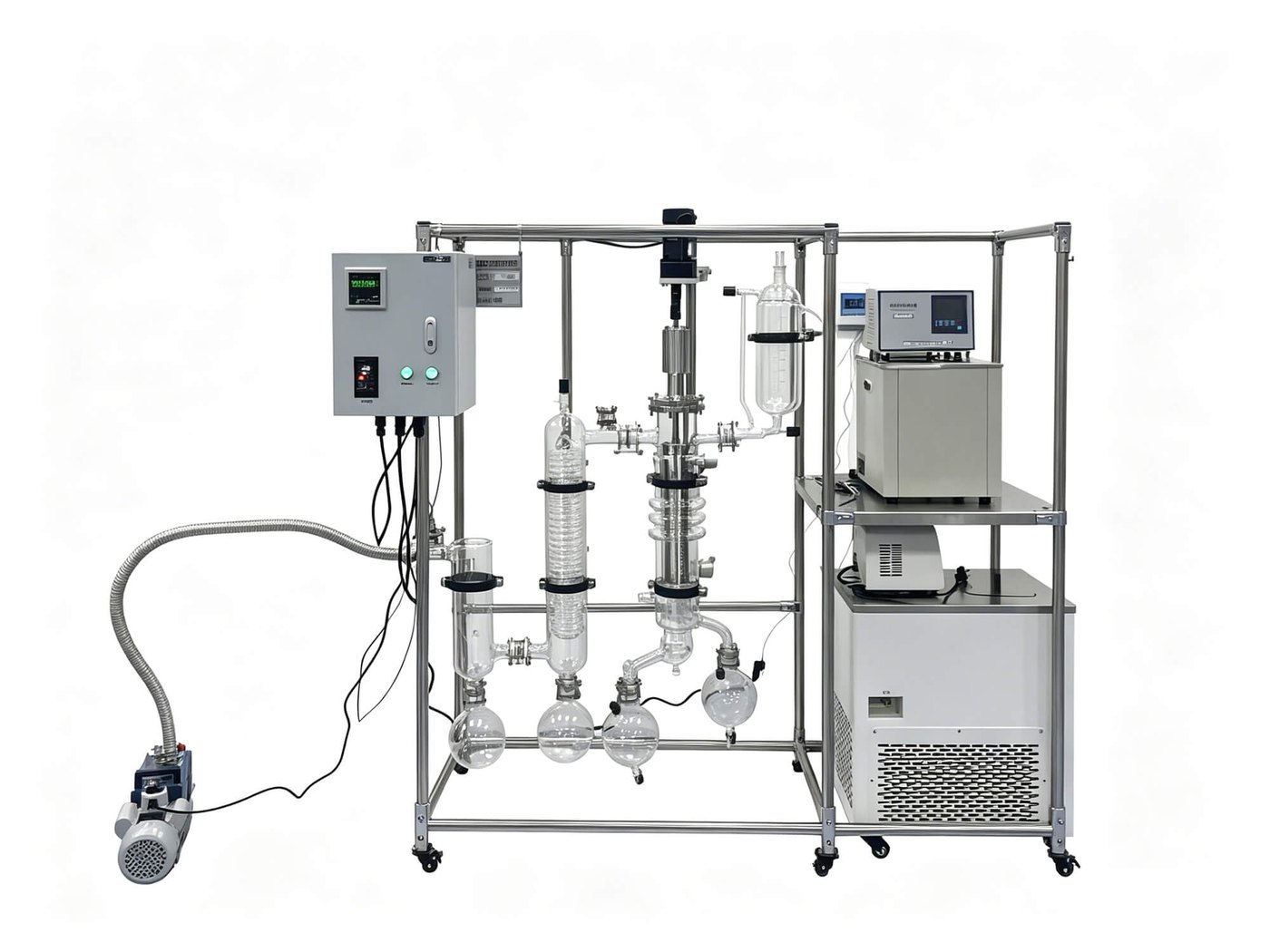
Molecular distillation is the gentlest evaporation technique available for heat-sensitive and high-boiling materials. Operating at 0.001–1 mbar, it separates molecules by mean free path rather than boiling-point difference alone:
- The evaporator surface and internal condenser are separated by a distance shorter than the mean free path of vapor molecules.
- Molecules that escape the thin liquid film travel directly to the condenser and are collected as the light fraction.
- Because operating pressure is extremely low, evaporation occurs at temperatures 100–200 °C below the atmospheric boiling point.
- Residence time on the heated surface is reduced to seconds, protecting active compounds.
Typical uses include cannabinoid and terpene purification, essential oil fractionation, omega-3 concentration, silicone oil purification and pharmaceutical intermediate cleaning.
4. Core Process 2: Thin-Film (Wiped-Film) Evaporation
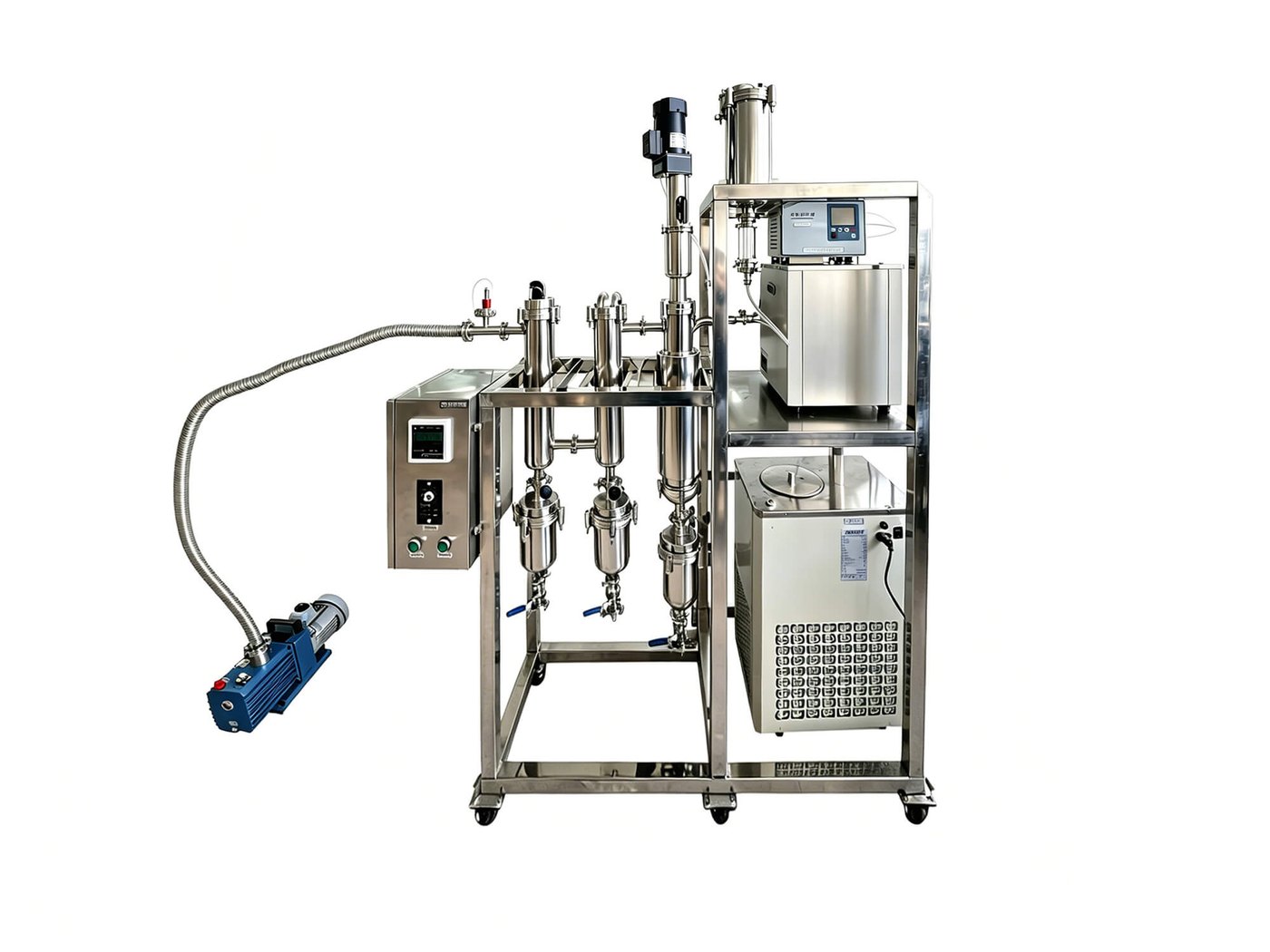
Thin-film evaporation is the workhorse for continuous concentration, devolatilization and pre-treatment before molecular distillation. A rotating wiper system spreads the feed into a thin, turbulent film on the heated wall:
- High heat-transfer efficiency from the constantly renewed film;
- Short residence time suitable for heat-sensitive feeds;
- Wide viscosity range — from light solvents to heavy oils and polymer melts;
- Continuous operation with adjustable feed rate, rotor speed and temperature.
Molecular distillation vs. thin-film evaporation: choosing the right tool
| Criterion | Thin-film evaporation | Short-path molecular distillation |
|---|---|---|
| Operating pressure | 1–100 mbar | 0.001–1 mbar |
| Condenser position | External | Internal, very close to evaporation surface |
| Typical product | Concentrate, devolatilized residue | High-purity distillate |
| Best for | Solvent removal, concentration, pre-treatment | Final purification of sensitive, high-boiling materials |
In practice the two techniques are complementary: a thin-film evaporator removes bulk solvent and light impurities, then the molecular still delivers the final high-purity cut. Many ANVORE customers run both in series.
5. Core Process 3: Reaction Control — Where Separation Begins
Purity is decided before the first distillation step. Reaction conditions — temperature accuracy, mixing quality, feeding profile and atmosphere — determine how many by-products enter the separation chain. Good reaction control means fewer impurities to remove later.
Modern laboratory reactors contribute to separation performance through:
- Precise temperature control (jacketed vessels with external circulators) to steer selectivity;
- Effective agitation for homogeneous reaction and heat distribution;
- Controlled feeding of reagents over time instead of all-at-once charging;
- Inert-atmosphere operation to prevent oxidation and moisture pickup.
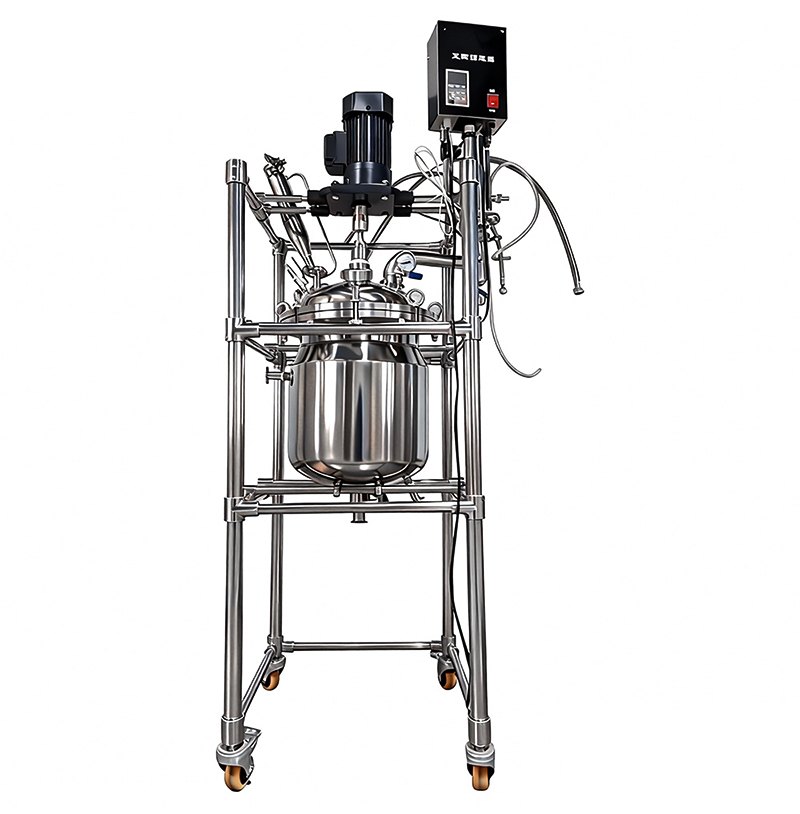
ANVORE reactor systems — from small glass reactors for route screening to stainless-steel pilot reactors — are designed with these controls in mind, and pair with the same circulators and gas supply used across the separation line.
6. Supporting Solution: On-Site Gas Supply
Gas supply is the most overlooked element of a separation workflow — until cylinders run out mid-run.
Inerting and blanketing
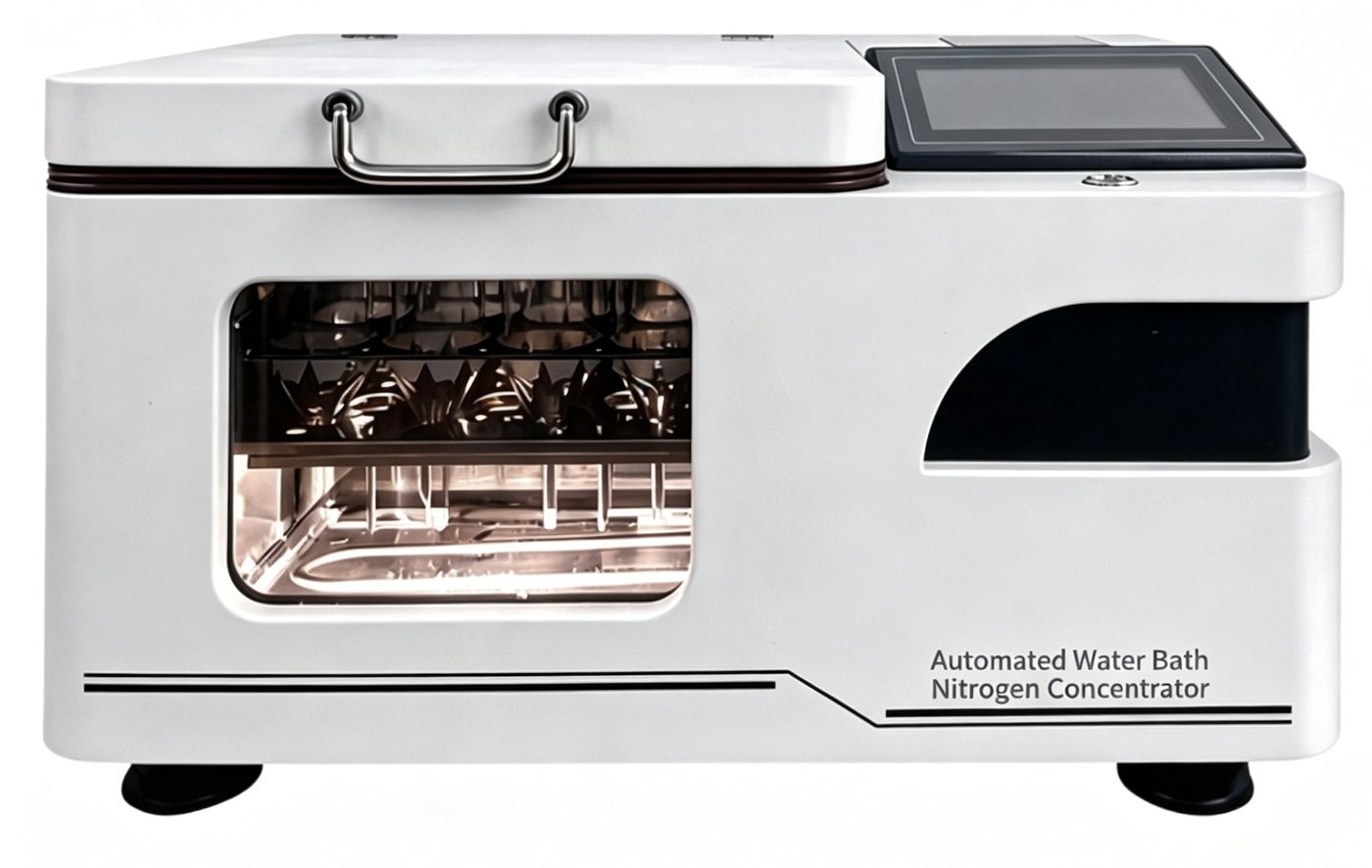
Oxygen-sensitive reactions, evaporations and transfers require nitrogen. On-site nitrogen generation via PSA or membrane technology delivers:
- Purity up to 99.999% on demand;
- Continuous supply with no cylinder changeovers or supply interruptions;
- Consistent purity, which improves batch-to-batch reproducibility;
- Lower long-term cost than cylinder or liquid nitrogen logistics.
Other laboratory gas roles
- Blanketing reactors and receivers during heat-sensitive processing;
- Purging lines and vessels before solvent introduction;
- Instrument support for analyzers and automation.
An on-site generator turns gas from a logistics problem into a utility — as dependable as electricity and water.
7. Building an Integrated Separation Workstation
The four building blocks above deliver their full value only when integrated. A complete ANVORE laboratory separation workstation typically includes:
- Reaction stage — jacketed glass or stainless-steel reactor with circulator and nitrogen inlet;
- Pre-treatment stage — thin-film evaporator for solvent removal and concentration;
- Purification stage — short-path molecular distillation system with matched vacuum pump and cold trap;
- Utilities — vacuum pumps, heating/cooling circulators and an on-site nitrogen generator;
- Control and documentation — consistent set-point management and batch records for reproducible results.
Because ANVORE manufactures the full range in-house, every component is matched: vacuum levels fit the evaporator, circulator ranges fit the jacket design, and gas output matches consumption. Customers scale from 0.1 L/h laboratory systems to 50 L/h and above without redesigning the process.
8. Typical Applications
- Natural products and nutraceuticals: cannabinoid and terpene purification, omega-3 concentration;
- Pharmaceuticals: intermediate purification under inert atmosphere, solvent recovery;
- Essential oils and flavors: fractionation of heat-sensitive aromatic compounds;
- Specialty chemicals and new materials: silicone oil purification, polymer devolatilization, epoxy intermediates;
- Food and beverage: decolorization and deodorization of sensitive extracts.
9. Conclusion
Efficient laboratory separation is a systems problem. Molecular distillation provides the gentlest purification for sensitive, high-boiling materials; thin-film evaporation handles continuous concentration and pre-treatment; reaction control determines how pure the feed to separation will be; and on-site gas supply keeps every step stable and reproducible.
ANVORE designs, manufactures and integrates all four elements — from glass short-path systems and wiped-film evaporators to reactors, circulators, vacuum packages and nitrogen generators — helping laboratories move from process development to production scale on one consistent technology platform.
Planning a separation workflow? Contact ANVORE for an application review and a tailored system configuration.